
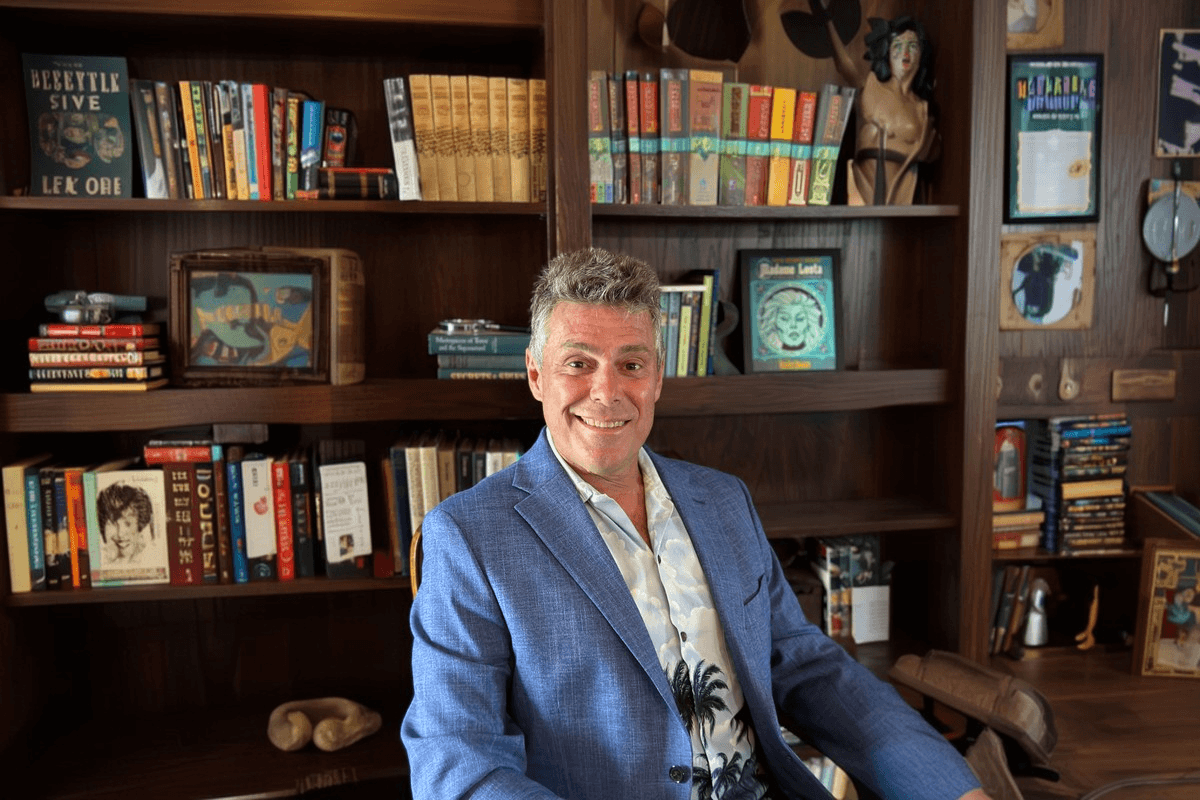
PHOTO: Robert Patrick Wills, author and innovator, whose works captivate readers with genres ranging from comedy fantasy to inspirational science fiction.
Insightful Reflections On Fantasy, Science Fiction, And The Power Of Imagination
Robert Patrick Wills discusses his journey from Military Intelligence to multi-genre author, revealing the inspiration, humour, and meticulous research behind his novels, spanning fantasy, inspirational science fiction, and alternative history.
I n this edition of Reader’s House Magazine, we delve into an engaging conversation with Robert Wills, a former Army Chief Warrant Officer Four with a remarkable career in Military Intelligence, who has seamlessly transitioned into the world of literature. With nearly twenty published works spanning diverse genres, Wills offers a unique perspective shaped by his military background and his passion for storytelling.
His tales, which range from quirky fantasy to thoughtful science fiction, draw inspiration from both his everyday encounters and vivid imaginings. Wills discusses the interplay between his structured past in military report writing and the imaginative freedom of his creative pursuits. His insights also reveal an interesting approach to character development, where the ordinary meets the extraordinary, infusing his narratives with a distinctive flair.
As we explore Wills’ journey from the rigours of military life to the realms of fantasy and science fiction, his reflections offer aspiring authors valuable advice on the importance of careful crafting and patience in the publishing process. Join us as we discover the mind behind Tales From a Second Hand Wand Shop and other intriguing works, and gain a glimpse into the way a writer’s life experiences can profoundly shape their storytelling.
Robert Patrick Wills masterfully blends humor and intricate imagination, transforming military precision into extraordinary, multi-genre literary adventures.
What inspired you to transition from a career in the US Army Intelligence to writing fantasy and science fiction novels?
I have been writing since I was in High School; long before I joined the Army at 23 years old. I’ve always been interested in fantasy and science fiction so those seemed to be where my writing gravitated.
How do you come up with the quirky characters and storylines in your Tales From a Second Hand Wand Shop series?
A lot of the characters are people that I meet in day-to-day life. They just end up being Elves, Orcs, and Halflings. One thing that is easy for me is coming up with a fantasy name- it’s the names for the science fiction stories that always cause trouble so I end up using combinations of names of friends from school and the Army.
“Make sure you edit it and get the best possible cover you can get before publishing.” – Robert Patrick Wills
Can you tell us about your experience in writing highly classified intelligence reports and how it has influenced your writing style?
I make a joke about that in my bio but really, they are apples and oranges; intelligence reports are concise and to the point; just the facts. My fantasy and science fiction stories are probably longer than they should be.
What drew you to explore the genre of inspirational science fiction in your novel The Prodigals?
The idea for this series came about while teaching Sunday School to kindergarteners while stationed in Heidelberg, Germany. The lesson was about Adam and Eve. It was a very watered-down lesson; ‘lying is bad’ because the kids were so young. Afterwards I thought “I wonder what would have happened if Eve had turned down Satan?” Then since I didn’t want to write a Frank Peretti “This Present Darkness” type story, I made it science fiction. Then, because a story needs some sort of conflict to move the plot along I made the ‘Eve’ who turned down Satan an alien and the Earthlings are showing up to colonize a planet where there is no Original Sin. I actually wrote the last chapter of Apple Declined first then afterwards thought how the two powerful men- Chief Hauser and Tolen the mayor got to their standoff. I write my stories chronologically; this is the only time I haven’t.
“Intelligence reports are concise and to the point; just the facts. My fantasy and science fiction stories are probably longer than they should be.”- Robert Patrick Wills
How do you balance the elements of humour and adventure in your stories, particularly in the 18 Fathoms and Tales From a Second Hand Wand Shop series?
It’s actually tough because even in 18 Fathoms- a ruthless pirate story- some humor comes through. The same with my vampire story; Hugh ends up in a couple of humorous situations because I enjoy writing humor.
What research do you undertake to create the alternative worlds and historical settings in your novels, such as in The Alternatives series?
I actually didn’t do any when I wrote the last chapter of Apple Declined. It wasn’t until it was done and I started on the rest of the story that I began to look up stars and planets as well as potential methods to power an interstellar space ship. I also made sure that when I have my characters down on Earth, the locations and street names are correct.
How do you manage to switch between writing in different genres, from fantasy to horror to science fiction, and do you have a favourite genre to write in?
Switching genres seems pretty easy for me. In fact, I will typically have three or four stories ‘in the works’ across genres and as I write in them, I end up with one that gets ahead of the others and I end up finishing it. As I write this I currently have 8-20,000 words down in: The fourth Hugh, Vampire story; the eighth Tales from a Second Hand Wand Shop story; Poppins von Trapp where Mary Poppins and Maria von Trapp are the same person, Harrison vs. the Wheelers a post-apocalyptic comedy adventure story that the main character is fighting a gang that rides go-carts, and Doomsday Arc that takes place in the Star Trek Original Series universe.
What advice would you give to aspiring authors who are looking to publish their own work, particularly in the fantasy and science fiction genres?
Take your time! Don’t rush to get your story out there; make sure you edit it and get the best possible cover you can get before publishing.