
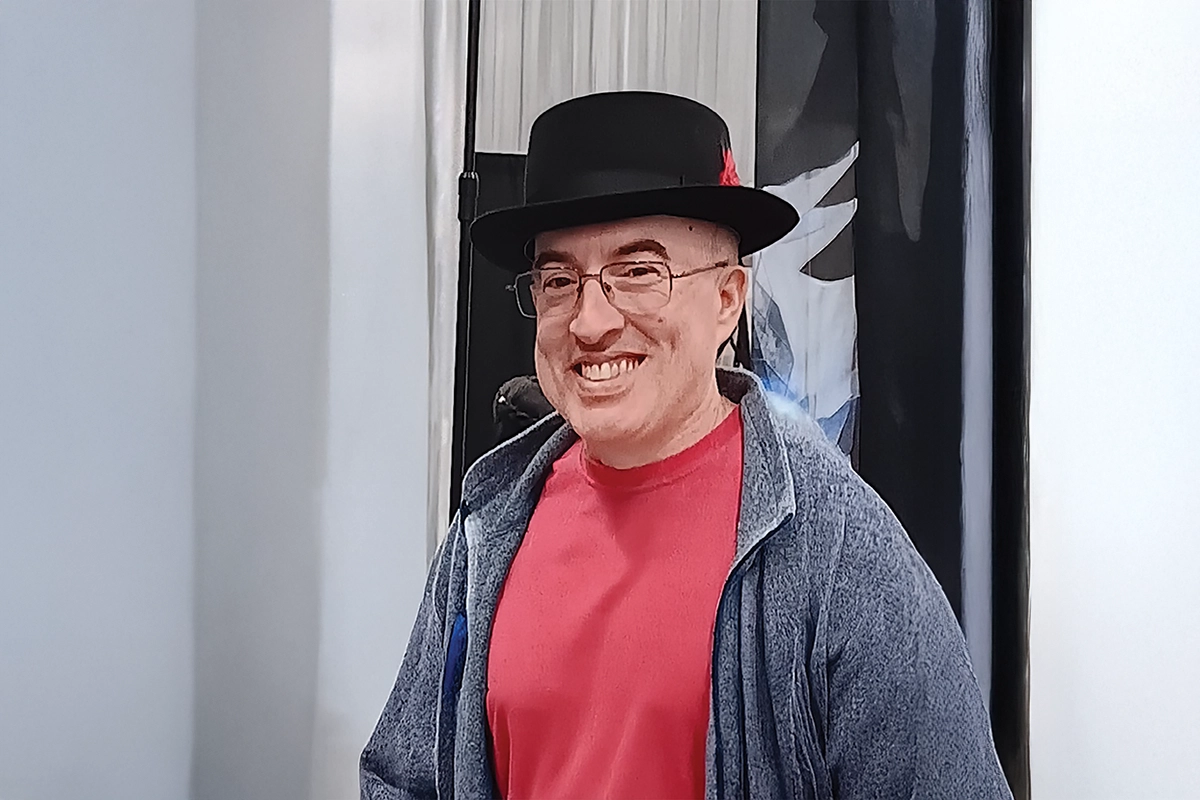
Photo: A Visionary in Science Fiction and Fantasy, Sharing Stories That Resonate With Heart and Imagination.
Crafting Stories That Evoke Emotion And Adventure
Paul Heingarten shares insights into his creative process, blending emotional depth with imaginative storytelling, his lifelong writing journey, challenges in marketing, and the evolution of his distinctive Essence Wars series.
PPaul Heingarten is a true creative force, seamlessly blending his passions for writing, music, and technology into a vibrant tapestry of stories and worlds that captivate readers. A seasoned science fiction and fantasy author, his works display an imaginative depth and emotional authenticity that set them apart. Particularly noteworthy is his Essence Wars series, a riveting exploration of character and conflict that evolved from a single novel into an intertwined collection of novelettes, showcasing Paul’s ability to adapt, expand, and explore the boundaries of storytelling.
Residing in South Louisiana with his wife Andrea, Paul combines his artistic endeavours with a professional career in Information Technology, proving that creativity can flourish amidst life’s practicalities. What makes his journey remarkable is the resilience and passion with which he pursues his craft, whether carving out moments for writing during a busy schedule or embracing the challenges of marketing his work in the ever-evolving publishing world. Additionally, his active involvement with the Bayou Writers Club highlights his commitment to fostering a community of shared inspiration and support.
In the interview that follows, Paul offers candid insights into his writing process, his influences, and the lessons he has learned as an author. From the early creative seeds planted in his childhood to the exciting directions he is now exploring, his responses provide a rich perspective on the intricacies of crafting compelling narratives. Here is a writer committed not only to his imagination but also to the growth and exploration needed to hone his craft. As you read, you will find Paul Heingarten a remarkable voice in the realm of speculative fiction, an author whose dedication and vision are matched only by the breadth of his storytelling.
Paul Heingarten masterfully crafts imaginative worlds, vivid characters, and deeply emotional narratives that resonate with science fiction and fantasy lovers.
Paul Heingarten spreads time between writing, being a musician, and, since 2002, a career in Information Technology. He lives in the southern United States with his wife Andrea.
What first inspired you to become a writer, and how did that impulse evolve into the specific path you’ve taken today?
In my early years of school, around age eight or so, I had a creative writing exercise where I had to write a few short stories. I’d say the early seeds of my writing ever since were laid right there.
“Sometimes growth can sting, but it’s essential if writing is where you see yourself.” – Paul Heingarten
How do you conceive of your core themes or motifs when starting a new work — do you begin with plot, character, imagery, or an emotional seed?
Character and the emotional seed go hand in hand with me. I like to start with strong characters and then put them in taxing or, better yet, overwhelming situations to have them rise up so they can win the day.
Can you walk us through your writing routine or rituals — are there particular times, environments, or habits that help you enter a creative state?
As I work a day job that is not related at all to my novel and story writing, I have to grab time to write whenever and wherever possible. Sometimes it’s early morning, other times it’s late at night. Since ideas can come at any time, I usually make notes on something if it’s an idea I want to explore when I can sit down to write.
What has been the most difficult challenge you’ve faced during your writing career, and how did you overcome—or adjust to—it?
Marketing! The bane of my existence! I’m a passion writer, and that doesn’t always translate to very marketable material in the sense of running ads and such. I’m working on a closer study of the genres I write to get a better feel for what is marketable.
Which of your works do you feel has surprised you the most, either in reception or in how the writing unfolded during the process, and why?
My Essence Wars series has been an exciting project. The work began as a single novel told through six different perspectives. As the story grew, I eventually realized that limiting these character voices to fit within the confines of a single book would stifle them a bit, so I expanded the book into six separate novelettes, each focused on a single character with tangents that link to at least one of the others in the series. The response in pre-orders for the subsequent books was also very nice and encouraging. It showed me that separate novels linked together can be a big draw for readers.
What writers or works (past or present) have had the greatest influence on your voice, and in what ways do you see their fingerprints in your writing?
Philip K. Dick, George Lucas, Quentin Tarantino, Kurt Vonnegut. It’s tough to pinpoint examples, but I think the overall feel of writing a vast story universe filled with complex characters whose needs are declared but not written in stone comes from influences I’ve had, like these authors.
“Separate novels linked together can be a big draw for readers, as seen with the Essence Wars series.” – Paul Heingarten
How do you deal with self-doubt, writer’s block, or critical feedback, especially in more vulnerable or ambitious pieces?
I surround myself with a healthy support system of people. I’m grateful for my wife Andrea, with whom I can share all those times I second-guess myself or get down on what I’m trying to accomplish. In addition to her, I belong to a writer group where I have several close friends with whom I can commiserate during those times when the negative or nasty feedback comes.
Do you consciously revise your drafts in stages (plot, pacing, language, theme) — and how do you balance faithfulness to your first vision with openness to surprise?
I definitely revise in stages. Given my somewhat limited schedule to write or revise, I tend to focus on one aspect during a particular revision. My very first novel was criticized for having a very predictable plot, so since then I’ve been trying not to let my story or my characters have too much time to rest, or a clearly defined path before them. While I’m keeping their end goal in mind, I do whatever I can to pull the rug out from under them, whether it be a surprise revelation, an unexpected crisis, etc.
Looking ahead, what projects or directions are you most excited to explore next, and are there genres or mediums you haven’t yet ventured into but would like to?
I’ve been in talks to create works with another science fiction author, and I’m very excited to see what that brings. I’ve never co-authored a project, so I’m interested (maybe a little nervous) to see how that goes.
“I like to start with strong characters and put them in overwhelming situations so they can rise up to win the day.” – Paul Heingarten
What single piece of advice would you give to up-and-coming authors, especially those who struggle with maintaining momentum, finding their voice, or navigating the publishing world?
Explore. Writing is by nature a very isolated process, but you need to glean perspectives and experiences of others if you want to grow, and especially if you want to build a career out of writing. Join a writer’s group if there’s one near you. Look on social media for writer groups and communicate with as many authors as you can. There’s a lot of great information out there, and you don’t always have to pay to get it. Of course, you’ll run into scam artists along the way, but that’s just another instance where the perspectives of a large group of authors can help you.
The continued search for people and their writing experiences will show you the approaches to writing and publishing out there. Build your circle of trusted writer friends, people who won’t just tell you what you want to hear, but what you need to hear. Sometimes growth can sting, but if writing is where you see yourself, take the time and put the effort in to explore and build your network of knowledge and author friends.