
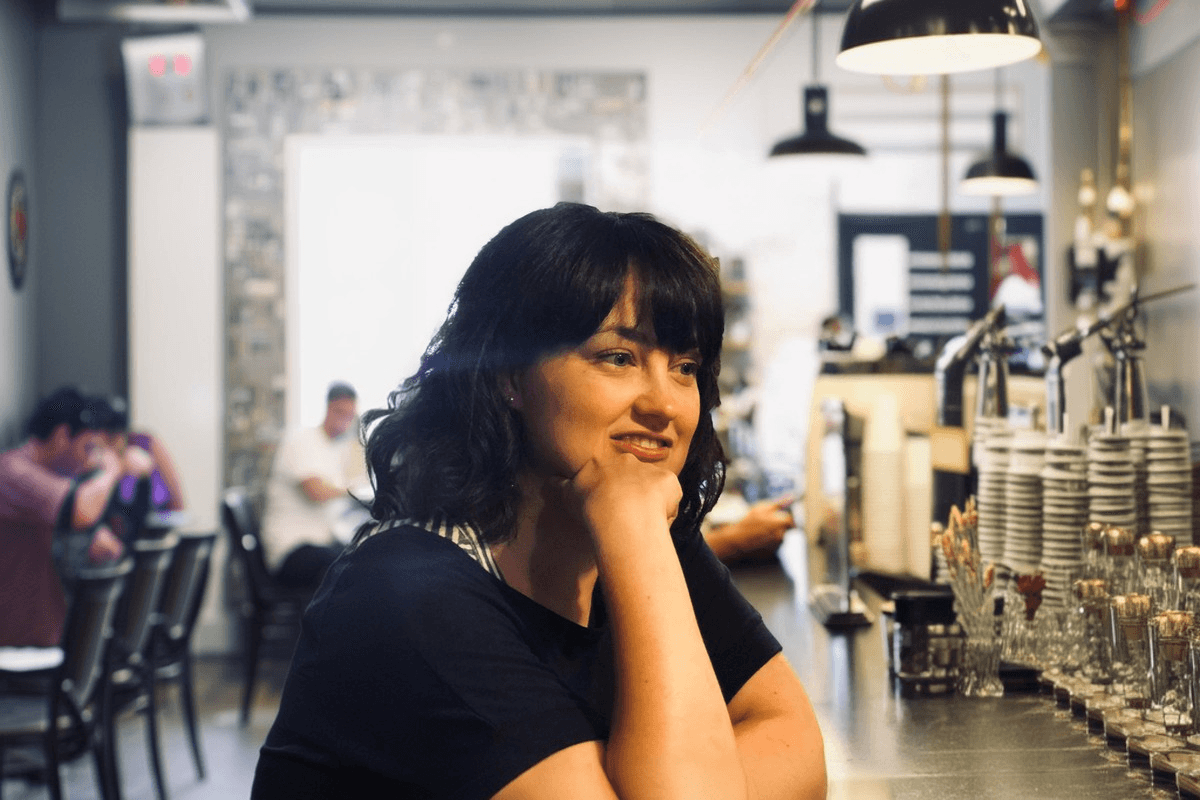
PHOTO: Erin Grey infuses her personal experiences and sharp wit into unforgettable fantasy and science fiction worlds.
Exploring Trauma, Humour, And The Superpower Of Neurodivergence
Erin Grey discusses her captivating stories that weave neurodiversity, mental health, and humour into fantastical settings, creating relatable, resilient characters and breaking down stigma with wit, poignancy, and imagination.
Erin Grey (also known as Erin Vere in her other literary ventures) is a writer whose works transcend the surface of typical storytelling, delving into the multi-faceted complexities of the human psyche. Living in South Africa with her “pet husband” and an “Evil Cat Overlord,” Grey’s creativity stems from a deeply personal place. Her journey with mental health, especially her experience with Dissociative Identity Disorder, and her fascination with neurodiversity have become profound driving forces behind her imagination. Her tales are brimming with wit, poignancy, and characters who stand as beacons of understanding and self-acceptance.
Across her genres, from the playful romance of Gaslamp Fantasy in her Erin Vere works to the boundless realms of Science Fiction under Erin Grey, she crafts narratives that unflinchingly dismantle stigma. Her worlds brim with humour and hope, balancing tragedy and levity with finesse. Whether it’s a protagonist wrestling with inner voices or an impossibly handsome alien distracted by Earth’s sitcoms, Grey’s stories celebrate the extraordinary strength in diversity and the unconventional victories of resilience.
Through novels such as Jane in her dystopian world of forbidden fiction and singing pirates, Grey’s sharp satire reflects the injustices she sees in the real world — prejudice, suppression, and the persistent underestimation of neurodivergent minds. Yet, she does not shy away from laughing in defiance at life’s absurdities. Humour, in her hands, becomes both a coping mechanism and a tool to ground us in the reality of her characters’ grief, traumas, and triumphs.
Erin Grey is not just an author; she is an advocate for embracing imperfections, a storyteller who refuses to let stigma have the final word. Through her writing, she invites readers to laugh, cry, and most importantly, to see the power and possibility in neurodiversity. For her, every word penned becomes a lifeline for those seeking connection amid life’s chaos — a call to embrace the fractures that make us whole.
Erin Grey masterfully balances humour and heart to reveal the hidden strengths in all of us, particularly neurodivergent individuals.
What inspired you to write a story featuring a protagonist with neurodiverse characteristics, such as Jane’s voices?
At the time, I was discovering the voices in my own head during therapy, the individual personas I’d created to protect myself as I faced various childhood traumas. Writing Jane was a way of understanding my Dissociative Identity Disorder and coming to terms with it. Humour has always been a powerful coping mechanism for me, so putting my story into a fantasy-scifi scenario and exaggerating and laughing at the voices helped me process and heal my fragmented personality.
How do you draw upon your personal experiences with mental health issues in your writing?
I always give my characters aspects of my own mental health struggles and traumas, as well as my neurodivergent traits. It’s both a way for me to process each new thing I discover about myself and a means to show others who may be going through the same thing that they are not alone. Wrapping it up in humour and fantasy or scifi softens the sting of reality and forces me to laugh at myself, which helps me continue to wade through the ever-thickening muck we call life. I am not shy to expose these scars and partially-healed wounds in my brain, because during my darkest times, others opening up to me about their experiences with depression and anxiety were hands reaching into the sea of my despair and confusion and pulling me up into a life raft. I hope that my being open and honest can help yet others to find comfort, see a way to survive, and get the assistance they need.
“Writing Jane was a way of understanding my Dissociative Identity Disorder and coming to terms with it.” – Erin Grey
Can you tell us more about your fascination with neurodiversity and how it influences your work?
When I had my mental health breakdown at age 30, a bewildering galaxy I had never conceived of hurtled into my field of vision. In an effort to understand what was happening to me, I was driven to research all types of disorders and neurodiversity, as well as the various ways these present in each individual. I was blown away by how little I had known before it became my personal lived experience, by how many stereotypes are drummed into us by society, by how often I came across the phrases ‘it is not known’ or ‘no studies have been conducted’ or ‘it is not fully understood.’ And yet I was finding example after example of people with so-called ‘neurodivergent’ brains doing amazing things. The more I looked, the more I started to believe that there is no such thing as a neurotypical human, only a human wired in the optimal way to function in an industrialised system. As a result, I am no longer capable of writing a neurotypical character – they bore me, and I’m not convinced they truly exist. My goal with every story is to vanquish stigma and demonstrate that neurodiversity is something to be embraced and mental illness deserves treatment and support.
What is the significance of the fictional world in your book, where fiction is forbidden and singing pirates roam the suspended sea?
Eorth is a satire of human civilisation, where no matter the culture, diversity is too often treated as deformity, and mental illness is not treated at all. The systemic stigma around mental illness and neurodiversity is upsetting to me, so my goal with Jane was to present these in a context where each ‘disorder’ was in fact a superpower that had been suppressed due to the fear and lack of understanding by the neurotypical majority. I wanted to showcase the value and strength to be found in neurodiversity, something our society as a whole has yet to see. One of the morals of Jane is that understanding and the opportunity to use our unique brains and abilities to their full potential can result in extraordinary achievements and internal peace.
How do you balance humour and seriousness in your writing, particularly when tackling sensitive topics such as prejudice and xenophobia?
Humour is the perfect vehicle for topics humans struggle to discuss or even think about. It’s easier to grapple with hard truths when you’re laughing. But Terry Pratchett coined the term ‘tragic relief’, and it’s a principle I’ve strived to apply in each story. You can turn the volume up on the comedy, but you must give the audience a break every now and again with a little light stab to the heart. Then just as they’re reeling from the blow, you buoy them up with a series of laughs. It’s how I deal with life: laugh at it and maybe it will go away.
“Humour is the perfect vehicle for topics humans struggle to discuss or even think about.” – Erin Grey
What role do you think your Evil Cat Overlord plays in your creative process, if any?
He certainly takes an earnest interest in ensuring my keyboard is functioning. He’s even discovered shortcuts I didn’t know were there. Sometimes he’s a lap-warmer, on other occasions a desk ornament, and frequently he’s inspiration for a character.
How do you manage to create such unique and quirky characters, such as the ridiculously good-looking alien addicted to Earth sitcoms?
I start with a stereotype, subvert from as many angles as possible, and then give them a neurodivergence and a trauma. Then I throw them at my alpha readers and see if they get upset when I hurt them. That’s a sure sign that the character is relatable and lovable.
What advice would you give to fellow authors who are looking to write about complex issues such as mental health and neurodiversity in a humorous and engaging manner?
Throw away the stereotypes in your head and do your research. No two people with ADHD look the same. Not everyone diagnosed with Anti-Social Personality Disorder is a serial killer. Watch interviews, read studies, and challenge your pre-conceived ideas. Most of all, draw from your own heart, your trials, your confusion, your desperation, your deepest darkest pain. There is a reader out there searching for familiarity, for one person to say, “You know that thing you’re feeling? I feel it too.” And when they write to you and thank you for revealing your heart to them because they saw themselves in it, all the wounds you bared to them heal over a little bit.
“My goal with every story is to vanquish stigma and demonstrate that neurodiversity is something to be embraced.” – Erin Grey