
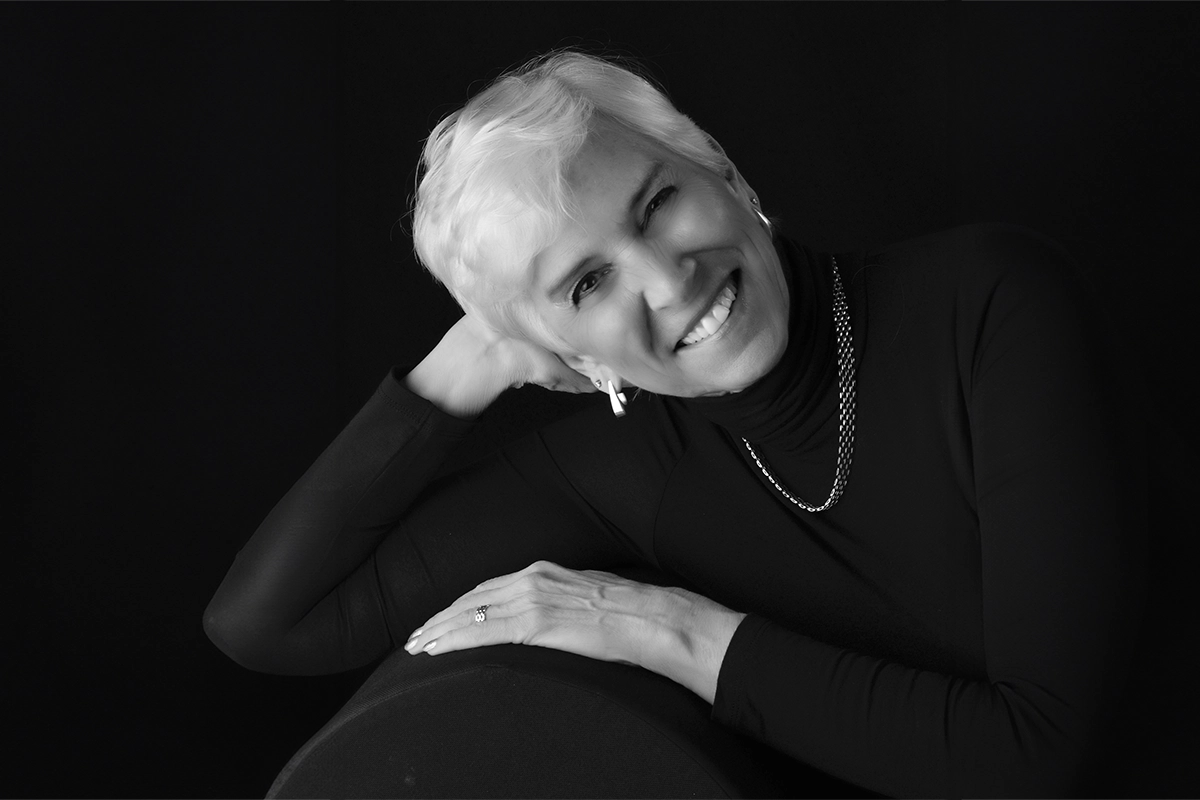
“Dr Chérie Carter-Scott, the trailblazing coach and author whose transformative wisdom has redefined personal growth and life coaching globally.”
The Game Of Life And The Rules Of Being Human, Explained
Dr Chérie Carter-Scott reflects on her inspiring journey, shares the origins of life coaching, her unique techniques, and how she empowers people to reach their life’s full potential.
Chérie Carter-Scott, Ph.D, MCC, often referred to as the “Mother of Coaching,” is an extraordinary pioneer who has shaped the very foundation of the coaching industry as we know it today. Her groundbreaking work has empowered individuals worldwide to discover their inner truths, pursue their dreams, and experience profound personal transformation. It is a rare privilege to feature someone whose legacy in the field has become synonymous with excellence, authenticity, and resilience.
Renowned for her timeless bestseller If Life is a Game, These are the Rules—a book cherished by millions—Dr Carter-Scott has masterfully distilled universal principles of human experience into wisdom that resonates across cultures and generations. But her remarkable body of work doesn’t stop there. Her tenacity, insight, and unmatched ability to guide others have given rise to a multitude of books, coaching programmes, and leadership trainings that have shaped lives both personally and professionally. Her unwavering belief that the answers to life’s challenges reside within each individual remains at the heart of all she does.
Dr Carter-Scott’s life story reads as a testament to resilience and purpose. Overcoming her own hardships, she has channelled her experiences into a life devoted to helping others become the best version of themselves. Her influence spans decades, and her profound contributions to the coaching profession continue to inspire coaches and clients alike worldwide. In this illuminating interview, we explore her journey, the birth of the coaching industry, and the transformative power of her unique approach to unlocking human potential. Prepare to be inspired by the indomitable spirit and wisdom of a true trailblazer.
Dr Chérie Carter-Scott is an unparalleled visionary, empowering millions through her transformative coaching, timeless wisdom, and groundbreaking contributions to human development.
Tell us a bit about the beginnings of the coaching industry?
In 1974 I was searching my mind, heart, and soul for the purpose of my life, when a colleague asked me if I could help him sort out some issues regarding his company. I had little to no experience with business and couldn’t imagine what value I could bring to his situation. I declined his invitation and continued my quest for meaning and relevance. He called two additional times and asked if I could help him. I was becoming mildly irritated and asked him, “Why are you calling me?” To wit he replied, “Because I trust you.” I protested, “But I don’t know anything.” He retorted, “That could come in handy!” I was dismayed and stated, “If you completely understand that I know nothing about your business, and you are willing to pay me to help you sort out some issues, then I accept!”
In October, 1974, we started the project and Lloyd became my first official coaching client. After a successful coaching assignment, he started sharing his amazing results with everyone he came in contact with…it sounded like, ”My friend, Cherie, the woman who asks the incredibly powerful questions.” My phone started to ring off the hook. Before I knew it, I was coaching people every day, more and more called, and even though I continued to protest, “I don’t know anything about business, but I will ask you questions and you will discover your own answers.” They didn’t care that I claimed to know nothing, because the recommendation from Lloyd (and others) was so emphatic.
In 1974, I charged $35 for a 90-minute session. Within six months, clients started to ask if I could teach them how to ask those powerful questions in order to work more effectively with their patients, customers, and clients. The answer to their request was unclear to me since I was unaware of what I was doing in those sessions that was so profoundly helpful to people. I knew I helped them focus, determine what they wanted, and make clear choices, however, I had no idea how the combination of intention, skills, abilities, and the use of positive energy created such extraordinary results. People used the word, “Gifted” to describe what I did, however, like a prodigy, the “not-knowing mindset” came naturally to me, without effort or performance anxiety.
“The most important aspect of goal achievement is the way
you treat yourself in the process of going for what you want.”
With the help of my friend, Kathy, we started to examine and analyze what I was doing that was creating the amazing results. The most important aspect was that I was absolutely certain that I didn’t know the answers for anyone. I also believed that each person possessed their own answers to all of their challenges, and I never presumed to know for anyone else what their choices or actions should be. This was the perfect starting place, and from there Kathy assessed everything I did with my clients that had worked. The initial behaviors were obvious and she immediately noticed that I easily suspended judgment, something Kathy said was not so easy to do. I didn’t know that setting aside judgments was challenging for others, and so we set out to find the root of judgmental behavior in order to unlock that mechanism. If I could suspend judgment, I imagined that it must be possible for others to do so, as well, however, we needed to determine how to unlock the judgmental mechanism? In addition to suspending judgment, we had to find a way to train people to not know the answer for others. Since this was a knee-jerk reaction, trained over many years of formal educational environments, we believed that it would take a concerted effort to reverse this deeply-ingrained behavior.
“I never presume to know what’s best for the client
– their answers are already within them.”
We thought that if an individual exhumed their own dreams, they might experience the process from the inside out and be more attuned to the fragility of the human psyche and emotions. In other words, if they experienced the process of remembering their precious dreams, they might be more respectful of the dreams, wishes, and goals of others.
Listening Actively was essential to the process, but how could you listen if your mind was busy chattering at you?
We needed to find ways to help people silence the voices of their mind, at least temporarily, for an hour or so, so that the coach could listen intensely and focus on what was being said. This focus of attention was critically important. We queried, ‘How could we get their attention off of themselves and 100% on to another person?’ (A critical concern)
Then there were those powerful questions that I asked that seemed to come out of thin air. When Kathy asked me how I found those questions, I commented that as I listened intently to their answers, the next question magically presented itself. If I was paying close attention to what was stated, the “Clue” would surface and reveal itself to me. If my mind were elsewhere, I would surely miss it. As we proceeded with the analysis of my behaviors that created a safe coaching environment, more elements started to surface. Kathy noticed that I used the techniques of restating and recapping frequently. I was unaware of this, but acknowledged that I wanted to ensure that I really understood what was had been communicated to me, and to confirm that we were both on the same page as we progressed together. Although I didn’t want to be irritating to the client, I really wanted to make sure that I hadn’t missed something or lost the thread. Kathy commented that I never gave advice, and I shared with her that since I knew nothing about the client’s situation, it would have been presumptuous or arrogant of me to imagine that I had any advice that might be remotely helpful. I commented, “Listening closely in a non-judgmental manner, reflecting back what I heard, asking questions that go deeper, and being very respectful of the client’s inner wishes, dreams, and fears just about summed it up.”
Kathy was also respectful when she requested to sit in on a session with a client and watch what I did to determine if there was more that I was unaware of. I obtained permission from a client and Kathy watched silently in the corner, with her clipboard in hand. After the session, she commented, “I have a whole new list of behaviors that I observed.” She continued to list the behaviors, of me, the “Unconscious Competent,” a person who is unaware of their extraordinary capabilities. Kathy commented, “You were sincerely interested and curious about your client’s situation, and you asked several times about their feelings regarding related items. You were very connected to the client and if the connection became shaky, you took it on yourself to repair any disconnection. There was an interesting blend of caring coupled with empowerment. You weren’t weak or mushy, nor were you pushy or forceful. You didn’t get shaken when feelings came to the surface, which was impressive, and although empathetic, you didn’t take on their feelings or get enmeshed in them. How did you do that?” she questioned. I wasn’t really sure how to answer that, I was aware of the boundaries: where I ended and where the client began, which helped to see clearly that their feelings were not mine.
Kathy continued to list the many behaviors that I demonstrated, and eventually we had a rather lengthy list. This was the first step in the process. Then I enlisted the help of a new colleague, Carol, who helped me design the first MMS Coach Training in the Fall of 1974. Carol was the ideal associate because she was curious, enthusiastic, collaborative, and non-judgmental. We took the list from Kathy and set out on the mission…to design a training to teach people how to coach their clients, patients, and customers in the same way I was coaching them.
What is life coaching?
As the International Coaching Federation defines it: “Coaching is partnering with clients in a thought-provoking and creative process that inspires them to maximize their personal and professional potential.’ This is the broadest and most inclusive definition.
What’s involved in coaching?
Establishing the coaching agreement is critical so both people: coach and client are on the same page, have clear expectations about the nature of the conversation(s), what will and won’t be addressed, and what the approach would be. It was also important in managing expectations to address what is not coaching, specifically: mentoring, advising, consulting, and therapy.
How does it work?
Coaching combines a variety of approaches starting with Socrates and his belief that questioning rather than telling leads to a more fruitful discovery of one’s values and and priorities. Those who have contributed to the various components of coaching are:
• Socrates’ open-ended questions
• Maria Montessori -Inner Knowing
• Carl Jung -Personality Theory
• Kurt Lewin -Freezing & Refreezing
• Joe Luft (1955) – Johari Window: Self-Awareness
• Harry Ingham (1955) – Johari Window: Self-Awareness
• Douglas McGregor -Theory X & Y
• Abraham Maslow: Hierarchy of Needs
• Carl Rogers -Active Listening
• Mihaly Csikszentmihalyi – Flow
• B.F. Skinner – Stimulus/Response Therapy
• Michael Neenan – adaptability
• Albert Ellis – changing belief systems
• David McClelland – 3 Motivators
• Daniel J. Levinson – People matter
• Frederick Hertzberg – Satisfaction and fulfillment
• Jack Mezirow – Unconscious Assumptions
• William Glasser – Choice Theory
• Louise Hay – Self-Love is the key
• Victor Vroom -Expectancy Theory
• Sir John Whitmore The GROW Model
• David Kolb Experiential Learning
• Martin Seligman – Positive Psychology
• Richard Barrett -Seven Levels
• Dr. Chérie Carter-Scott, MCC: Expectation Mgnt, DWBC (in document)
• Salovey and Mayer – EI & Monitoring Feelings
What are some of the most meaningful goals that your coaching has allowed clients to realize?
Changing jobs or careers, moving to a new location, finding one’s soul-mate, increasing one’s income or net worth, and a variety of smaller items like: time management, stress management, Finding the purpose of their lives is profound and includes context, direction, and fulfillment. Essentially, it connects the dots that the client has become aware of in their defining moments. Here is a short list of the types of goals that clients bring to coaching:
• Develop my self-confidence
• Speak up in meetings
• Learn to listen better
• Become more empathetic
• Get to bed earlier
• Be on time more often
• Manage stress effectively
• Stop procrastinating (a chronic case)
• Make more friends
• Become more disciplined (and structured)
• Keep my commitments (to myself and others)
• Stop being defensive (at performance reviews)
• Learn to network better at events (said by an introvert)
• Executive presence (gravitas)
• Transition from a manager to a leader
• Balancing work and home (said by a workaholic)
• Find a career/industry that I value and can make a difference in
What would you do to uncover subtle objectives that were not yet discernible to clients?
I would ask straight out do you hear this? Do you recognize this element? Does this resonate with you? I hear this, is that accurate in your perception?
Are there any objectives that are not amenable to life coaching?
Focus on the past traumas, phobias, strong addictions, any category that has been clinically labeled and studied as a condition that deviates from functional human being.
Which services would you recommend as adjuncts to coaching?
Personal development with all of the components, as long as they have the high value of the client, patient, customer having their own inner answers to their life’s challenges.
Does a coach sort out the client’s life?
No, the coach can ask the client to sort out their life, but the coach can offer to the client what they hear, see, observe, notice, perceive, or feel intuitively about the client of their circumstances.
What is the coach’s role exactly?
A mirror, a sounding board, verbal reflection interaction, positive and constructive contextualizing, addressing any transition, decision-making and choice-making based on one’s inner values and priorities.
Can anyone benefit from coaching?
IN theory, yes, but in actuality, they must have these four aspects:
Desire, Willingness, Belief, and Commitment. They also should be “above the line “in terms of Life Condition (DWBC)
And will I get results?
If the DWBC is solid there is a 98% chance of everything working perfectly with the client.
What’s the difference between coaching, counselling, mentoring, and consulting?
• Coach: the person who is conducting the coaching session
• Client: the recipient (the team or group) in the coaching session
• Mentor: Advisor, guide, or subject matter expert
• Sponsor: the person who is financially responsible for the coaching engagement
• Sponsor Options: corporation, spouse, parent, mentor, or friend
How can coaching help me?
That depends on where you are in your life and where you want to go (grow).
It depends on how ready, willing, and open you are to your coach, and the coaching process. It depends on your relationship with yourself, your honesty level, your pain points, and your urgency.
What sort of people have a life coach?
Those who see the value, the need, who want support in getting what they want, and those who can allocate the time, energy, and resources to this special connection and purpose.
What type people do you coach?
I coach the children of my clients, my students, my corporate clients, primarily those in the C-suite, those in my family, my licensees, leaders of my Coach Training, and people I am assigned through Mindspan, UNAIDS, and other agencies who broker coaches. (Please reference the Fixed vs. the Growth Mindset)
What made you choose life coach as a profession?
Actually, coaching chose me in 1974, as I have described in the beginning of this document.
Tell us about your approach to life coaching and your specialty area?
• Executive coaching
• Transition coaching
• Life Purpose
Why are you so passionate about your work?
I am incredibly passionate about coaching because it is my life’s purpose to support people being the very best version of themselves.
What does it cost?
It depends on whether it is personal or corporate, whether you are a student paying for yourself or the CEO of an MNC. The prices vary based on the coach’s experience, years of coaching, credentials, and pricing packages.
Is coaching worth the price?
It depends on the results and the price of the coaching.
How do coaches help their clients get results?
Through sincere curiosity, the powerful questioning approach, summaries: restatement and recapping, empathetic unattached observations, the rock-solid belief in the client’s abilities,
What kind of success have people you’ve coached gone on to have?
Transformation, clear and focused perspective. at all levels, fulfilling their life’s purpose, fulfilling their destiny from an inner-directed place.