
A Visionary Approach To Global Solutions
Dr. Sally Ember discusses her Spanners Series, blending Buddhist philosophy with multiverse theory to create hopeful, utopian alternatives to dystopian fiction, while sharing insights on meditation and the self-publishing journey.
R arely do we encounter a literary voice that manages to be simultaneously cosmic in its reach and deeply grounded in the human spirit. Dr. Sally Ember, EdD, is one such rarity. A lifelong wordsmith who first picked up the pen at the age of nine, Dr. Ember has spent decades honing a craft that defies simple categorisation. Through her celebrated Spanners Series, she has carved out a unique space in the literary landscape, blending the intellectual rigour of speculative fiction with the soulful tranquility of Buddhist philosophy.
Her work arrives as a refreshing tonic to the relentless tide of dystopian fiction that often dominates our bookshelves. Instead of presenting a future defined by decay, Dr. Ember invites her readers into a “multiverse” of possibility—a series of interconnected timelines where the Buddhist vow “to do no harm” serves as the foundation for a utopian reality. It is a bold, hopeful vision that challenges the status quo, asking us to imagine not just how the world might end, but how it might beautifully begin again.
What makes Dr. Ember’s narrative so compelling is the authenticity she brings to the page. Drawing from her extensive background in education and a lifelong commitment to meditation, she imbues her protagonist, Dr. Clara Branon, with a sharp, academic wit and a profound spiritual depth. The result is a “timulting” journey through romance, paranormal intrigue, and science fiction that feels as intellectually stimulating as it is emotionally resonant.
Dr. Ember is a luminous visionary whose intellectual rigour and spiritual depth offer a refreshing, transformative blueprint for speculative storytelling.
We are delighted to bring you this exclusive insight into the mind of an author who is truly “getting it done.” From her Seattle home, where she balances the quietude of the Zafu with the rigour of the written word, Dr. Ember speaks to us about the inspiration behind her series, the empowerment found in self-publishing, and why the world needs hopeful stories now more than ever.
“We need to access our power. Live our power.”
– Sally Ember
What inspired you to blend utopian science-fiction with Buddhist themes in The Spanners Series? (113 words)
Being disgusted with the plethora of dystopian, nightmarish depictions of the future, I realized I mostly wanted to read novels which offered solutions, hopeful next phases, and heroic characters, especially women and youth.
Having read a few of those, I decided to write my own best-case scenarios (which we now need more than ever). I and the people I most respect are Buddhists, so I began by basing my characters on people I know, am related to, and myself, then fictionalizing it all.
The main precept, or vow, Buddhists take is “to do no harm.” How much more of a utopian life would we all be having if we each practiced just that!
How did your background in education influence the development of Dr. Clara Branon’s character?
I can’t separate myself from my “background” in education since I’ve tutoring, teaching, training teachers and creating curriculum since I was 14. I do believe that those of us who acquire the knowledge, do the research and make the effort to get a doctorate the traditional way (NOT by “mail order,” NOT “honorary,” and NOT by doing what we’re already doing and getting “life experience credit”) have a lot of untapped skills, abilities and talents which ought to be put to better use than teaching college courses or working in nonprofits (which are most of what I’ve done). Why not have that set of gifts come to the global table and help save the world? We EdDs GET IT DONE!
Can you discuss the role of multiverse theory in shaping the narrative structure of your novels?
”Every possible configuration of matter and energy could occur an infinite number of times.”
“Everything that can happen is happening, now.” These two concepts, and variations of them, have inspired my use of the present tense in my novels. I attempt to demonstrate the “nowness” of all experiences. I also show multiple versions of the same experiences, with only slight variations, for the main characters and some minor characters, to display how the multiverse’s infinite forking timelines might play out for those of us who can experience more than one, which, in my books, I term “timulting.”
Showing that Clara has this ability and can therefore timult the various versions of her romantic and friendship relationships with both Fanio and Steve, for example, gave me a lot of satisfaction. Wouldn’t we all like to experience our lives at least once just the way we want it?
In what ways did your meditation practice contribute to the creative process of writing the series?
My first book started as an auditory dictation experience that occurred partly while dreaming and partly while meditating. I rushed to write it all down and finished the first novel (which is about 120K words) in under one month. The other two novels weren’t completed quite as quickly or “automatically,” but equally easily.
I also drew on talks I’ve had with and books written by my Buddhist teachers, my own meditation practices and rituals for the series’ conversations, teachings, information and experiences as depicted in each novel, mostly for Clara (the main character).
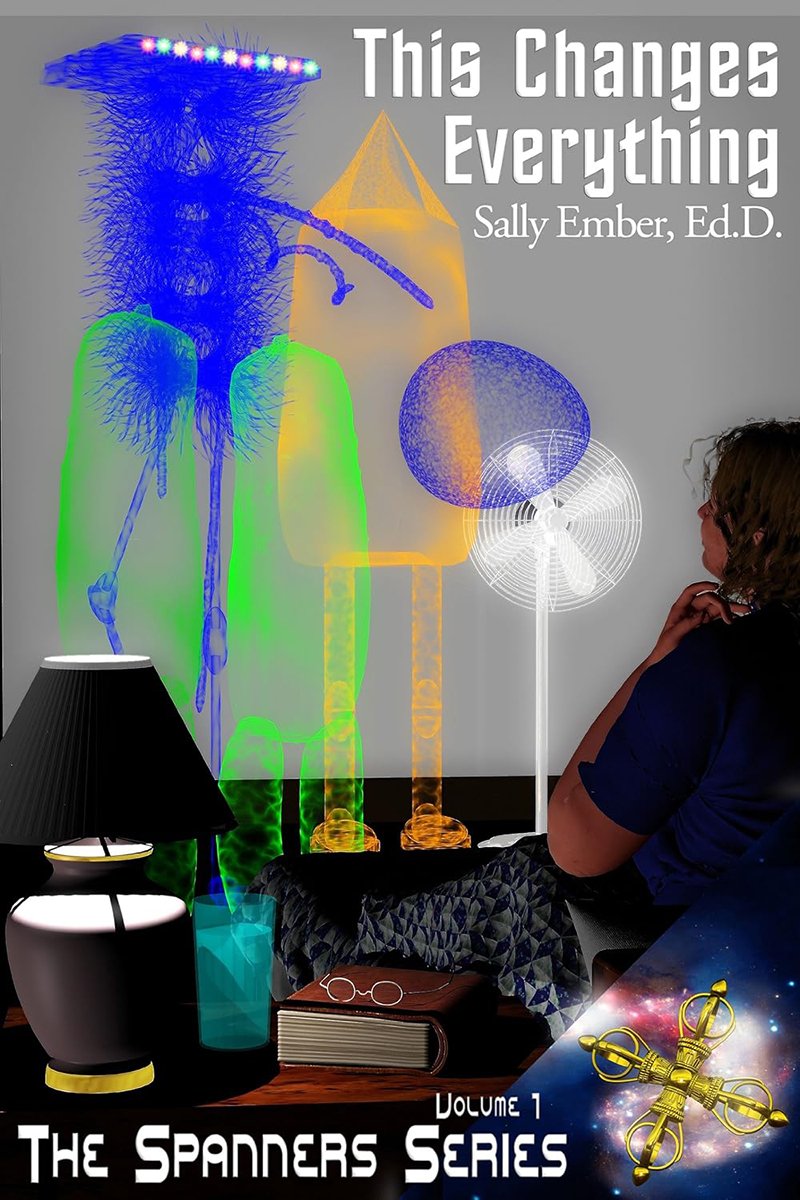
What motivated your decision to make the first volume, This Changes Everything, permanently free?
I self-published first in 2012, at a time when authors were beginning to do this frequently. In a very crowded field, it is hard to stand out. After much research into marketing and trends, I decided to ease access to my series by making the first ebook permanently free and hoped that readers would like it enough to purchase the next volumes electronically or in paperback.
What advice would you offer to aspiring authors interested in self-publishing speculative fiction?
I don’t know if writing speculative fiction constitutes a unique category regarding self-publishing, but given that traditional publishing houses of all types now provide very little in the way of author support, marketing or much of anything, offering no guarantees, AND they take a much bigger cut off any profits, I highly recommend self-publishing.
Unless you really believe your books are the types that agents can sell to traditional publishers, DIY.
Plus, if you object to all these non-authors taking a large “slice” of YOUR author’s “pie” while doing almost nothing for you, self-publishing is the way to go.
However, GET A GOOD EDITOR and PROOFREADER. Really.
EDITOR’S CHOICE
A bold, mind-altering masterpiece of speculative fiction that masterfully blends utopian ideals with intricate multiverse world-building and profound intellectual depth.
Sally Ember’s This Changes Everything is an ambitious, cerebral sci-fi novel introducing Dr. Clara Branon as Earth’s liaison to a multiverse collective. Favouring meticulous world-building and utopian themes over traditional tropes, the story explores global transformation, psychic warfare, and shifting timelines. It is a demanding, mind-altering read that rewards those seeking intellectual depth and intricate, speculative storytelling.