
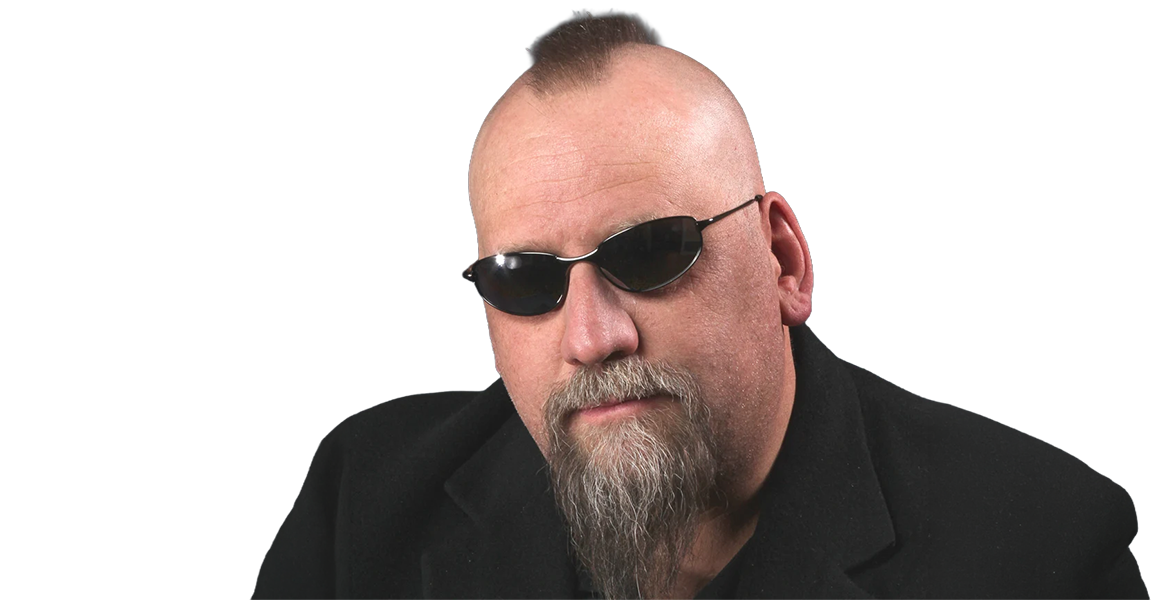
Photo: Quincy J Allen, cross-genre author and storyteller, known for blending noir, fantasy, and science fiction into gripping, imaginative narratives.
Blending Worlds Crafting Legends Defying Boundaries
Quincy J Allen discusses cross-genre storytelling, character creation, publishing realities, and balancing creativity with market demands, offering practical advice for writers pursuing speculative fiction across multiple genres.
Q uincy J Allen stands as a bold and uncompromising voice in contemporary speculative fiction, fearlessly blending genres to create stories that are as inventive as they are unforgettable. With a body of work spanning noir thrillers, epic fantasy, military science fiction, and steampunk adventures, Allen has carved out a distinctive space where creativity knows no limits.
From the award-nominated Chemical Burn to the immersive worlds of the Blood War Chronicles and the expansive Eldros Legacy, his storytelling thrives on complexity, energy, and a deep understanding of character under pressure. His narratives pulse with tension and authenticity, driven by a belief that extraordinary circumstances reveal the truest nature of both heroes and villains.
Allen’s experience as a writer, editor, and publisher lends his work a rare depth, balancing artistic ambition with a sharp awareness of the industry. Whether crafting short fiction or full-length novels, he approaches storytelling with discipline, intensity, and an unwavering commitment to entertaining his audience. In this insightful interview, Quincy J Allen shares his philosophy on cross-genre writing, character creation, and the realities of navigating both traditional and independent publishing landscapes, offering invaluable guidance for writers daring enough to defy convention.
Quincy J Allen delivers bold, genre-defying stories filled with grit, imagination, and compelling characters, establishing himself as a powerful voice in speculative fiction.
What inspired you to blend genres such as sci-fi, noir, and fantasy in your writing?
Like any foodie, I cook what I like to eat. Writing is very much the same. I wrote what I enjoy reading (and watching). You’ll find a lot of super-hero mojo in the sorts of characters I admired over the years. I figured, if I was going to write fiction, like any god I created what interested me most.
How do you approach creating unique and memorable characters for short stories versus full-length novels?
Envisioning the characters is an identical process. The difference is that you have less time to convey what’s under the hood—what’s in the psyche—so a more condensed story requires bringing those details to the surface more quickly and with conflict. Ultimately, it’s the combination of severe circumstances and our reactions to them that manifests our true self. That axiom is as true for fictional characters as it is for real ones.
Your Endgame series features a sci-fi detective noir protagonist—what drew you to combine these elements?
That novel—my first—sort of wrote itself. I’d just been laid off a solid IT income and had decided to risk dying a starving artist rather than go back to corporate America. If you read that novel (a bit rough and ready, to be honest), there’s a lot of me as well as a lot of classic male fantasy not just between the lines but all over them like bees on honey. The voice came naturally, and I suspect that Justin Case is just me in an alien, ex-government-assassin’s fictional body. I think that story reads the way it does because it’s pretty much exactly what I would have done if I were wearing Justin’s shoes (and trench coat). I wanted to make something entertaining, bizarre, full of righteous justice, and carried with really good fight scenes. The rest just sort flowed from that.
How does your work as a publisher and editor influence your own writing process?
I look at the writing process a little differently than many of my peers, at the time, at least. When you’ve worn all the hats I have, you find that their influences creep in during the creative process. There’s good and bad in that, but the publisher and editor in me definitely kept thoughts of length, market, production challenges, and myriad other factors that have very little to do with writing great prose that coveys the story of interesting characters.
Can you share your experience contributing to anthologies like The Monster Hunter Files and how it differs from solo projects?
I’ve done several media-tie-in projects, including both Monster Hunter, Inc. and Colt the Outlander. The difference—and I think it’s a mistake some authors (and directors) make—is that when playing in someone else’s sandbox, you have to know that sandbox well before you start digging, and when you do dig in, it’s more their voice you need to capture, not your own. Of course, it’s important that any story be your own, but being both aware and respectful of the house you’re being allowed to party in is an important aspect. I’ve seen to many authors (and directors) decide that their vision of someone else’s world and characters was acceptable. I disagree. The saying goes, “When in Rome, do as the Romans do.” Well, that applies here. It’s like entering a traditional Japanese home or an Islamic Mosque… they take their shoes off, so you damn sure better make sure yours come off before you go tramping around at their invitation. Respect. It’s all a matter of respect. In my own sandbox, I do it my way. In theirs… well, you get the picture.
What challenges do you face in maintaining consistency in long-running series like the Blood War Chronicles?
Ultimately, I think the key is re-reading the completed books again before you start the next installment. You have to immerse yourself in the setting and the head-space of those characters if you’re going to once again speak in their voices. Like Reacher says, “Details matter.” If you fudge over the details or, worse yet, make them inconsistent, you literally shake the underpinnings of the universe you want to create. The reader not only feels that quaking, it shakes them loose from the story and their overall experience.
How do you research the technical or fantastical elements in your stories to keep them believable?
Rabbit-hole research is always necessary, at least in some cases. Don’t get me wrong, my fiction doesn’t require a lot of hard-fast facts to hold it up. However, when dealing with historical characters or even the basic notions of physics, a solid understanding shored up by contemporary research is vital. It gets back to that “don’t jar the reading experience” notion. If you know the reader is going to have certain expectations, it’s up to the author to ensure—to the best of his or her ability—to meet those expectations. I think that’s why some of the more recent Star Trek and Star Wars endeavors have at least faltered. The new creators failed to adhere to that simple rule. Like in any consumer-specific business, it’s all about expectation management. Miss that mark, and you’re dead in the water.
How has living in Charlotte, North Carolina, influenced the settings or themes in your work?
In my case, it hasn’t been that much of an influence. My fiction has almost always been “elsewhere.” Granted, the Blood War Chronicles has a section that takes place in old Denver, Colorado, but beyond that, I was always writing about places long past the next horizon. Hell, most of my work takes place on other planets or even different realities, never mind being in different cities. North Carolina never really entered into it… although I love love LOVE my new home. Charlotte is a fantastic city, and like never before, I truly found a home here where I don’t think I’d ever actually had one before.
What writing tips would you give to aspiring authors trying to break into cross-genre fiction?
Ask one question first: “Do I want to go traditional path or independent author?” If you want to go Trad-Path, do not get into cross-genre. Frankly, even today the publishing world doesn’t quite know what to do with us because Barnes and Noble doesn’t know where to put our books. As an indie-author, you can write literally whatever you want… mix and match, push the envelope, test whatever waters you want to dive into. You’re going to be doing all the work yourself (pretty much) so all the risk and that uphill battle of finding an audience is in your hands and yours alone. Even in the indie market, though, it’s still difficult to find audiences because they’ve mostly been indoctrinated to look for what they want on those very same Barnes and Noble shelves (or Amazon categories). On the flip side, if you don’t care if you sell anything, then just write what your muse tells you… the black-and-white of those choices is a harsh reality, but a reality nonetheless.
What advice would you offer aspiring authors who want to get involved in anthologies and short story publications?
I’ll tell you what I’ve told every aspiring writer who asked that question at every convention I ever attended: Use websites like https://thegrinder.diabolicalplots.com/ (The Submission Grinder) and just start throwing stories out at the most likely editors and venues. There are several different sites like this, and the process is always the same. When you’re first getting started, throw stories at the “token pay” projects where you’re just getting your name out there. You’ll get lots of rejections at the outset. Take any advice they return to you to heard, and if they ask for revisions, for god’s sake DO THEM. Get your ego out of the mix. As you get accepted more regularly to the token markets (6 out of 10), start submitting to the semi-pro markets. As you start to place there, start submitting to the pro-pay markets. Also, never throw a story away. Keep them, rework them as your skills increase, and then when a market opens that might be a good fit, send it out.
How can authors balance writing for their own creative enjoyment with market expectations in genre fiction?
Take the time to craft your fiction to meet both requirements, if you want to be successful. It’s a job, after all. Do your job.
What strategies do you recommend for emerging authors to build a loyal readership across multiple genres?
Build your fanbase one reader at a time, cater to the devoted fans, and always do your best to keep your name and your writing in front of them as often as possible. After that, it’s just patience. The most successful authors these days aren’t necessarily the “best” writers, they’re the ones with the greatest stamina.