
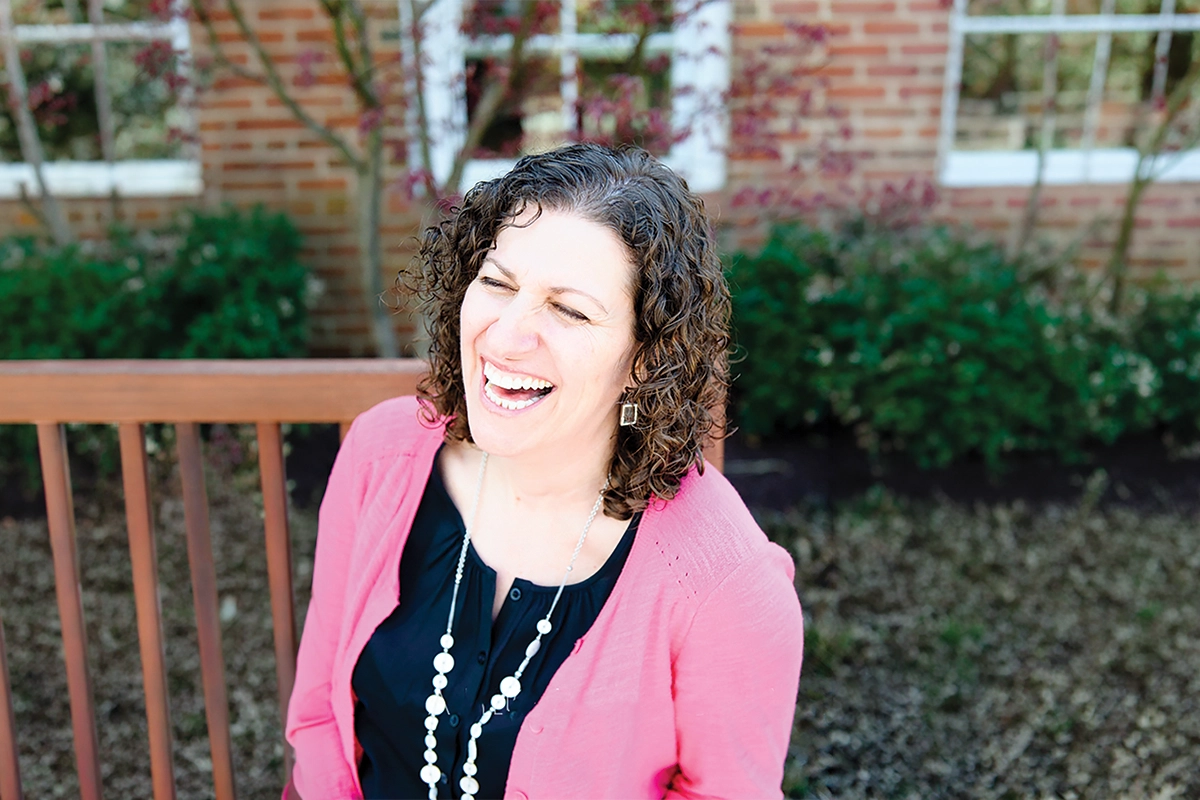
Photo: Michelle Ray, acclaimed novelist and educator, whose richly researched historical fiction and inventive literary retellings continue to enchant readers across generations.
The Past Never Truly Ends When A Great Story Refuses To Let It Go
Michelle Ray discusses historical research, Shakespeare, Jane Austen, theatre, teaching and the creative process behind crafting emotionally powerful novels that transport readers across centuries with unforgettable characters.
Michelle Ray writes with the rare ability to bridge centuries while making every emotion feel immediate. Whether reimagining the timeless worlds of Shakespeare and Jane Austen or venturing into the richly textured landscapes of history, she crafts stories that are intellectually engaging, emotionally resonant and irresistibly compelling. Her novels celebrate courage, resilience and the enduring complexities of the human heart, inviting readers to discover familiar tales through fresh perspectives while embracing entirely new adventures.
In this exclusive conversation, Michelle reflects on the remarkable journey behind A World on Fire, her ambitious historical novel set against the upheaval of the late fifteenth century. Drawing upon meticulous research and an extraordinary partnership with her medieval historian husband, she recreates a world of plague, piracy, exile, faith and survival with remarkable authenticity. Yet, beneath the historical detail lies what has always defined Michelle’s finest work: unforgettable characters whose hopes, fears and determination transcend time.
Equally captivating is Michelle’s passion for the classics. Her acclaimed retellings of Hamlet, Macbeth, Much Ado About Nothing and Pride and Prejudice demonstrate both deep respect for the originals and an inventive imagination that breathes new life into beloved characters. As a teacher, theatre director and lifelong admirer of Shakespeare, she possesses an instinctive understanding of dramatic tension, dialogue and emotional pacing, allowing every novel to unfold with the vividness of a stage production or cinematic experience.
Michelle Ray masterfully combines historical authenticity, theatrical imagination and emotional depth, creating unforgettable novels that captivate, educate and inspire readers worldwide.
Warm, insightful and endlessly imaginative, Michelle Ray reminds us that great storytelling is timeless because people themselves are timeless. Whether exploring medieval Europe, Regency England or the modern world, she continues to create novels that entertain, enlighten and leave a lasting emotional impression. It is a genuine pleasure to welcome an author of such creativity, scholarship and heart to the pages of Reader’s House.
What inspired you to write a novel set during the turbulent events of 1497, and what first drew you to this period of history?
My husband is a medieval historian, and, if I’m honest (he knows this, and we joke about it), I found his writing boring. Then one day, he started talking at a dinner party about his work — about plagues and pirates. My ears perked up. I already knew that the Jews were kicked out of Spain in 1492, but he went on to explain that they had been trapped in Portugal (a country in which many had taken refuge), and forcibly converted to Christianity, and that some escaped and made their way across the Mediterranean via North Africa and Italy to the Ottoman Empire. I asked him what would happen to a young woman traveling alone, and he said she would be raped and killed. When I asked what to do if I wanted to write a whole book about it so she would have to live, he said I would have to be creative. Challenge accepted! We worked on the book together, which was amazing. Pirates, plagues, land wars, religious acceptance and conversions, strife, family, love, refugees separated and attempting to reunite without modern technology fascinated me. Thus, the book A World on Fire.
How much historical research went into writing your novel, and did you discover any surprising facts along the way?
The entire thing was surprising. I did so much research because I knew literally nothing about life in the medieval Mediterranean. My husband was an extraordinary font of information, and I was proud that I only made two errors that he caught before it went to print: 1) no envelopes (I should have known that!) and 2) no tobacco since it had not yet come from the New World. Friends have told me they found the fact plot really sad, but the truth is, the real thing would have been worse. I cut out many of the grossest details, like a man who made a flag of skin, and too-crazy-to-believe facts, like a man saved from a shipwreck by a monkey on his shoulder tapping on the hull. But I loved discovering the everyday details of life, like how women tied their sleeves onto their gowns and how fun and wild card parties could get. I didn’t know that people slept in trash heaps to stay warm, or that women separated had to go to impossible lengths to prove that a husband was dead if they wanted to remarry, or all of the wild ways people tried to protect themselves from the plague. I loved learning about religious practices and architecture and even marriage rituals. Every day that I worked on A World on Fire I learned new things, and hope that readers enjoy learning about them, as well.
Beatríz faces incredibly difficult choices throughout the story. Which scene was the most emotional for you to write?
There are scenes that are just plain brutal, but I don’t want to spoil, so I’ll go a different route. Every time she left a place (and there is much moving about in the story), it was emotional. I hate goodbyes, and miss people with my full heart and soul when I go. I thought about that with Beatríz. Even before the troubles, her merchant fiancé would frequently leave for months at a stretch to trade, but the last time they part, they both know that the political winds are shifting, and it might mean an even longer separation. That uncertainty of how or if they would reunite tugged at my heartstrings as I imagined it.
Your background is in teaching, theatre and directing. How have those experiences influenced the way you write your novels?
I picture all of the scenes in my head as if they are a play. On stage and the page, one must create scenery and costumes, intention, emotion, and flow. As a writer, I have an endless budget, which is fabulous! Similar to directing, I ask my characters to do and say things a certain way, and, like actors, sometimes the characters refuse to comply. (Yes, my characters have minds of their own!) This can be frustrating, but ultimately often rewarding since the characters and actors are often right. I have learned in all forms of creation to let the process take me in unexpected directions and to be delighted with the ride.
You clearly love Shakespeare. Which of his plays has had the greatest influence on your storytelling, and why?
I do love Shakespeare. I don’t know that any one in particular has influenced my storytelling, but all of them together. The man knew how to keep tension going and to ratchet up the stakes and the drama, even in the comedies. Things are seeming okay for the characters? That cannot stand. Add another murder or a donkey head!
Your favourite books include Hamnet, Harry Potter, Code Name Verity and Pride & Prejudice. Which authors have shaped your writing the most?
Much like Shakespeare, I think it’s all of them together. I can never write like others, nor would I try, but I love action and heartbreak and a good laugh all together in one story. Each story that I am especially drawn to—and I don’t think I realized this until you asked this question—pulls at my heart really hard. I can picture myself in the best stories even if they take place at a magical school or in a Nazi prison or at a regency ball. The best writers create the time and place, as well as the mindset of the characters in compelling ways, and I strive to do that for my readers.
When writing a retelling of such a beloved classic, how do you balance staying true to the original with creating something fresh and unexpected?
“What if?” is the classic question of the writer, and I adore asking “what if” when approaching a retelling. When I was little, I couldn’t sleep and wasn’t allowed out of bed, so I made up stories, putting myself into whatever I was watching at the time. A favorite was Little House on the Prairie. Oh, how I loved being a Wilder sister in bonnets and milking cows and talking to Pa and Ma. I never lost the habit, it seems. The reason I choose stories like Pride and Prejudice, Hamlet, Macbeth, and Much Ado About Nothing is that the original characters and worlds are so compelling, and I want to spend more time there hanging out with these dear imaginary friends. By keeping what I love about the stories—indecision, humor in the face of embarrassment, pride, competitiveness, the hunger for power, regret, love, and friendship—I find it easy to put the characters in new situations and watch what happens. For example, I was watching High School Musical with my kids when they were little, and started thinking about the actors being trapped in the Disney machine that wanted them to stay young, wholesome, and in the same roles. Considering how challenging this had to be for the stars who probably wanted more, Mac/Beth was born. In thinking about Ophelia in a modern world, I didn’t want her to lose her ties to her family, but a modern girl wouldn’t be as compliant as the original, yet the predicaments of public shame and expectation are still there, and technology actually enhances the ways one can be humiliated and controlled. I keep my P&P variations in the regency period, so then I get to create new ways of keeping Darcy and Elizabeth Bennet dancing on the line of attraction and separation. Since I want them together, and love their banter and their struggles with society’s expectations, it becomes a fun game of staying within the confines yet thinking of a new scenario.
Do you ever find that your characters surprise you by taking the story in a direction you hadn’t planned?
It happens all the time! I am not a huge planner with my writing, which can be advantageous or a problem. I usually have a general outline for the overall story, but even that can change. One time my husband came downstairs and found me crying. He asked what happened, and I replied, “They broke up!” It took a while for me to explain that it was characters I was writing, and that, no, they could not simply un- break up because he said “X” and she said “Y”, and “you cannot come back from that!” My very patient husband shut the door and walked away. Good man! Listen, I go where the characters take me, and have found that, personally, I cannot argue with them. I have tried to force plots and scenarios, and they don’t work if I insist.
As someone who loves both novels and theatre, do you picture your scenes as if they are being performed on stage?
I absolutely picture the scenes as if they are being performed. More than that, I usually act them out. I don’t often get on my feet, but I read my work aloud with all of the emotion and intonation, and even accents (thank goodness I’m alone for that). I imagine the scenes as fully as if they were on stage or film, and reviewers and friends have mentioned that my books read like movies.
What are you working on now, and what can readers look forward to next?
Four Weddings and Four Funerals, my latest P&P variation comes out July 7. I’ve been mentally living in this regency world for a while, and while I enjoy it, after one more short story on the docket, I think I’m ready for a change. I actually want to go back to A World on Fire and the children of Beatriz since the early 1500s Italy were fascinating. Then again, I’ve been saying that I was going to write that one for years, and then other characters call to me. It’s hard to say, but every time I threaten to stop writing, my husband and friends laugh at me, knowing I can’t stop my imagination.
What writing tips would you give to aspiring authors who want to write engaging historical fiction or classic retellings?
For classics and historical fiction, aspiring writers should be prepared to do lots of research. The clothing, buildings, tools of everyday life, modes of transportation, and rules of manners have to be uncovered to make it accurate. Readers of classic retellings often do not like too much change, and one needs to know the fandom to see what is going too far. As for making it engaging, I think the thing to remember for both genres is that people are people no matter where or when they live. My husband just read me a letter to her son from six hundred years ago where she’s basically giving him a guilt trip for not writing more. Things don’t always change all that much. Readers want to feel connected to the characters and to be carried away into a new world, whether it’s their fictional favorite place like Pemberley or Venice in the early 1500s.
What advice would you give to aspiring authors who are trying to balance writing with work and family life?
I started really writing when my kids were just about to turn 1 and 4, and that was an insanely busy time but it helped me keep my mind busy in a way that I apparently needed. Now they are grown and out of the house, but I still have teaching and directing and a social life that keep me busy. I think everyone is different, but it’s important to not pressure oneself to write every day…unless that works for you. One author friend used to wake herself at 5 a.m. to ensure she was writing before her children woke. That did not work for me. I am very able to work with commotion around me—a huge part of being a teacher is embracing noise—so I could write with my daughters playing in the room where I was working, and thought about plot ideas at the playground. Everyone is different, but the key is to keep going even if it’s a page a week. Add those up and you have a story!
If Shakespeare joined one of your middle school English lessons, what do you think he’d make of today’s students?
I think once Shakespeare got past the surface (girls in pants! Electronic devices! School buildings that house an entire town’s worth of humans!) he would see that not much has changed. I mean he wrote, “Love goes toward love as schoolboys from their books. But love from love toward school with heavy look,” so he understood the nature of the young. But really, he would probably love their enthusiasm for life and flair for drama. And he would likely appreciate that they still enjoy his work. I read Romeo & Juliet with my students, and each time we get to the balcony scene, I’ll be darned in those kids don’t swoon, and when the famous lovers kill themselves, my students always get upset. Every time! I say, “Guys, they literally told us in the prologue that this was coming,” but as a person who screamed when watching the filmed Jessie Buckley R&J that come out onscreen during Covid, I get it. It works. Shakespeare would likely appreciate that young people still give themselves over to a good story.
If Beatríz, Elizabeth Bennet and Mr Darcy all found themselves at one dinner party, who would end up doing most of the talking?
Elizbeth and Beatríz might compete for talking time. I think they would find each other fascinating and would compare injustices of how women moved through the world even hundreds of years apart, and would despair for each other’s dramas. They would understand the stresses of women’s worth being tied up with marriage prospects, and of challenging mothers who want the best but do not always act in ways their daughters find helpful. Mr Darcy would listen with appreciation and interest, but would keep his counsel.
If one of your fictional characters had to direct one of your favourite musicals, who would you choose, and which musical would probably end in complete chaos?
That is a hilarious question. I think Mr Darcy would direct either Into the Woods, appreciating Sondheim’s tight structure and musical rules that are then broken, or My Fair Lady, as he would connect with the plot of English strictures of language and custom, and an appreciation of a leading lady who does not fit neatly into its limitations. I do think that Mr Darcy would find actors too difficult to work with. Too many feelings, too much uncertainty.