
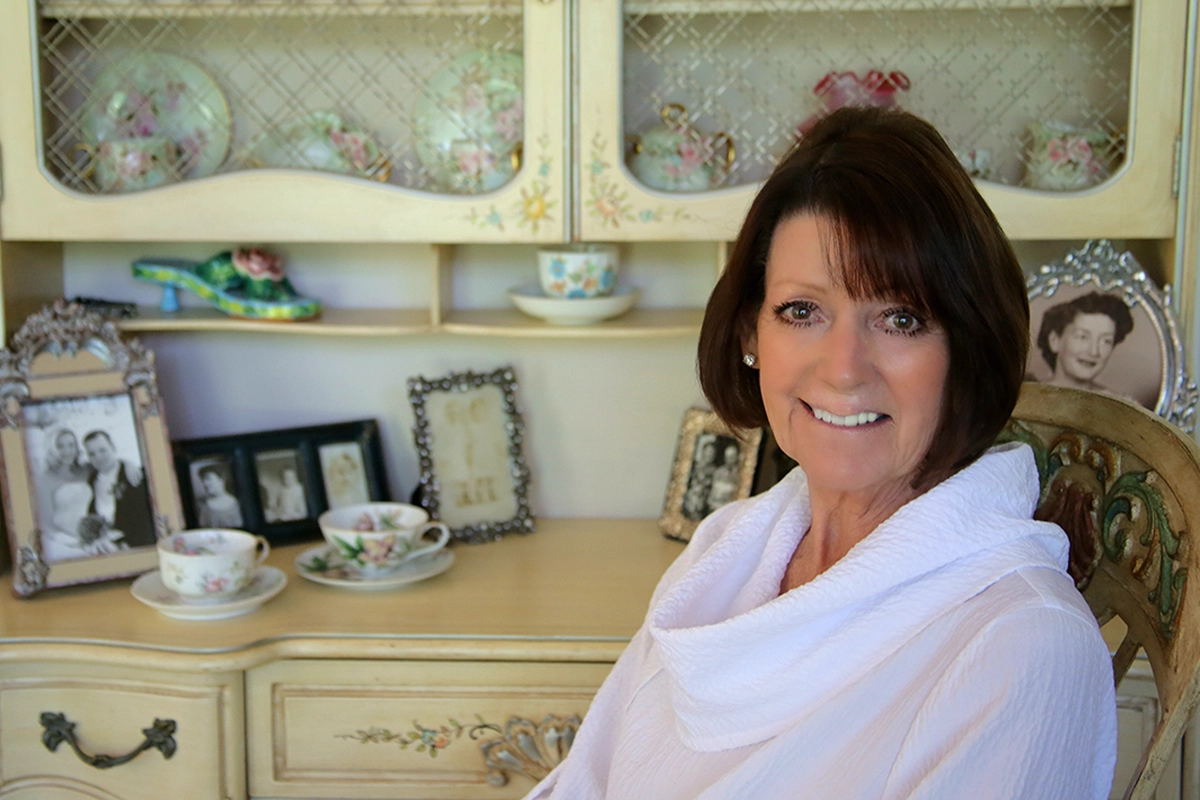
Photo: JoDee Neathery, the celebrated East Texas author behind award-winning literary fiction, shares her inspiring journey and captivating narratives.
Award-Winning Stories of Secrets, Suspense, and Human Spirit
East Texas author JoDee Neathery shares her unconventional writing journey, inspirations behind her award-winning novels, and how landscapes, family, and morality shape her captivating stories of humanity and resilience.
J oDee Neathery, the multi-award-winning author from East Texas, exemplifies the timeless allure of storytelling. With a gift for crafting deeply moving narratives, her works, Life in a Box and A Kind of Hush, have garnered acclaim not only for their literary brilliance but also for their emotional depth and rich characterisation. These novels, celebrated by readers and critics alike, delve into the complexities of human relationships and unforeseen tragedies, unveiling truths that resonate universally – themes that underline her distinctive voice in contemporary literary fiction.
Her debut, Life in a Box, emerged as a unique exploration of family secrets and tangled destinies, evoking the question: how far would one go to protect a secret? Lauded as “an all too rare literary gem” by the Midwest Book Review, it established her as an inspiring storyteller. Her sophomore novel, A Kind of Hush, not only elevated her reputation but redefined the bounds of family sagas intertwined with suspenseful mystery. Set against the vividly contrasting landscapes of New York’s Zoar Valley and Texas’s majestic Big Bend, the novel sparkles with intelligent prose and a poignant examination of moral ambiguity. It’s no wonder A Kind of Hush has been celebrated as a finalist or winner in an impressive list of prestigious literary awards.
Now, with her eagerly anticipated third offering, Wings Against the Wind, JoDee continues to captivate with her signature blend of literary elegance and compelling storytelling. Early reviews suggest another masterpiece is on the horizon, with praise for its finely crafted characters and evocative landscapes.
What makes JoDee’s journey remarkable is not only her gift with words but the path she took to get here. Without formal authorial credentials, she weaved her early love of storytelling, the encouragement of her East Texas book club, and her life’s challenges into an inspiring tapestry of perseverance and creativity. Through her vivid imagination, her ability to transform fragments of memory and real-life incidents into enthralling tales, and her focus on crafting narratives that speak to the complexities of the human condition, JoDee has etched her name among noteworthy storytellers.
Highlights from the Interview
- JoDee’s unique path from jazz teacher to banking and finally to a celebrated author.
- The inspiration for A Kind of Hush from a newspaper clipping and her research into Zoar Valley and Big Bend.
- Exploring morality and forgiveness through her novel’s grey areas of right and wrong.
- Reflections on healing old wounds while writing Life in a Box.
In this interview, JoDee Neathery shares her insights into the craft of writing, the landscapes that shape her stories, and the emotional truths that linger long after the final page is turned. We are certain that her reflections will inspire readers and fellow writers alike. Prepare to be taken behind the scenes of her award-winning novels and into the mind of a truly extraordinary literary force.
JoDee Neathery’s masterful storytelling and profound characterisation elevate her novels to unforgettable masterpieces of literary sophistication and emotional depth.
What first compelled you to trade jazz hands for a banking ledger, and how did that early detour shape the discipline you bring to writing today?
I was a student teacher for jazz and ballet classes throughout high school. After graduating my eye was on attending a small liberal arts college in Louisiana, majoring in dance with aspirations for a Broadway career. My very practical daddy strongly suggested that unless I wanted to be a teacher or nurse, finding a job was a better option, thus my jazz hands turned into typing hands as I was employed as a secretary in the installment loan department of a bank. Public relations recruiting was my next career move before we retired to a golf course/lake community in East Texas. A stage 4 melanoma diagnosis pushed urgency to the forefront, and I recalled Pat Conroy’s statement that four of the most powerful words in the English language are “tell me a story” and I had one to tell.
I believe the detour made me appreciate both the difficulty and rewards tied to following my writing dream. Disappointment fuels determination and even without “author credentials” I was willing to take a risk and I’m glad I did.
In A Kind of Hush, the landscape itself feels almost culpable; how consciously did you allow the gorges and shale cliffs of Zoar Valley to steer the moral ambiguity of the plot?
I clip newspaper articles that interest me and put them in a shoebox labeled, “What’s next” and the idea for A Kind of Hush evolved from one such article. Two young brothers and their parents were hiking in Zoar Valley ending up on the edge of a cliff which collapsed. I researched the area learning it consisted of over two thousand acres, but some places are dangerous due to steep walls and unstable rocky terrain. With Zoar Valley close to Buffalo, New York, it presented itself as a viable outing for the Mackie family and somewhere a tragedy could unfold. I wanted to contrast that setting by coming home to my state, choosing the Big Bend area in far West Texas. It is a massive national park big enough to swallow Rhode Island and geographically where the Rio Grande makes a one-hundred-mile end around the Chisos Mountains on its way to the Gulf of Mexico. The area boasts of an unexpected stillness, “all you can hear is a birdsong and your thoughts.”
“We must continue to create unforgettable characters, settings,
and emotional journeys that speak to human experiences. AI cannot replicate these.” – JoDee Neathery
Both locations, although different in landscape, served not only as settings, but as characters symbolizing the uncertainty of existence and our place in the universe. I wanted the contrast between the danger of the Gorge and the peacefulness of Big Bend to play a role in the exactness of the tragedy, hoping readers would relate to the nuances of both settings and how they contributed to moving the story forward.
The novel withholds a firm verdict on the tragedy; do you believe fiction has a duty to leave space for reader doubt, or were you simply honoring the untidiness of real grief?
As the title suggests, there is a gray area between right and wrong. I wanted the characters to consider the moral and ethical dilemmas of the choices they made but ultimately as indicated in the ending, I wanted readers to consider what it takes to forgive and move on from tragedy. Some readers have commented they wanted Willa to be punished for her role in her mother’s death. Matt’s attitude gave his daughter a chance to be a better person, which would not have been possible if she’d been locked behind bars and I felt in my heart I would have made the same decision in that situation.
Life in a Box sprang from a literal box of family artifacts; what was the single most unsettling discovery you made in those journals and how did it alter your relationship with your mother?
My mother died in 1985 and writing her character I was as truthful as possible when categorizing our relationship. She was beautiful inside and out but had a coat of armor that surfaced when she felt vulnerable – and at those times, she retreated into her “life in a box” to escape. As a child, I thought the change in demeanor was my fault, rather than her insecurity about her place in my heart. I was Daddy’s girl and I’m sure she felt unappreciated and maybe unloved. Writing her character forced me to evaluate how we both treated each other. Going through all the memories closed inside the box allows me to see her as she was and not how I perceived her. The healing process continues and writing this book has helped build courage to achieve more dreams and to accept and embrace criticism without retreating inside my box.
You weave two sets of twins across centuries and continents; did you ever fear the puzzle would become too intricate for readers, and how did you decide when enough threads had been tied?
My editor commented that Life in a Box just spewed like a volcano from my mind to the words on the page to the development of the characters. We added a family tree, a table of contents and broke the text into separate segments for the Smith and Brown families. The ending tied it all together and answered all the questions and the emotion of the accomplishment was overwhelming.
The book club ladies of East Texas are thanked as early believers; which of their collective comments first convinced you the manuscript was more than a private indulgence?
The manuscript took five years to write and when it was finally finished, they were as excited as I was as they knew they contributed to its completion. I published a book review of Olive Kitteridge and one of our members forwarded it to the author. She responded with glowing praise for the creativity and writing and sent an autographed copy. My Bookers group saw this as affirmation that it was going to be worth the wait and stood at the finish line until I crossed it. They’re still waving their pom poms!
Having watched both traditional banking and executive recruiting upended by the internet, how do you predict AI will reshape the publishing ecosystem for mid-list literary novelists?
The publishing industry evolved from a printing press to eBooks to audiobooks and AI will be a player going forward. It’s scary wondering if human authors can exist in an AI world and how we will use the new tools to tell stories. We must continue to create unforgettable characters, settings, and emotional journeys that speak to human experiences. AI cannot replicate these without our guidance and creativity that focuses on the uniquely human elements of storytelling.
What practical ritual – be it longhand morning pages, a locked-door hour, or a scented candle – would you urge other authors to adopt when self-belief falters?
I keep a notepad beside my bed and scratch out thoughts during the night hoping by morning, I’ll be able to read what I wrote. When I hit a creative wall, the notepad is blank, so I read.