

Photo: Award-winning author J. D. Edwards, whose evocative prose explores the delicate intersection of myth, memory, and the human spirit.
Where Beauty Meets Danger
J. D. Edwards discusses the evolution of The Faerie Chronicles, exploring how sequels shift from discovery to responsibility, the complexities of shattered diplomacy, and the emotional resonance of buried pasts.
J . D. Edwards stands as a rare and compelling voice in contemporary literature, an author whose breadth of vision and depth of feeling place him firmly among the most intriguing storytellers of our time. With an oeuvre that traverses epic fantasy, historical fiction, horror, theology, and poetry, Edwards writes with both intellectual precision and emotional clarity. His narratives do not merely entertain; they invite reflection, challenge perception, and linger long after the final page is turned. It is precisely this fusion of imagination and insight that makes his work so deserving of both critical acclaim and devoted readership.
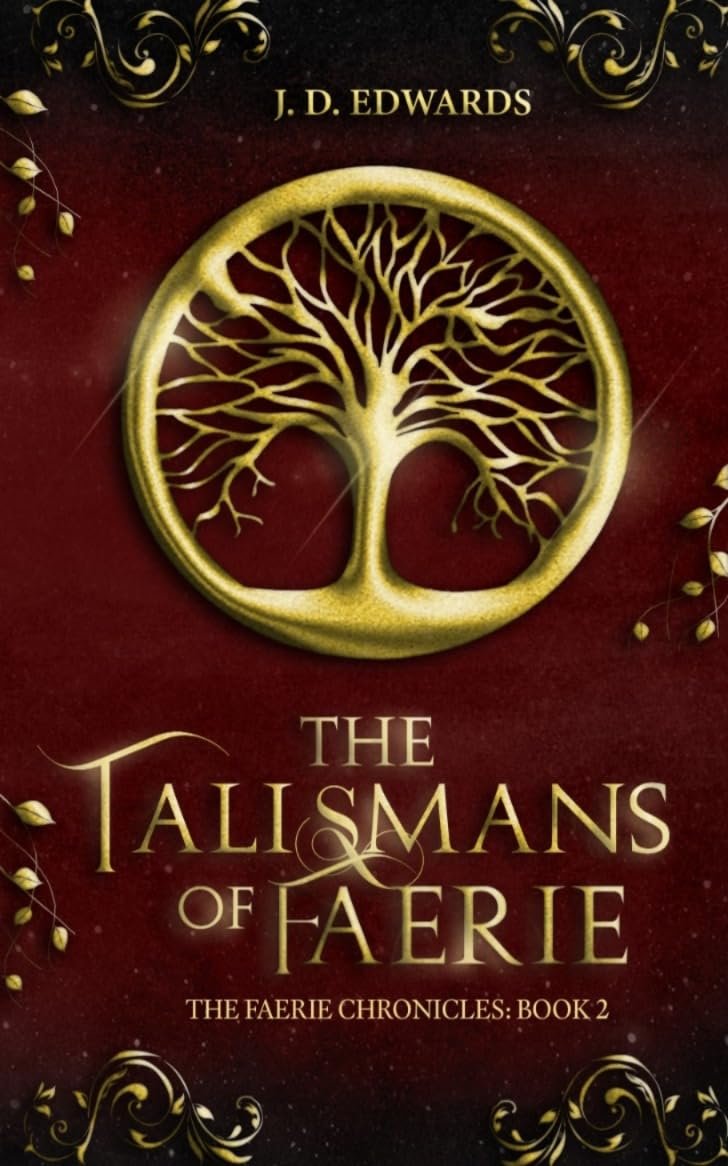
What distinguishes Edwards most profoundly is his ability to weave together the mythic and the human with such quiet authority. In *The Scions of Faerie* and its compelling continuation, *The Talismans of Faerie*, he constructs a world at once enchanting and unsettling, where beauty coexists with consequence and every choice carries weight. Rooted in Celtic myth and enriched by meticulous historical research, his storytelling bridges realms—both literal and metaphorical—inviting readers to journey not only across landscapes but into the complexities of identity, faith, and legacy. His Amazon bestselling novel *Indomitable: The Story of Eliza Harris* further demonstrates his remarkable versatility, illuminating history with the same care and resonance he brings to fantasy.
Throughout his distinguished career, Edwards has garnered numerous awards and accolades, yet he remains, at heart, a storyteller devoted to truth—whether found in the annals of genealogy or the shadows of imagined worlds. His work reflects a profound understanding of human nature: its frailties, its resilience, and its enduring hope. Each page bears the mark of a writer who approaches his craft with both discipline and reverence.
Reader’s House is proud to feature J. D. Edwards as our cover star, not only in recognition of his literary achievements but in celebration of a voice that continues to evolve and inspire. At a time when storytelling often seeks spectacle, Edwards offers substance—rich, layered, and deeply humane. This interview provides a glimpse into the mind behind the magic, a conversation that reveals the thoughtfulness, conviction, and creative spirit that define his work.
Edwards is a masterful storyteller whose profound emotional depth and historical precision create an immersive, world-building experience unlike any other.
Highlights
- The Shift in Stakes: Why the sequel moves from curiosity to the heavy burden of choice.
- Shattered Peace: An inside look at the political collapse between the Fey and the Dryads.
- Darker Foundations: How the author allowed the narrative tone to grow naturally from character choices.
- Mythic Diplomacy: The challenge of rebuilding trust in a world scarred by old grudges.
What inspired you to continue the journey of Drew and Ian in The Talismans of Faerie, and how did you decide the direction this darker chapter would take?
I continued Drew and Ian’s story because there was more left to say. In The Scions of Faerie, they step into a world of wonder, but only brush against the wounds beneath it. I wanted to explore the places where beauty meets danger and where the past refuses to stay buried. The darker tone wasn’t forced; it grew naturally from the choices they made. Peace is fragile, and old grudges don’t vanish with signatures on a page. I wanted this book to illuminate Faerie’s shadows and let the characters choose their destiny when the world asks more than they expect.
How does The Faerie Chronicles evolve in this instalment compared to the earlier books in terms of tone and emotional depth?
This book enters deeper waters. The Scions of Faerie holds the excitement of discovery, but The Talismans of Faerie carries the weight of responsibility. The characters aren’t just reacting to the world; they’re shaping it, and that brings pressure. The emotional stakes rise because their choices echo far beyond their own lives. The tone shifts because the world is still beautiful, but the shadows stretch longer, and the cost of every decision becomes harder to ignore. It’s where innocence gives way to understanding.
The fragile peace between the Fey and the Dryads is shattered early in the novel. What drew you to explore political tension and diplomacy within a fantasy setting?
Fantasy lets us explore real human struggles through a mythic lens. The tension between the Fey and the Dryads reflects how difficult reconciliation truly is. Peace isn’t a moment; it’s a long, uneven journey filled with missteps. I wanted to show how easily fear can undo progress and how hard it is to rebuild trust once it’s broken. Diplomacy in a fantasy world gives a little distance, but the emotional truth remains the same. People carry old wounds, and healing them takes patience, humility, and courage.
The quest for the Soul Stones drives much of the plot. What do these talismans symbolise for you beyond their magical significance?
The Soul Stones, or Pangari, are more than relics. They’re pieces of history, fragments of memory, and shadows of Faerie’s soul. They symbolize the parts we lose to fear and division. Recovering them forces the characters to confront the past and understand it without dwelling in it. Those deeper wounds become more visible as the series continues. The Pangari represent unity by reminding the races of who they are and what they owe to one another. They’re a call to responsibility, honesty, and healing.
Drew undergoes profound personal change during the story. How did you approach writing his evolving identity and inner conflict?
Drew’s rebirth was something I wanted to handle with care. In The Scions of Faerie, he’s a human caught between two worlds. When he encounters the Memory Tree, he’s forced to face truths he long avoided. His rebirth is as much spiritual as physical. He must decide what kind of man he wants to be and whether he’s willing to carry the weight of his new identity. I let his journey unfold through choices that define the man he becomes, even when it scares him.
The world of Faerie expands to include Naiads, Elves, Korred, and Fachan. How do you balance rich world-building with maintaining narrative pace?
World-building should serve the characters, not overshadow them. Every new race must reveal something about the world they inhabit. When Drew and Bi Ann meet the Naiads, it shows the costs required to retrieve the Pangari. The Elves expose pride and prejudice. The Fachan test their courage, while the Korred reveal why they trusted Turok. Every discovery provides character growth, allowing the world to expand without slowing the story. The pace remains steady because the world pushes the characters forward.
Your earlier works such as The Soul Reaper and A Samhain Night’s Scream also explore darker themes. Do you find yourself naturally drawn to the shadowed side of storytelling?
Like humanity, the characters contain both light and darkness. The Pangari reveal their character, exposing their true selves when the light grows thin. I write darkness because it reflects life. People face fear, loss, and doubt, but I always balance the shadows with hope. I believe in resilience, loyalty, and the strength that carries people through difficult moments. The darker themes give substance to the narrative light.
With over seventy genealogical articles published since 2012, has your historical research influenced the mythology and lore within your fantasy writing?
Absolutely. Genealogy teaches you that every family carries stories of triumph and heartbreak, and that history is rarely simple. Hidden connections and choices echo across generations. Those ideas shape the mythology of Faerie. The races carry ancient wounds, but their conflicts didn’t begin with Drew and Ian. They’re rooted in events long forgotten. The Pangari are tied to the past in ways the characters must uncover. My research helps me build a world where history matters and where the past defines opportunities for growth.
Having received recognition from organisations such as The Ohio Genealogical Society and Carolina Bards, how has award recognition shaped your confidence or creative process?
Awards are encouraging because they remind me that my work resonates with people. Recognition gives me the confidence to take creative risks and trust my instincts when a story asks me to go deeper. It also reminds me to stay humble and teachable in craft and discipline. Awards are a milestone along the path, not the destination.
What challenges did you encounter when writing separate narrative paths for Drew and Ian, and how did you ensure their journeys remained emotionally connected?
The greatest challenge was keeping their journeys emotionally connected. They face different trials, but their bond remains the heart of the story. I grounded their paths in shared purpose. Both are searching for the Pangari, fighting for unity, and carrying the weight of prophecy. Even when separated, their choices shape one another’s futures. Their friendship is the thread tying the story together, and I wanted readers to feel that connection even when they walk separate paths.
What writing tips would you offer to aspiring authors who wish to craft immersive fantasy worlds with emotional resonance?
Create flawed characters. A world can be vast and beautiful, but it becomes meaningful only when readers care about the people who inhabit it. Build your world around emotional truth. Ask what your characters fear, what they long for, and what they’re willing to sacrifice. Let the world challenge and change them. Reveal your world through their eyes, not through exposition. Write with honesty. Readers can feel when a story comes from a place of sincerity.
What broader advice would you give to aspiring authors seeking perseverance and success in today’s publishing landscape?
Rejection is part of the journey. Keep writing, reading, and learning. Surround yourself with people who believe in your work. Protect your creative time and celebrate small victories. Remember that success is measured by growth not speed. Every story you write brings you closer to defining your voice.
EDITOR’S CHOICE
A thrilling, imaginative fantasy packed with rich lore, gripping stakes, powerful magic, and unforgettable characters. An epic sequel that captivates completely.
Edwards expands the world of Faerie with an engaging blend of prophecy, politics, and dark magic. Drew Prescotts struggle to understand his powers while trying to save his cousin keeps the tension high throughout the story. The pacing is fast, the stakes feel real, and the mythology grows richer with each chapter. A strong sequel that deepens the conflict and leaves readers eager for the next installment overall and satisfying.
Where Beauty Meets Danger
J.D. EDWARDS
AWARD WINNING AUTHOR
Weaves A Haunting New Chapter In The Faerie Chronicles
ISSUE 62
Editorial: Why J. D. Edwards Graces the Cover of Reader’s House Issue 62
At Reader’s House, our cover is never chosen lightly. Each issue celebrates a writer whose work does more than entertain—it expands the boundaries of storytelling, invites readers into deeper reflection, and leaves a lasting mark on contemporary literature. For Issue 62, we are proud to feature J. D. Edwards, an author whose imagination, scholarship, and emotional insight have combined to produce one of the most compelling fantasy series of recent years.
Edwards represents a rare and powerful fusion of disciplines. A poet, historian, genealogist, and storyteller, he approaches fantasy with both the precision of a researcher and the lyricism of a literary craftsman. His acclaimed series, The Faerie Chronicles, exemplifies the kind of storytelling that resonates with modern readers: rich in mythology, grounded in emotional truth, and unafraid to explore the shadows that shape human experience.
What distinguishes Edwards is his ability to transform fantasy into something deeply reflective of the real world. Through the evolving journeys of Drew and Ian, he explores themes that extend far beyond magic and myth—identity, responsibility, reconciliation, and the enduring impact of history. In The Talismans of Faerie, the series matures from a tale of discovery into a profound meditation on choice and consequence, reminding us that the most powerful stories are those that mirror our own struggles for understanding and unity.
Equally remarkable is the depth of Edwards’ world-building. Drawing on years of genealogical research and historical study, he crafts a universe where every race, alliance, and conflict carries the weight of memory and legacy. The tensions between the Fey and the Dryads echo the fragile realities of diplomacy and reconciliation in our own world, while the quest for the Soul Stones becomes a symbolic journey toward healing and collective responsibility.
Recognition has followed naturally. From literary awards to critical praise, Edwards’ work has resonated with readers and scholars alike. Yet what makes him truly deserving of this cover is not simply acclaim—it is his commitment to storytelling that is honest, immersive, and meaningful.
In this issue’s star interview, Edwards offers a rare glimpse into the mind behind The Faerie Chronicles: the inspirations that shape his narratives, the emotional journeys of his characters, and the philosophy that guides his craft. His reflections reveal a writer deeply attuned to the complexities of both myth and humanity.
At a time when readers seek stories that transport them while still speaking to the truths of our world, J. D. Edwards stands as a powerful voice in modern fantasy. His work reminds us that the most enduring myths are those that illuminate who we are and who we might yet become.
For these reasons—and for the extraordinary journey he invites us to take—we are honoured to present J. D. Edwards on the cover of Reader’s House, Issue 62.