
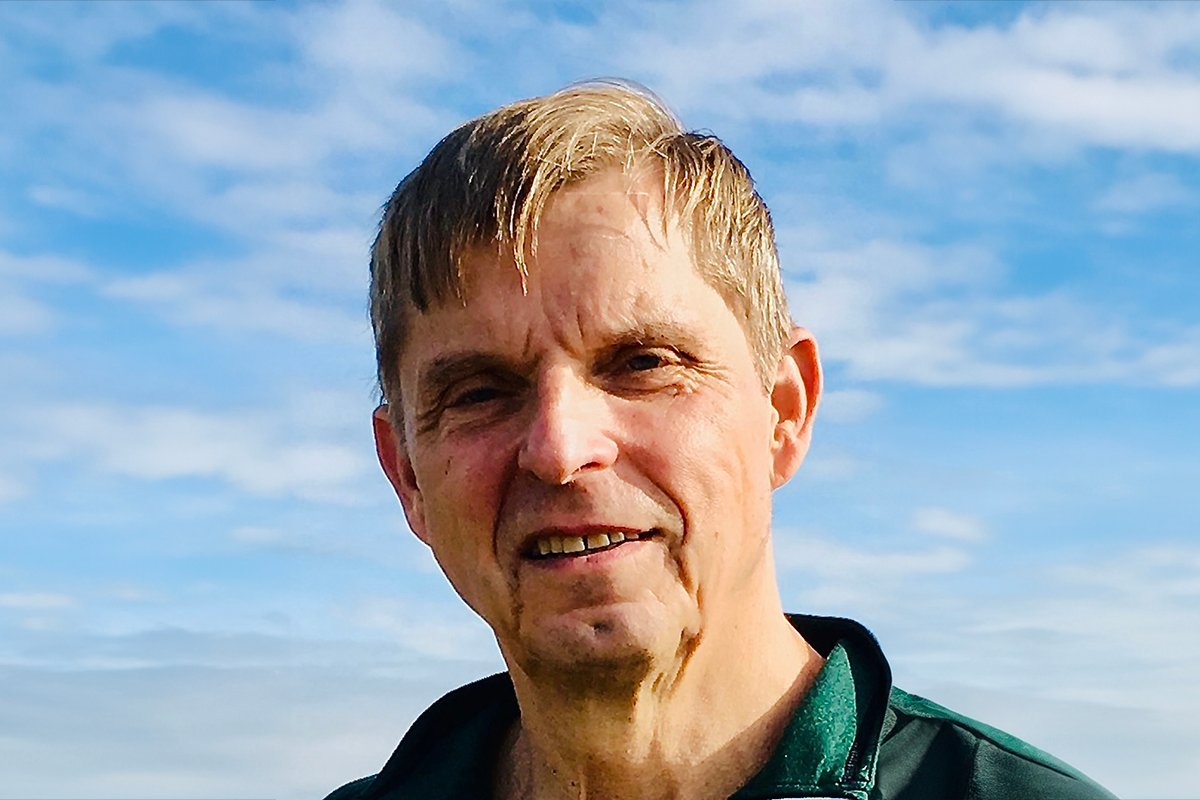
Photo: Geza Tatrallyay, acclaimed author and poet, known for his compelling tales of espionage and environmental awareness.
International Intrigue, Environmental Themes, And A Life Rich In History
Geza Tatrallyay discusses his inspirations for writing thrillers and memoirs, weaving personal history with geopolitical themes across multiple literary genres.
Geza Tatrallyay is a remarkable force in contemporary literature, an author whose works weave together thrilling narratives with profound reflections on personal and global histories. Born in Budapest and having escaped the political turmoil of 1956, Tatrallyay’s life story is as compelling as the fiction he crafts. His rich tapestry of background—from a Rhodes Scholar at Oxford to a Canadian Olympic fencer—imbues his writing with a unique depth and perspective that resonates with readers around the world.
With an impressive catalogue of nineteen published works, including six thrillers, six poetry collections, and several memoirs, Tatrallyay’s literary contributions span a remarkable spectrum of genres. His novels, particularly the “Twisted” trilogy, tackle intricate themes of espionage and international intrigue, often drawing upon his own experiences and historical contexts. His poetry, on the other hand, reflects a deep connection to nature and a poignant concern for environmental issues, revealing another facet of this multifaceted writer.
Geza Tatrallyay’s work showcases a masterful blend of personal history and thrilling narratives, captivating readers with depth and insight.
This interview explores Tatrallyay’s creative process, the inspiration behind his varied works, and his insights on the convergence of personal narrative with broader geopolitical themes. His passion for storytelling, rooted in a life rich with experience, invites readers to embark on journeys that are both thrilling and thought-provoking. As Geza Tatrallyay shares his insights, we are reminded of the power of literature to illuminate the complexities of human experience, making this conversation not only engaging but also profoundly relevant in today’s world.
What inspired you to begin writing international political thrillers, and how do you weave your global experiences into your plots?
Given my family’s background, escaping from Soviet oppression in Hungary in 1956, it seemed natural for me to write such thrillers. Also, when we were living in Vienna with my wife between 2004 and 2009, it was a no brainer – after all, the former Imperial Capital is historically an entrepot for international intrigue and spying. My favorite movie, The Third Man, based on Graham Greene’s wonderful novel, is set there immediately after World War II, and I thought it would be fun to write a modern-day take-off on it. Since The International Atomic Energy Agency is there, and there was quite a bit of concern then about the possible heist of some nuclear material from a former Soviet site, Twisted Reasons all came together naturally.
How did your early interest in the environment and human sciences influence the themes you explore in your books?
At Harvard, my mentor was Professor Roger Revelle, who was one of the first to point to the agency of greenhouse gases in global warming. Also, two summers spent in the Arctic in my student days working for the Geological Survey of Canada, already then made me acutely aware of climate change. So the environment enters most of my thrillers, but in particular, Arctic Meltdown and Arctic Inferno which are set against the backdrop of the melting polar icecap and the increasing potential for conflict up there. Much of my poetry (especially the volumes Extinction, Extinction Rebellion, The Abyss and “Beastie” Poems) is about the beauty of nature, and what we are doing to the world around us, other species and ourselves with our lifestyle
Your memoirs reflect deeply personal and historical events—how do you balance emotional truth with narrative structure?
I have not really had issues with this – my memoirs take place during important historical times, when the Cold War shaped geopolitics: For the Children, the 1956 Hungarian Revolution, The Expo Affair, mostly in 1970 at the time of Japan’s emergence from isolation, and The Fencers, during and leading up to the historic Olympic Games in Montreal in 1976. Clearly, my emotional and experiential perspective has influenced the writing and no doubt comes through, but in each case, I build a well-researched historical context around the stories. All three “events” – our escape, and the defection approaches at Expo 70 and at the Olympics, inherently had a natural and thrilling plot built in to the attempts, so the narrative just flows in concert with the emotional truth.
In the “Twisted” trilogy, how did you approach the research required to write convincingly about nuclear material trafficking and espionage?
It is amazing how much you can learn on-line, which is where I did most of my research. Through Google Maps, for example, I was able to zoom myself right into the Mayak site in what is now Russia where the heist takes place. Also, the browser would lead me to scientific and historical research papers that were extremely useful.
Many of your books involve Russian antagonists—how do you ensure your portrayals remain nuanced and avoid stereotypes?
Again, largely through research and extrapolation from what I could find online. In most cases, the antagonists – as well as the protagonists – are modelled on real life persons, with characteristics added or taken away to fit the needs of the storyline.
What was the emotional impact of revisiting your own escape from Hungary in “For the Children” and later Cold War memoirs?
I would say reliving them through the writing was cathartic more than anything else. I remembered our escape visually, and, as I was only seven at the time, I did not understand what was happening around me until much later. But it was emotionally satisfying to put it all on paper against the appropriate historical context and eventually see the three books published.
How do you switch between writing thrillers, poetry, memoirs, and children’s literature—do you approach each genre differently?
Again, the switch comes naturally to me and is not really conscious – it just happens! Poetry is perhaps the outlier in terms of process – it is different from the other genres. A poem usually starts in the brain around a theme, a vision or an emotion, that then brings up words that I the play around with, until the poem emerges. I tend to write short, non-rhyming, but rhythmical poems – I don’t like the false sense that forcing lines to rhyme creates. In memoir, the story is largely there as it is something I have lived, and it shapes itself: the key is to add the appropriate context. Thrillers and other fiction I tend to get an idea and try to develop an outline of where I want to take it, but then, as I write the novel it assumes a life of its own and takes previously unimagined turns and brings in characters as needed. My most recent book, The Purple School Bus Murders, a murder mystery set in Vermont is the outlier – it grew from the vision of a deserted vehicle on a field that my wife and I pass on our walks. I first wrote a short story, The Purple School Bus, that was published in my collection, The Mind Spins. I found though, that there could be an interesting and fun back and front story to the episode, so one day I just started answering some of the outstanding questions with no outline, and the novel created itself – I had no idea upfront where it would go.
What advice would you give to aspiring authors who want to draw from personal or geopolitical experiences in their writing?
For me, this is a very rewarding process – to create something based on your personal experience and in the appropriate geopolitical context. In all my prose – and I guess poetry too – I weave in my own personal experience, and most of my prose is set in a well-researched historical context. I love putting all this together, and I am sure aspiring writers will find the same. Keep at it and good luck!

Leave a Reply