
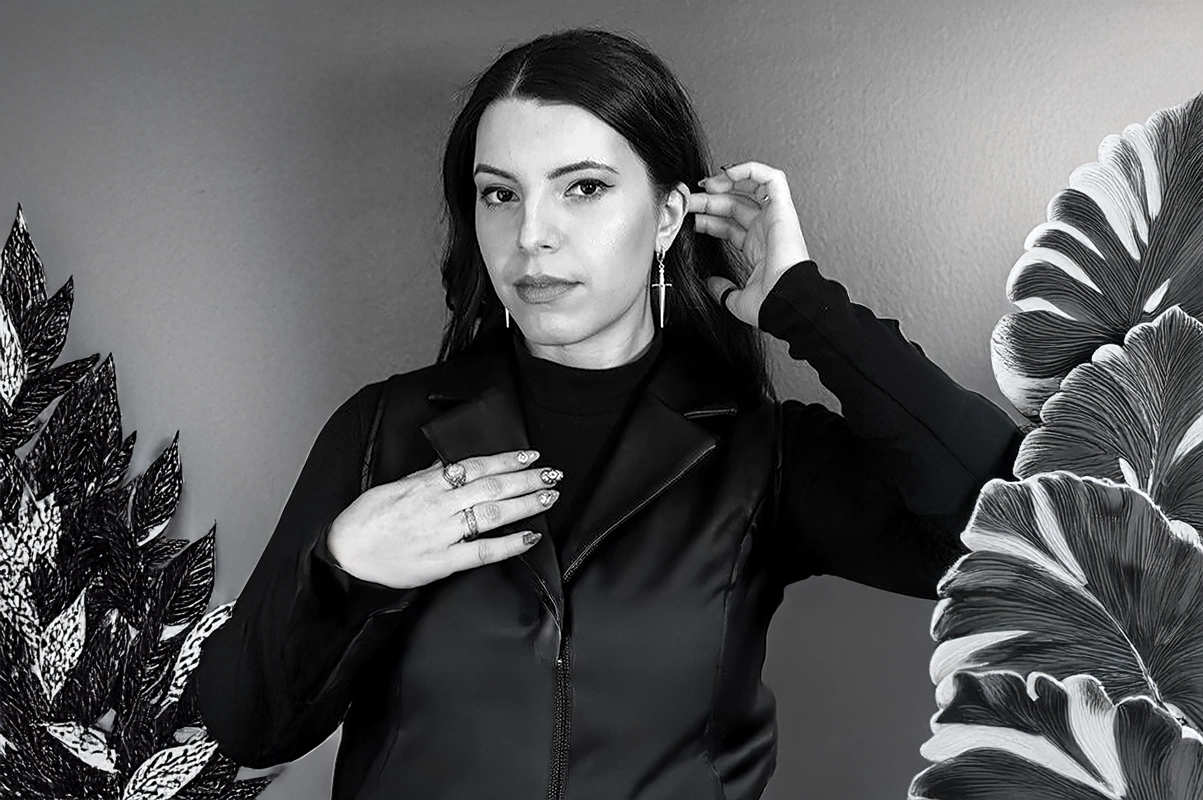
Photo: Elizabeth Caroline, author of Everything Blue and the Adapted series, creates stories filled with heart, resilience, and identity.
Writing Through Empathy and Growth
Elizabeth Caroline, a Black British author, discusses her writing process, character-driven storytelling, exploration of themes like identity and grief, and advice for aspiring young adult fiction writers.
E lizabeth Caroline is a luminous voice in young adult fiction, weaving narratives rich with emotional depth, character vulnerability, and themes of identity, belonging, and resilience. As a Black British author of mixed heritage, Elizabeth’s ability to create stories that resonate with young adult readers is both inspiring and impactful. Her works, including Everything Blue and the first two novels of the Adapted series, have captivated readers with their blend of character-driven storytelling, poignant themes, and thought-provoking narratives. In this exclusive interview, Elizabeth offers us a heartfelt glimpse into her creative process, her influences, and her commitment to exploring sensitive yet deeply human experiences such as grief, growth, and the search for belonging. Prepare to be inspired by this exceptionally gifted storyteller.
Elizabeth Caroline’s deeply moving, character-driven narratives enrich young adult fiction with their authenticity, emotional depth, and vibrant imagination.
What inspired you to write about characters with unique abilities in your Adapted series?
The original idea actually came from stories I used to tell my children at bedtime. Claudia was an OC I’d created from the Superman universe. She had immense abilities, but she didn’t want to be a superhero, she just wanted to fit in.
When I initially started writing, it wasn’t in order to publish it. But as the idea grew and I wrote more, I gradually moved away from the Superman world and created her own setting, backstory and set of circumstances.
I’ve always been drawn to characters who navigate the world differently, whether that’s because of their abilities, their upbringing, or the emotional weight they carry. So, her superpowers were never the point in my original stories. It was about staying true to who you are despite being different, and finding those people who will accept you even when they see the parts of you that you try hardest to hide.
How do you balance the blend of urban fantasy and contemporary narratives in your stories?
People are already so familiar with superheroes and other characters with fantastic abilities, so blending those elements with a contemporary setting feels very natural to me. Because of that, I like to turn the focus toward the parts of the character that feel real and relatable. I never want the fantasy to overshadow the human story.
If a character can throw a car across a car park but can’t say “I’m scared,” the real tension isn’t the super strength, it’s the vulnerability.
For me, that’s where the balance works best. The fantastical disrupts the everyday, but the everyday keeps us grounded in the character’s story and makes it believable.
“You don’t need permission to be a writer. If your stories won’t let you rest, you are already a writer.” – Elizabeth Caroline
Can you tell us more about your writing process and how you develop your characters?
I’m a big believer that characters make the story, so I always start with them. If I’m honest, they pop up in my mind long before their story reveals itself. From there, I get to know what they fear, what they avoid, what they want but won’t admit even to themselves, and once I know that, the story forms naturally around their emotional journey.
I’m not much of an over-planner and usually have my stories completely written out in my head months (sometimes years) before they ever make it onto the page. I do a lot of “walking drafts,” where scenes come to me when I’m cooking or folding laundry or trying to sleep at 2 AM. Then, when I sit down to write, I mostly follow the characters. They’ve already shown me their story, so I’m just the one putting it into words.
What themes do you aim to explore in your books, and how do you convey them to your readers?
The biggest themes I return to again and again are identity, belonging, and, more recently, grief.
I tend to explore these themes through my characters’ journeys, such as the choices they make or the things they avoid, and the small, seemingly trivial moments that reveal hidden pain. When these nuances help a reader feel a character’s loneliness, hope, or fear, I feel I’ve allowed my character’s story to come to life.
It’s really important to me that my work is a genuine and sensitive exploration of these feelings and not a lecture.
Grief and trauma feature strongly in my last book and I didn’t want to make it too heavy-handed. I aimed more for ‘this is how it feels,’ hopefully giving readers space to feel their own way through it.
“As long as there is blue in the sky, there’s still hope.” – Elizabeth Caroline
How do you create the world-building in your stories, particularly in the Everything Blue story?
The world-building in Everything Blue was based on my imagining of how the world might look five years after the adults disappeared, and what would be a reasonable reality. I started by asking questions like:
- How constructive would teens who’ve been left unsupervised be?
- What of our modern world would be impossible for them to upkeep?
- How would family structures adapt in a world where survival came first?
From there, the wider world evolved organically: gangs emerged along with their slightly juvenile survival negotiations, and the line between right and wrong blurred, with only a few left who recognised that structure and order were vital to survival.
The characters also played a large part in shaping the world. If they’re able to navigate through my world in a believable way, it makes it easier for readers to become absorbed into the story.
What is the significance of the title Everything Blue, and how does it relate to the protagonist’s journey?
In the beginning, Tori, the MC, reminisces on watching clouds drift across a blue sky with her best friend, Nate, and, later, blue is noted as her favourite colour. As the New World begins to corrode, the sky turns grey, coinciding with her loss of Nate. So Blue is a representation of all the things she’s lost.
From a personal point of view, I find blue to be a peaceful colour, and a blue morning sky has always brought me comfort. I have a personal motto, “As long as there is blue in the sky, there’s still hope.” So, in naming my book, I felt that blue was deeply significant as it symbolises everything Tori’s lost, and everything she’s still fighting for.
“Write the story that won’t leave you alone, not the one you think will sell.” – Elizabeth Caroline
How do you handle writing about sensitive topics, such as grief and trauma, in your young adult novels?
I aim to explore pain honestly, without glorifying it or sensationalising it. In Everything Blue, Tori experiences profound loss and grief, and I wanted readers to feel the ache of holding on too tightly, as well as the small steps toward healing. I don’t believe we need shock when discussing trauma, we need empathy. We need to give readers a mirror where they might recognise their own emotions and feel less alone.
Ultimately, my goal is to create stories where pain is acknowledged but not permanent, where grief is visible but tempered by moments of life, and where readers can emerge with a sense of resilience. Writing through empathy allows me to show that even in the hardest times, healing and hope is possible.
What advice would you give to aspiring authors who are looking to write their own young adult fiction novels and get them published?
My first advice is to write the story that won’t leave you alone, not the one you think will sell. Your passion can bring your story alive more than well-practiced prose.
Also, a few things I stand by, and some I’ve learnt along the way:
- Always write characters first, everything else second. Characters can make or break a story more than the plot can.
- Your first draft is allowed to be messy. Just get your story out and work through it later.
- Don’t focus on trying to sound “professional.” Your authentic voice is your greatest strength.
- And most importantly: You don’t need permission to be a writer. If your stories and characters won’t let you rest until you write them down, then you are already a writer.