
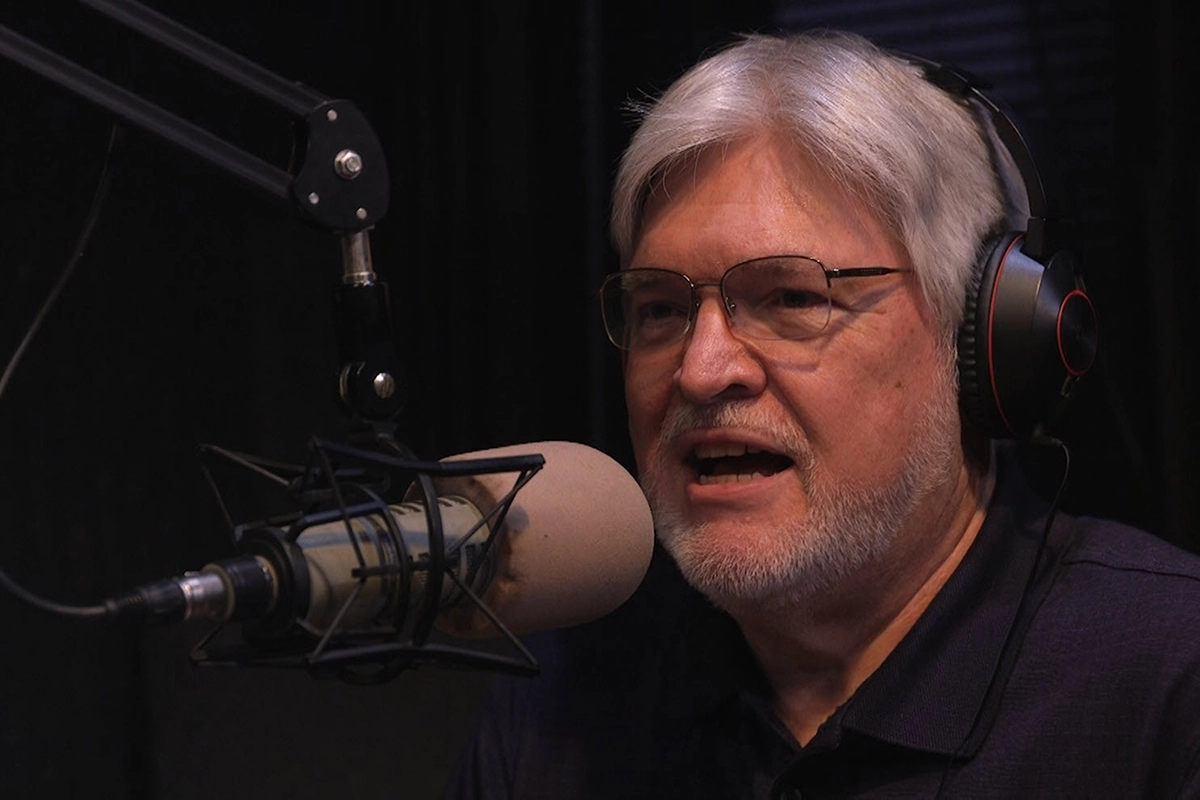
Photo: Award-Winning Author Don Keith – A Visionary Storyteller Bringing History And Heroes To Life.
Best-Selling Author Don Keith On Writing Thrills And History
Award-winning author Don Keith discusses his passion for historical fiction, his research process, cinematic writing style, and the enduring appeal of camaraderie and authenticity in his thrilling novels.
Don Keith, an extraordinary storyteller and a titan in the literary world, holds a unique place in the hearts of readers around the globe. With a flair for crafting gripping narratives and a remarkable ability to breathe life into history, his works stand as a testament to his artistry and dedication. An award-winning and best-selling author, Don’s military thriller Firing Point, now immortalised as the blockbuster film Hunter Killer, has captivated audiences with its intense action and compelling characters. His collaborations with esteemed professionals, such as former submarine commander George Wallace, lend his stories an extra layer of authenticity, while his newest series, A Call to War, promises to continue this tradition of rich, historic storytelling.
Don’s diverse career as a broadcaster, journalist, and writer has not only shaped his voice but also solidified his reputation as a master of multifaceted storytelling. Twice crowned Billboard Magazine’s “Radio Personality of the Year,” Don’s deep understanding of human emotion and conflict, as well as his commitment to historical and personal accuracy, shines through in memorable works like The Kaboom Boys and the Tides of War series. These tales do more than entertain—they celebrate the courage and camaraderie of unsung heroes who face unimaginable odds.
In the interview that follows, Don Keith shares fascinating insights into his inspirations, his meticulous research process, and his enduring passion for storytelling. Whether spinning tales of World War II bravery, exploring the psychological depth of submarine crews, or offering cinematic vibrancy to audiences thirsty for authenticity, Don Keith proves time and again that he is as versatile as he is masterful. Sit back and allow this accomplished author to take you on a journey through history, humanity, and the art of narrative.
Don Keith is a literary genius, masterfully combining compelling narratives, authentic history, and heartfelt characters that captivate readers worldwide.
What inspired you to write about World War II and the naval aspect of the conflict in your books?
I look for good stories wherever I find them. A good story, to me, is one in which seemingly ordinary people are placed in challenging situations and proceed to do remarkable things. Those who serve in submarines in wartime certainly meet that criterion!
How do you conduct research for your historical fiction novels to ensure accuracy and authenticity?
Whenever possible, I talk with people who have undergone the types of situations about which I write. That not only gives me backup for the typical types of research but also the warm-blooded human angle that I try to bring to my stories. I don’t just write about battles and troop movements and politics but about the real men and women who have participated in such broad, sweeping events and at all levels of the military.
By the way, I often co-author with people who have unique experiences in the realm I want to create. The HUNTER KILLER SERIES of submarine/Navy SEAL thrillers is co-written with former US Navy nuclear submarine commander George Wallace. My new series, A CALL TO WAR, and its initial release, now available, THE KABOOM BOYS, is co-authored with Elaine Hume Peake, a former award-winning TV journalist, and is based on some of the real experiences of her father. He was one of the first bomb demolition captains in World War II, trained in part by the RAF, and went ashore in France shortly after D-Day in 1944. The whole plot line about his squad defuzing bombs near Mont Saint Michel in Normandy actually happened.
“So many of those who volunteer for submarines…are average people who make the choice for varied reasons. That meets the first requirement for what I consider to be the perfect story.” – Don Keith
Can you tell us about your experience as a broadcast journalist and how it has influenced your writing style?
The main thing—besides always being accurate in my reporting—was to learn to tell a story in a powerful but concise way. That means every word counts and writing must be clear and unencumbered by long sentences, complicated construction, over-writing, and unnecessary descriptions and imagery. In other words, do the opposite of what I just did in that previous sentence. This is even more important when the “reader” is listening to an audio book.
Your books often feature strong bonds of friendship and camaraderie amongst the characters, can you discuss the importance of these relationships in your stories?
I could say that emphasis on bonds of friendship in my books was an accident, but the truth is, in the types of stories I tell—not all of them, by the way—such loyalties are how my characters, real or imagined, get through truly trying situations. Men in the torpedo room of a submarine or who are part of a US Army bomb disposal squad have to rely on that kind of close relationship in order to face the dangers they must. They also rely on training, humor, and bravery, too. Being a little bit crazy also helps.
“Two have already been adapted for theatrical release. The military thriller HUNTER KILLER…was a major motion picture.” – Don Keith
How do you balance action and suspense with historical detail and factual accuracy in your writing?
I could give you a long list of wonderfully dramatic scenes and moving accomplishments of key characters that ended up being deleted simply because I was unable to verity key details (or the entire episode) of an actual event around which the scene revolved. I also try not to let too much detail get in the way of story and pacing. If the reader wants more detail about what happened in the place or action, he or she can look it up. I only deal with what is important to the story.
Yes, fiction gives me much more leeway, but when I am tying a scene around an actual historic event, I simply cannot change time, location, or details to suit my beautiful narrative. I often joke about fiction writing consisting of making up lies for money. But the fact remains that any kind of fiction—even fantasy or science fiction—must still rely on a touchstone to reality. That gives the reader some basis from which to approach the story and characters, even if they both venture into decidedly non-realistic territory.
“Write about humans. Have them do things humans would and could do.” – Don Keith
What draws you to the submarine genre and the stories of the brave men who serve on these vessels?
So many of those who volunteer for submarines (and nobody is drafted into submarines in most of the world…it is an all-volunteer service) are average people who make the choice for varied reasons. That meets the first requirement for what I consider to be the perfect story. Then, all I have to do is allow them to do remarkable things! Bingo! A perfect story! That applies to most of my stories, even beyond the submarine/Navy SEAL thrillers and WWII historical fiction.
Your writing has been praised for its cinematic quality, do you envision your books being adapted into films or television series?
Two have already been adapted for theatrical release. The military thriller HUNTER KILLER, the first release in the series that bears its title, was a major motion picture starring Gerard Butler, Gary Oldman, Linda Cardellini, and Common. Another book, DREAM ON, the biography of a highly respected African American painter who was once a drug dealer for a street gang, was produced as a documentary titled COLORS OF CHARACTER and received theatrical release. Both are still streaming on various outlets worldwide.
We have early exciting film interest already in THE KABOOM BOYS, both as a theatrical release and as an episodic streaming TV series. And George Wallace and I have just released the first book in a historical fiction series, TIDES OF WAR, and believe there are great cinematic possibilities for it as well as the series. ARGENTIA STATION is set in the days before the US entered WWII, yet our heroes serve on submarines in the North Atlantic, assisting the British Navy against Nazi Germany. Along the way, a plot to assassinate President Franklin Roosevelt and Winston Churchill during a clandestine meeting at Argentia Station Naval Base in Newfoundland is discovered and it is up to our young submarine officers to thwart the plan. And yes, that was a real meeting between the two world leaders.
What advice would you give to fellow authors who are looking to write historical fiction or thriller novels, particularly those who are just starting out in their writing careers?
Write about humans. Have them do things humans would and could do. Avoid cardboard stereotypes. Make sure readers can identify with and care about the people who populate your stories, whether that be a seaman who cleans toilets or an admiral that plots major operations. That applies to villains, too. The reader must understand why they do the evil things they do. And, as noted, be accurate. Don’t twist history to fit those wonderful scenes or events you want to crowbar into the narrative, even if they don’t fit. Many—maybe most—readers may never notice, but others will. And they are only too happy to reveal such in their reviews on Amazon, Goodreads, and other outlets.