
Photo: David Harrison Horton, the Beijing-based experimental writer and artist, reshaping literature through creativity, visual ingenuity, and intellectual depth.
Challenging Literary Norms With Form And Meaning
David Harrison Horton redefines experimental literature by exploring visual forms, linguistic precision, and human self-placement, creating works like Maze Poems, Necessary, and Model Answers that challenge and engage readers.
D avid Harrison Horton stands as a luminary in the realm of experimental literature, where boundaries are flexible and form is perpetually redefined. Based in Beijing, Horton is not only a writer but also an artist, editor, and curator whose multidisciplinary approach to creation has positioned him as a pivotal figure in contemporary literary innovation. His ability to blend poetry, prose, and visual design elicits intrigue while challenging traditional notions of how literature is consumed and crafted. From his distinctive Maze Poems to introspective works such as Necessary, Horton is reshaping how readers interact with language, meaning, and form.
In his 2022 book Maze Poems, Horton presents readers with literal mazes filled with words, transforming poetry into a labyrinthine experience where the act of reading becomes exploratory. Reflecting on the project, Horton shared in an exclusive interview with Mosaic Digest magazine how the concept evolved over a decade of experimentation with the maze as a poetic structure. “First, I would create the maze. This gave the piece its actual form. Then, I would write continuously until the maze was filled with words,” he explains. For Horton, these mazes represent streams of thought—constructed visually to slow the pace of reading and encourage deliberate engagement with language.
David Harrison Horton is a literary pioneer whose innovative artistry, intellectual ingenuity, and fearless experimentation redefine the boundaries of contemporary writing.
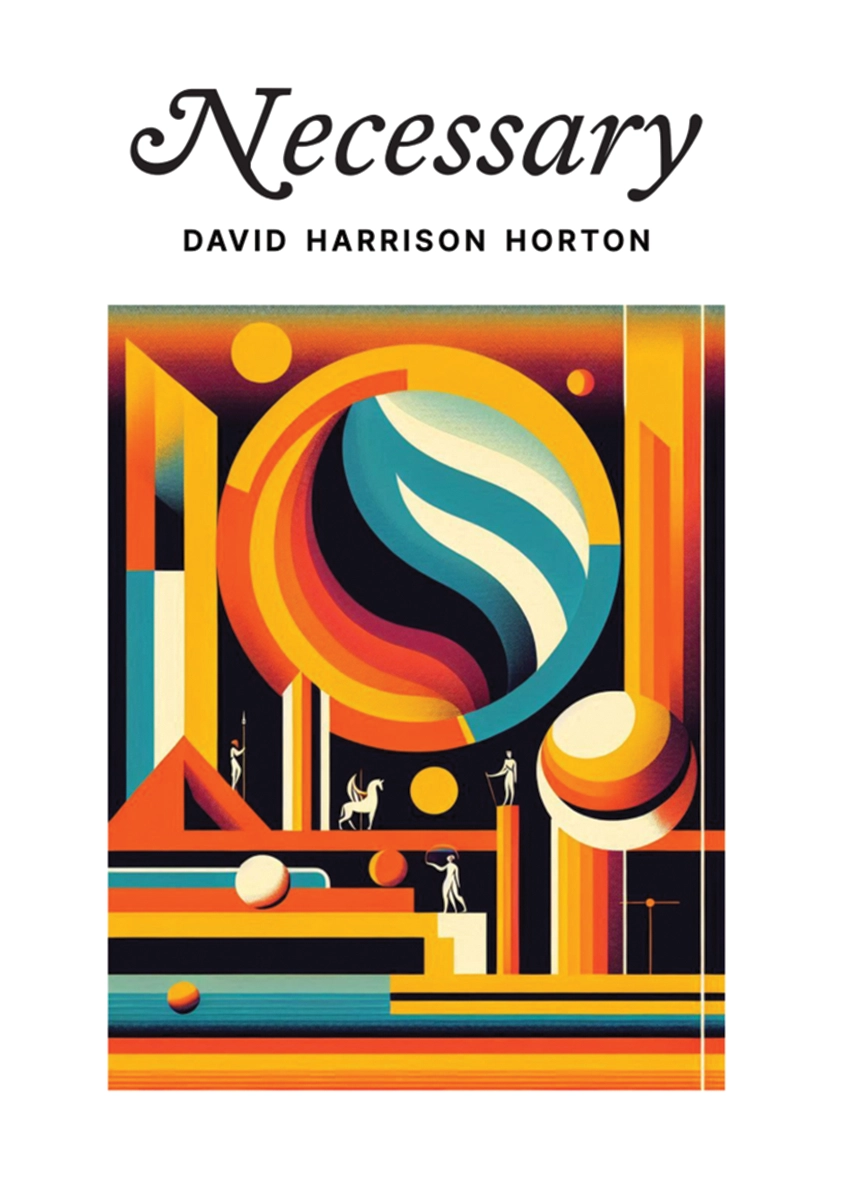
When questioned about Necessary, an earlier and meticulously restrained work, Horton shed light on its thematic core of placement and identity. Written after he moved from the San Francisco Bay Area to Nanjing in 2002, it explores the connections between geographical positioning, personal history, and cultural traditions. “We all choose how we place ourselves, and the terms we use to define this placement shape how we see ourselves and our experiences,” he notes. Horton crafted the poetry in Necessary with minimalist precision, challenging readers to interweave fragmented threads of imagery and emotion. “Because of the restraint used, Necessary is open to many different readings and understandings,” he adds.
Horton’s experimental trajectory continued with Model Answers—a 2024 chapbook blending linguistic play and dissonance while subverting conventional text formats. Inspired by the rigid structure of model essay books offered for standardised tests, Horton infused these writings with increasing unpredictability as they unfold. This exercise in “negative cohesion,” as he describes, pushes the boundaries of thematic drift while maintaining an underlying sense of connection. “One of the main concerns with Maze Poems,” Horton elaborates, “was purposefully slowing the reading speed down, to focus on how we, as readers, are creating meaning out of language with the activity of reading.”
“We all choose how we place ourselves,
and the terms we use shape how we see ourselves and our experiences.”
– David Harrison Horton
Horton views experimental literature as more than a matter of structure; he sees it as a dialogue between form and content. Responding to Mosaic Digest, he reflected: “Form shapes how the writer approaches content and impacts how it is presented to the reader. Using innovative structures offers new ways of looking at and presenting the content. This, hopefully, will give the reader a new way to connect with it.” His creative philosophy underscores how form modifies perception, using constraints or visual disruptions to enhance the reading experience.
In addition to transforming form, Horton’s personal journey has also informed the humanistic themes present in his works. He cites memories and encounters—figures like “Mr King in Oakland” or “Mr Godston in Chicago”—as direct influences for Necessary. These characters, from his own history, symbolise the universal questions of belonging and identity he wrestles with in his writing. Horton describes how personal experiences blend with creative exploration to produce work “open to many different readings,” allowing each reader to interpret the meditative fragments through their own lens.
However experimental his creations may be, Horton retains an affinity for accessibility, play, and curiosity. Describing Model Answers, Horton remarked that while exploring serious linguistic challenges, the process itself carried a sense of joy. “I hope these come across as just as fun to read as they were to write,” he says, encouraging readers not to fear the disruptions caused by unconventional literary forms.
As a vocal advocate for experimental literature, Horton has words of encouragement for emerging writers. His advice is simple yet profound: “Try it and see if it breaks. If it doesn’t break, keep going until it does or until you reach the end of your investigation into that form.” He urges individuals to read voraciously, both contemporary and classic works, to expand their toolkit and fuel their imaginations.
Through his masterful mix of disruptive creativity and grounded meaning, David Harrison Horton challenges readers to redefine their relationship with literature itself. His works, from the labyrinthine Maze Poems to the introspective Necessary, push us to embrace uncertainty, perceive differently, and ultimately discover our own truths. In doing so, Horton continues to stand as a transformative force in the world of poetry and experimental writing—as essential and innovative as the works he creates.
EDITOR’S CHOICE
David Harrison Horton’s Necessary is a masterful, thought-provoking poetic tapestry, blending history and imagery into profound, resonant reflections.
David Harrison Horton’s Necessary is a striking exploration of fragmented narratives and the resonance of history. Through vivid imagery and influences spanning Babylonian creation myths to modern cultural references, Horton crafts a poetic tapestry that examines how we inherit, reshape, and reconcile the past. Structured with precision, the collection presents snapshots of poignant moments, anchored by the enigmatic Mr. Lusk. His journey through layered landscapes mirrors universal themes of memory and survival. Necessary is a profound and challenging work, inviting deep reflection on the stories that define us.