
PHOTO: Brian A. Plank, Canadian author and mental health advocate, photographed in a moment of thought and quiet resilience.
Exploring Life, Resilience, And The Mission To Educate Through Fiction
Canadian author Brian A. Plank discusses his battle with mental illness, his unique writing perspective shaped by engineering, and the therapeutic power of storytelling in his book The King Who Would Be Man.
Brian A. Plank’s life is a tapestry interwoven with threads of resilience, introspection, and a profound commitment to understanding the human condition. Born in Hamilton, Ontario, his journey as a writer began as soon as he could put pen to paper, a storyteller driven by the need to make sense of both the external world and the inner landscapes of the mind. For years, he balanced the demands of a career in engineering with his creative aspirations, only to find himself confronted with the challenges of mental illness—a force that reshaped his path and deepened his perspective in ways he could never have foreseen.
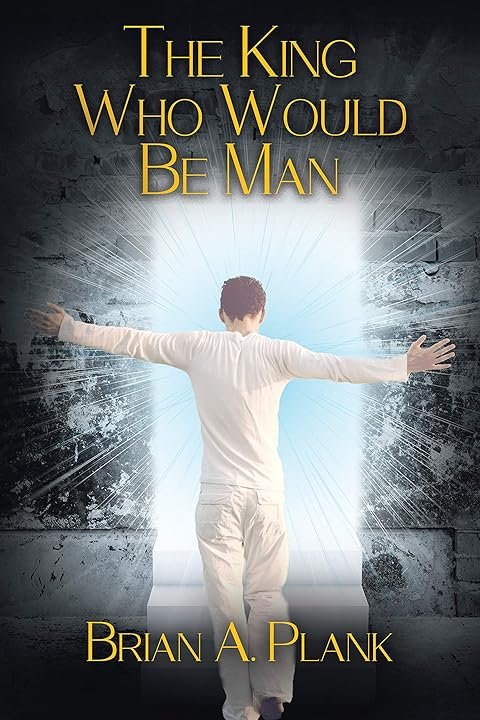
In The King Who Would Be Man, Brian steps boldly into the delicate and often misunderstood terrain of mental health, using fiction to illuminate truths that are deeply personal and universal. His narrator—unnamed but unmistakably human—invites readers to confront the intricacies of living with mental illness and to rethink the societal constructs that alienate those who fall outside the bounds of what is deemed “normal.” This is no mere account of struggle; it is a deeply considered exploration of identity, empathy, and the transformative power of storytelling. Through his raw and unflinching prose, Brian challenges his audience to see beyond the surface, urging them to embrace the complexity of lives that are often weighed down by stigma.
Brian’s background in engineering acts as an intriguing counterpoint to his literary voice, a discipline that has taught him precision, logic, and the persistence required to untangle problems—even those of the heart and mind. Yet his writing is anything but clinical; it pulses with warmth, vulnerability, and a kind of defiant optimism. As he shares his experiences, whether of being gaslit and bullied in the workplace or finding solace through the act of writing, Brian lays bare the resilience of the human spirit and the necessity of forging solidarity with those who seek to speak their truth. Through the pages of his work, one feels the weight not just of challenges endured, but of a profound hope for understanding and change.
Brian A. Plank is an inspiring advocate whose groundbreaking storytelling boldly sheds light on mental health with empathy and resilience.
What inspired you to write about the complex topic of mental illness in your book The King Who Would Be Man?
I was diagnosed with schizophrenia when I was in my early thirties, although I believe I was born with it. I found that once symptoms started to significantly surface, many of my friends and colleagues turned on me or simply disappeared. I realised that people didn’t understand the complexity of the illness, so I have made it a mission in my life to educate how devastating a serious mental illness can be.
I have chosen to be a voice for those who are unable to speak their truth.
How did your background as an engineer influence your approach to writing and storytelling?
Having a background in engineering taught me how to use my mind as a tool to think critically by incorporating logic and mathematics in problem solving. When problem solving with a team, I developed the mantra that even if the solution to a problem is not obvious or popular, it should proceed until a better solution which promises an equal or better solution can be implemented.
I have learned to look at problems from different angles, and how to be open to all positive and constructive input, while ignoring those naysayers who have no real solutions to offer.
“Prepare yourself to be vulnerable to both you and your readers. Readers need honesty and transparency.” – Brian A. Plank
Can you discuss the challenges you faced in creating a narrative that tackles such a sensitive and personal subject matter?
While my emotional health was diminishing with the symptoms seeping into all aspects of my life – both personal and professional – I continued working in a highly toxic work environment. I was bullied and gaslit until my self-esteem was abolished.
Being unable to work, but still wanting to make my mark, I began writing essays and stories as a therapeutic means. The first article I published was titled, Another Perfect Day, which was a short story describing being bullied and gaslit in the workplace. When my article was successful, it prompted me to continue writing about these topics to raise awareness and with the hope of helping others realise that they were not alone.
How do you hope readers will respond to the unnamed narrator’s journey and struggles with mental health?
I know that the word “empathy” is being kicked and tossed around like a football, but my hope is that the readers will take a moment to reflect on people who may seem different, and see that those of us who are outside what are considered to be “normal” constructs are still valid and equal members of society.
“I choose to be open to discussing it for the purpose of educating through my writing.” – Brian A. Plank
How did you ensure that you shared an accurate portrayal of the experiences of someone struggling with mental illness?
While all disabilities are unique to the person in question, my portrayal was based primarily upon personal experience, the experiences of others who, like me, are a little more sensitive, and articles posted on the Internet.
Do you believe that your book can help raise awareness and reduce stigma around mental health issues?
The struggle to overcome the stigma of having any disability is an ongoing challenge. It can be worse for those of us with “invisible illnesses.” I choose to be open to discussing it for the purpose of educating through my writing, and by providing a plot that makes the novel an entertaining page-turner.
How do you balance the darker themes in your book with the need to create a compelling and engaging narrative?
This novel is about more than mental illness – it addresses many elements of the human condition. Beyond the storytelling, my hope is that readers will see between the lines and begin to open their minds and take on an introspective look into what is truly the unknown…
To deal with the darker themes, my style is to be raw and blunt when dealing with a sensitive issue, and to be thought-provoking at other times. I want to challenge the readers, and in turn be challenged by them.
What advice would you give to fellow authors who are looking to tackle difficult or sensitive topics in their own writing?
Prepare yourself to be vulnerable to both you and your readers. I believe that when dealing with sensitive material, readers need honesty and transparency. Some readers are looking for advice. Some are looking forward to hearing that someone else has been through a situation like they may be experiencing. And some readers are just interested in reading for the sake of reading. Be open to constructive criticism. And learn to be both instructor and student.
EDITOR’S CHOICE
A raw, compelling tale of resilience, The King Who Would Be Man powerfully illuminates the complexities of mental illness.
Brian A. Plank’s T he K ing Who Would Be Man is a gripping exploration of mental illness, resilience, and the human spirit. With raw prose and profound empathy, this book masterfully captures the narrator’s harrowing yet inspiring journey, offering readers a transformative and thought-provoking experience. A must-read for advocates of mental health awareness.