
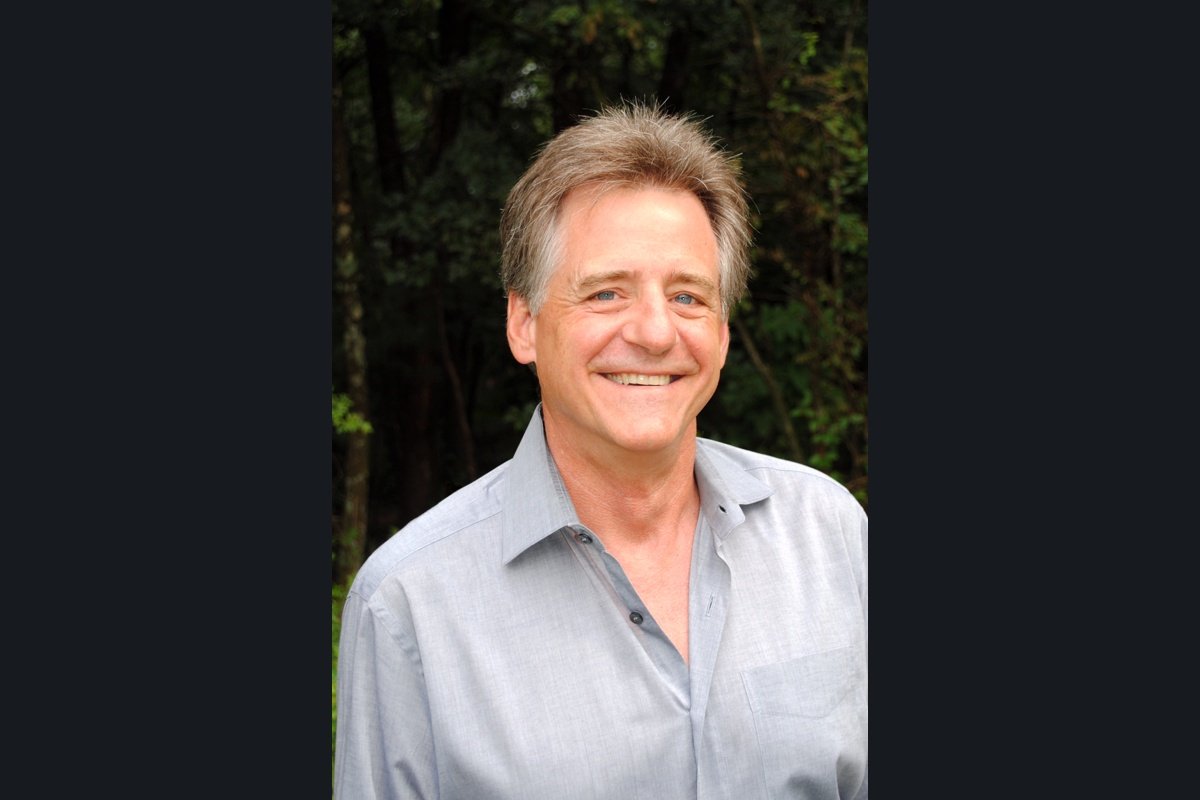
Jeff Shaara approaches historical fiction through the people who experienced history before they could know how it would be remembered. That choice gives his account of writing both its intimacy and its discipline. The facts must be established, but they are only the beginning; the task is to understand a person’s knowledge, loyalties and uncertainty closely enough for a convincing voice to emerge. His respect for the reader rests on that commitment to research, and on a refusal to treat a familiar historical name as permission to take easy imaginative liberties.
Gods and Generals and The Last Full Measure extended the narrative world associated with his father Michael Shaara’s The Killer Angels, before his own work moved across other conflicts and periods. The Shadow of War carries the additional resonance of childhood memory, while The Unfinished Work turns towards Lincoln as commander, friend, husband and father. Shaara’s preference for the word storyteller is revealing. He wants history to invite readers in, not simply instruct them from a distance. This interview offers a thoughtful encounter with an author whose dedication to accuracy is matched by a clear appreciation of character, perspective and the enduring pleasure of a good story.
Interview by Ben Alan
You have brought many defining moments of American history vividly to life through historical fiction. What first drew you to telling history through the eyes of those who lived it?
That method of storytelling was used by my father, Michael Shaara, in The Killer Angels, his Pulitzer Prize winning novel about the Battle of Gettysburg. My first novels were the prequel and sequel to his work, and it made sense to approach the storytelling the same way. I enjoy writing that way, because in order to tell a story from the characters’ points of view, you have to feel you know them. Thus the research is more personal than just facts and figures.
Continuing the legacy of your father, Michael Shaara, was an extraordinary undertaking. How did writing Gods and Generals change your understanding of both history and storytelling?
The first thing I learned in telling the story through the eyes of significant historical figures is that you had better get it right. People care about these figures and you can’t play fast and loose with who they really were. Someone said to me once, “How dare you put words in the mouth of Robert E. Lee!” Challenge accepted. But when you have a beloved character, you owe it to the audience to do the research, to make sure those words you’re putting in his mouth are accurate.
Your novels, from The Last Full Measure to The Shadow of War, combine meticulous historical research with compelling human drama. How do you balance historical accuracy with the demands of a great narrative?
I research the history first, get the facts straight, which often can introduce me to an unexpected character. I’m not sure I understand what the demands are, if there is some rule I should follow, or someone else’s style I should copy. My goal is to tell a good story, something that even someone with little interest in history will find interesting. If there are demands to producing a great narrative, I’ve never felt that kind of pressure.
Many of your books tell famous events from multiple perspectives. Why is it important for readers to experience history through different voices rather than a single viewpoint?
That goes back to my father. Any story about the Civil War, if it puts all the focus on one side, it simply can’t be accurate. I told my Civil War stories, all of them, through points of view on both sides. It just makes for such a better and more complete story. I also carried that forward into the rest of my work, the World Wars, Korea, Cuban Missile Crisis, etc.
Over the years you have written about the American Civil War, the Revolution, the World Wars, the Korean War and the Cuban Missile Crisis. Which period challenged you the most as an author, and why?
World War One. My publisher did not believe there would be an audience for two books on WW1, which is what I had planned. So I had to combine the flying ace story, with the story of the Marines and Black Jack Pershing. Fortunately, the time line allowed me to make that separation, even though the book is a single volume. Strangely, it was easier to research the Germans than it was the American pilots of the Lafayette Escadrille. There are only two memoirs written by the original 37 members, one is a complete fabrication. But then I found a comprehensive biography of each man individually, an incredible treasure. Without that I don’t think I would have been able to tell that part of the story.
Historical figures such as Abraham Lincoln, Ulysses S. Grant, Theodore Roosevelt and Dwight Eisenhower become remarkably human in your novels. What is your process for transforming legendary figures into believable characters?
I think what you’re asking is, how do I write? I don’t set out ever to transform any historical figure into something he wasn’t, or to make anyone more interesting, or funny or angry, than he truly was. Choosing the right characters means finding the voices who will tell the best story. Example- with Eisenhower prior to D-Day, I take insights and information, characterizations and conversations from CDR Harry Butcher, Ike’s aide, who had been ordered by Ike to keep a diary
Your forthcoming novel, The Unfinished Work, explores Abraham Lincoln from an intimate perspective. What new aspects of Lincoln's character were you most eager to explore?
This was a challenge, because there are, so I’ve been told, some 20,000 books written about Lincoln, nearly all of them non-fiction. It’s easy to conclude that every aspect of Lincoln has been revealed. I wanted to show Lincoln the Commander in Chief, the friend, the husband and father. The story covers a limited period of time, so that I could dig deep into Lincoln and those around him, including his wife Mary, without writing a 2000 page book.
Readers often say your novels inspire them to learn more about history. What do you hope someone takes away after finishing one of your books?
This may sound odd, but I hope anyone who reads my work is entertained. I’m not a history teacher, I’m not a historian, I’m not conveying some life lesson. The best comment I can hear is “I had no interest in history, didn’t much like to read, but someone insisted I read your book. Now I’m reading more of them, and I’m taking my kids to Gettysburg (or Pearl Harbor, or Normandy.)”
Looking back across your remarkable career, which book has been the most personally meaningful to write, and why?
The Shadow of War, the story of the Cuban Missile Crisis. There is a boy in the story, the son of a professor at Florida State. He has a younger sister, and his mother is a social worker, in Tallahassee, Florida. That is the accurate description of my family. I drew on my own recollections, JFK’s speech, Adlai Stevenson at the UN, the convoys of troop trucks roaring through Tallahassee on their way south, and the absurd, the neighbor down the street building a fallout shelter, with no concept of what a nuclear war would mean, and of course, the amazingly stupid “duck and cover” in the schools: crawl under your desk, and we’ll close the blinds. Then we’ll be safe. I lived all of it, and so many of the details are my own.
Historical fiction continues to evolve. How do you think the genre has changed since you published Gods and Generals, and where do you see it heading in the future?
I’ve heard directly from a number of historical writers who are understanding the need not to “play around” with history. There are still “alternative history” authors, but that number is shrinking. From what I’ve heard, these writers have come to realize that if their story is acccurate historically, it will be more popular with readers. Otherwise, they should write science fiction. I have no idea where the publishing business or writing styles will move from here. There is enormous fear in the business that Gen Z simply doesn’t read. The publishing business is contracting, and that holds terrible possibilities.
What writing tips would you offer aspiring authors who want to write historical fiction that is both authentic and impossible to put down?
Do your research. Don’t be lazy. Don’t take shortcuts. Your publisher or editor may not notice, but readers will. Nobody likes negative reviews on Amazon. One other thing. My father would tell his Creative Writing students, if you want to write a story, you have to use the “BIC” method. BUTT IN CHAIR
What advice would you give to aspiring authors hoping to build a long and rewarding writing career while remaining true to their own voice?
Those two things are mutually exclusive. Just like the movie business (where I have some experience), you can find what will sell, a publisher who wants to publish you, an agent who wants to represent you, but you can’t assume you’ll be able to remain true to your own voice. OR, you can stay dedicated to your own ideas and your own voice, and you might end up self-publishing. Or you can be very very fortunate and have both. But don’t count on it.
If you could spend an afternoon with any historical figure you've written about, who would it be, and what would be your very first question?
Teddy Roosevelt. And I would ask him, WHY did you not run for President in 1908? You would have won easily.
Which of your historical characters do you think would be the most entertaining dinner guest?
Benjamin Franklin. Just sit back and let him talk Source: Reader’s House