
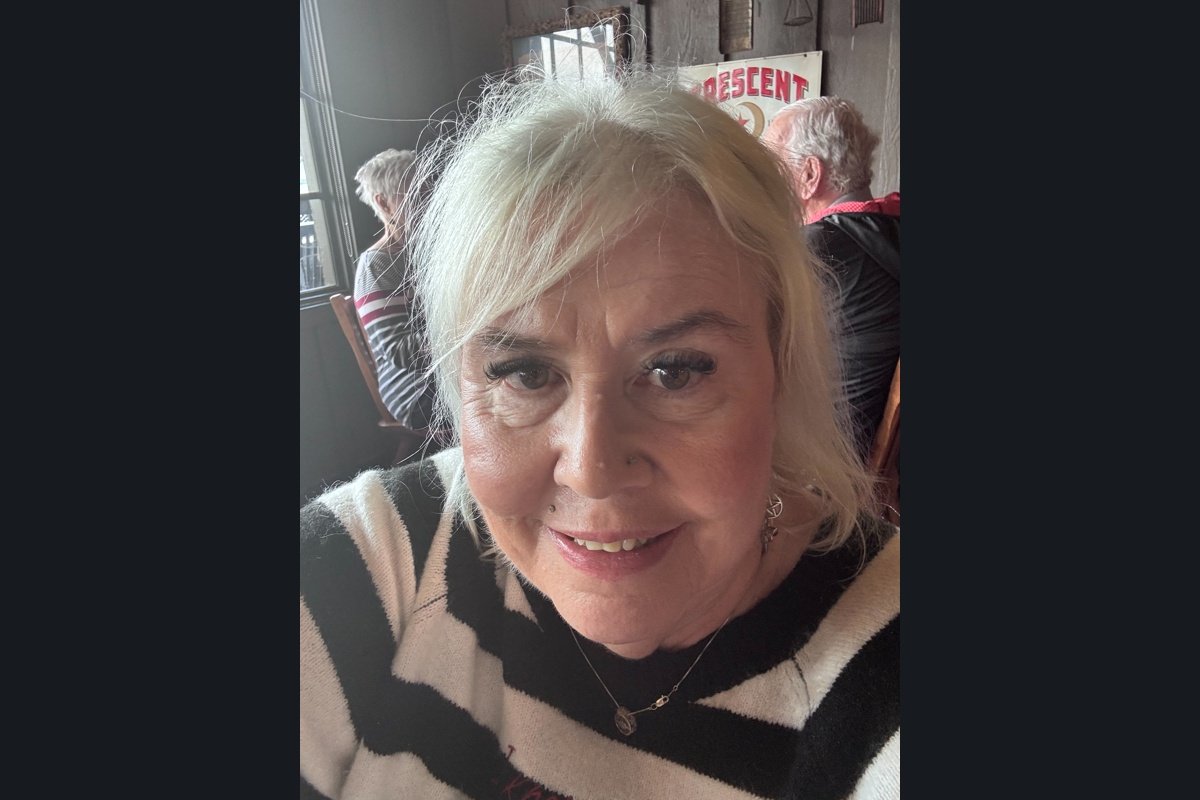
Elizabeth Horton-Newton approaches storytelling with a lively willingness to follow an idea beyond its original boundaries. A romance may acquire a murder; an opening paragraph may reveal an entire mystery; a familiar small town may turn out to contain far more than its neighbours wish to admit. That openness gives her work an appealing unpredictability. Across novels and short fiction, she is drawn to the hidden pressures within communities and to characters whose motives resist an easy division between innocence and guilt.
Riddle, View From the Sixth Floor and the stories written under her Starla Hartless identity demonstrate the range of that imaginative territory. Candie’s Heart also opens a revealing discussion about independent women and the expectations placed upon them in romantic fiction. One of the pleasures of this interview is discovering that an apparent collaboration is, in fact, another expression of the same author’s creative personality. Horton-Newton speaks candidly about research, alter egos, reader encounters and the discipline of writing something every day. Her answers convey the energy of an author who remains curious about different forms, new characters and the unexpected places a story can lead.
Interview by Ben Alan
Your bibliography spans a rich array of genres, from small-town romance and mystery to short fiction. When a new idea takes root, how do you usually know whether it demands a full-length novel or a tightly focused short story like The Thin Place?
That’s a great question. Short stories tend to come to me as a whole. From beginning to end, they come together completely. Full-length novels sometimes come from something as simple as a phrase, something I see or hear that clicks, or, fairly often, they start out with an idea that is vague and may change as I write. I have started what are romances in the beginning but pick up a murder midway. It changes the story and requires significantly more detail.
You and your husband are famously dubbed The Crazy Writer Couple. How does living in a household with two active creative minds influence your daily writing routine—do you bounce plot twists off each other over morning tea, or do you guard your drafts until they are complete?
Although we have been working on an idea that we’ve tried co-writing, it has proven very difficult. Our styles are different. Neil’s style is clean and to the point while my writing is more “flowery”. I love words and I want my readers to be fully engulfed in a story; the sights and sounds, the scents or odors, and the inner thoughts and conflicts of the characters.
In co-authoring titles like Candie’s Heart and Carved Wooden Heart with Starla Hartless, how do you manage character voices and pacing across two writers, and what is the secret to making a co-authored narrative feel like a single, seamless voice?
I had to laugh at this question. In reality, I am my own co-author. The Starla Hartless identity was the result of my youngest granddaughter telling her elementary school teacher that her grandmother is an author. I was in the midst of my first Cougar Romance when she told me the teacher brought up my author page on the computer to share with the class. It occurred to me this could happen again. I didn’t want my spicy books to a group of ten-year-olds. So, I created Starla. Last September I was given a delightful baby Yorkshire Terrier and I named her Starla Hartless. Now we share a Facebook page!
View From the Sixth Floor: An Oswald Tale tackles a very specific, iconic moment in modern history. What kind of research was required to capture the atmosphere accurately, and how did you balance known historical facts with fictional characterisation?
I had been thinking about the story for a couple of years before I began the process of putting pen to paper. I did extensive research on both the accepted facts of the event as well as theories put forward by both professionals and people I knew. I was surprised to find many people felt as I did. There was a conspiracy. Compounding the situation was the various conspiracies suggested. It was a fascinating experience. Blending the accepted theory and some of the conspiracies was pretty much pick and choose. What could contribute to the story moving forward realistically?
In Riddle, you weave complex threads of mystery. How do you approach plotting out intricate suspense—do you outline every twist and red herring meticulously beforehand, or do you allow the plot to reveal itself organically as you write?
You hit the nail on the head. Riddle was born out of the first paragraph. It played over in my head for a few days before I decided to just sit down and write that beginning bit. The rest of it simply took off on its own. I like to put twists into my tales. As I finished the first draft I felt incomplete. Going back, I realized there was more to the story that what I thought. So this book has two big twists.
Candie’s Heart delves into the tangled relationships and hidden tensions of a close-knit Southern town like Sweetwater. What draws you to small-town settings, and why do you think they provide such fertile ground for romance and drama?
Over the years I’ve found that small towns are a microcosm of the world at large. But, it’s much easier to take the relationships in smaller towns are easier to identify. Many people have dirty or dark secrets. In a large city these may remain hidden. In a small town everyone has an opinion on their neighbors. Secrets inevitably come out and there are those who will say they knew it all the time. Think of the book Peyton Place by Grace Metalios.
Beyond your novels, you have contributed to anthologies and short story projects like Dragonfly Books and Electric Eclectic. What unique challenges or freedoms does the short story format offer you as a writer?
When writing for anthologies my stories need to fit with the overall theme of the other stories included. I only agree to contribute to an anthology if I believe I can contribute something worthwhile within a specific genre. Writing short stories for anthologies is a good way to keep up my writing skills. It also provides an outlet for exploring other genres. I enjoy the challenge! I also enjoy reading what other writers have contributed and what their vision is.
Many of your female leads—such as Candie Loveless—are strong, independent, and unapologetically mature. How important is it for you to feature complex, experienced women who redefine traditional romantic tropes?
It’s very important to me to represent women as strong and independent. There are plenty of romance novels that have female characters who, while not subservient to men, are overshadowed by their male counterparts. I find it perfectly fitting for a hot stud or love interest to accept a strong independent woman. In fact, the men in my books love having a woman who will stand her ground. As women today we are still struggling to assert ourselves.
Small-town rivalries and lingering pasts play a key role in driving tension in your stories. What, in your view, makes a compelling antagonist who feels grounded and human rather than purely villainous?
Most criminals feel justified in their actions. Because of their belief that their behavior is righteous, they are able to blend in with the world they live in. The denial of their dark sides makes them compelling. The reader is often torn between having their crimes exposed and seeing them succeed. Everyone has a bit of darkness within. Create a character who faces challenges anyone might face, and it can be difficult not to relate. Of course, if the antagonist is attractive it’s a plus.
You spend a great deal of time on the road at events like the Knoxville Book Festival and the West Virginia Book Festival. How does meeting readers face-to-face shape your perspective on your own work?
The most important thing I achieve while meeting and speaking with readers gives me insight into what they like to read. If they are my followers, I get a better understanding of what they like or don’t like about what I’ve written. Talking about books, my own or those of other authors, can be helpful. Am I hitting the mark with my views? Even my most faithful readers don’t like every one of my stories. No writer can claim everything they write is bestseller material.
Writing across multiple projects simultaneously requires significant creative stamina. When you encounter a plot hurdle or writer’s block, what is your go-to strategy for getting the story moving again?
Writing. Writing something every day. I journal, blog, write reviews of books or movies. Sometimes I will jot down story ideas for the future.
With a diverse portfolio already behind you, what genres or untried story ideas are still on your author bucket list, and what can readers look forward to next?
I’m currently writing a vampire story and a science fiction story. I’ve been playing around with a post-apocalyptic tale for several years. I suspect it will take a while to get it right.
If you and your co-author ever had a fierce disagreement over a character’s fate, how would you settle it—a literary duel, a coin toss, or whoever makes the strongest pot of coffee?
Since my co-author is usually my alter ego you would think there wouldn’t be any disagreement. My Starla Hartless identity is more of a romantic than I am. In many ways that side of my personality softens some of my darker writings.
Readers who follow your tour photos know that Sophie Sloth is a frequent companion at book fairs. Does Sophie have any diva-like demands on the road, or is she the ideal low-maintenance travel buddy?
Sophie Sloth is a delightful companion. She is quite popular with readers and often has her photo taken with them. I’ve been working on a children’s book featuring Sophie. In fact, I have the drafts for two children’s books.
If you suddenly found yourself trapped in a lift with one of your own antagonists, which character would it be, and what bribe would you offer them to let you out unharmed?
Ouch! I think it would be interesting to meet Gaunt Thibedeaux from Old Habits. I’m not his type per say, so bribing him might be easy. I would offer to write his story after he dies so the world would understand him and what drove him to be a serial killer. In many ways Gaunt wants to understand and be understood. I could offer him insight into his urges.
If you were forced to live inside the world of one of your books for a month, which setting would you choose—and which character's house are you definitely not visiting?
I’d love to live in Terza’s world in Stolen Gypsy. Of course, it would be tempting to live with Tristan. But his home is also one to avoid. The action primarily occurs there. In all likelihood I’d be safer staying with Tristan’s sister. Source: Reader’s House