From Curry Kitchens To World Tours
Steven Heap reflects on decades of culinary discovery, revealing how travel, competition, teaching and British Indian restaurant traditions shaped his award-winning career, ten books and enduring passion for accessible cooking.
S teven Heap brings together the curiosity of a traveller, the discipline of an award-winning chef and the generosity of a natural teacher. His culinary journey, which began in an Indian restaurant at the age of fourteen, has since taken him across nearly seventy countries, into demanding competition kitchens, onto international music tours and, most importantly, into the homes of readers eager to understand the craft behind exceptional food.
A multi-award-winning chef and the author of ten cookery books, Heap has built a distinguished career around knowledge, precision and an enduring respect for culinary tradition. His work is particularly valuable because it goes far beyond the conventional recipe collection. Rather than simply telling readers what to cook, he explains why techniques work, how flavours are constructed and how the carefully organised systems of professional British Indian restaurant kitchens can be recreated by the home cook.
Steven Heap‘s books reflect decades of practical experience gained through restaurant work, extensive travel, cookery teaching and close study of South Asian cuisine. Detailed yet accessible, they remove the mystery from mother sauces, spice preparations, breads, pickles and much-loved curry-house classics. Beginners are encouraged to develop confidence step by step, while experienced cooks are offered a deeper understanding of the methods, histories and cultural influences behind the dishes.
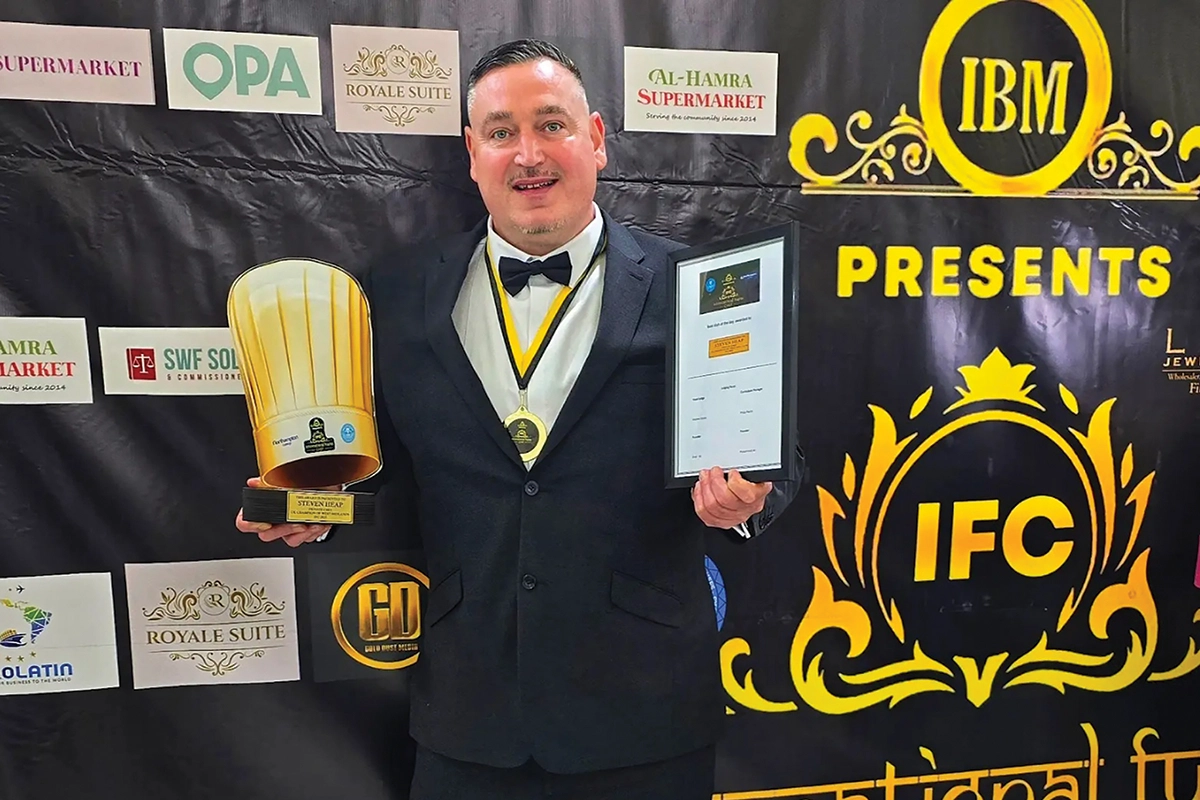
Heap’s accomplishments are equally impressive beyond the page. His honours include recognition at the UK Curry Championships, the UK Curry Chef of the Year awards, the Bengali MasterChef Awards and the Culinary World Cup in Luxembourg. He has also cooked on tour for internationally celebrated artists including Sting, Wiz Khalifa, A$AP Rocky, Paramore and Bloc Party. Yet, despite this remarkable résumé, his philosophy remains refreshingly grounded: great cooking depends not on unnecessary complication, but on sound foundations, quality ingredients, careful preparation and respect for the process.
What makes Steven Heap such a compelling author and culinary voice is his willingness to share the knowledge that professional kitchens often keep hidden. His writing invites readers to become more thoughtful, capable and adventurous cooks, while also encouraging them to appreciate the people, migrations and traditions that shape the food on their plates.
In this wide-ranging interview, Heap reflects on the childhood memories that sparked his passion, the countries and cultures that expanded his understanding, the pressure of culinary competition and the demanding world of tour catering. He also discusses the purpose behind his books, the joy of teaching and his continuing fascination with Indian cuisine after more than three decades. The result is an engaging conversation with a chef whose work celebrates food not merely as a collection of recipes, but as a lifelong journey of discovery.
Your books do far more than present recipes. They teach readers how to think like a British Indian restaurant chef. What inspired you to share the techniques behind the food instead of simply publishing another collection of recipes?
Although British Indian restaurant cooking is complex, each individual component is relatively easy to master with a little insight and practice. What inspired me most to write books about British Indian restaurant food is that it is far more intricate than many people realise. In many ways, it differs significantly from traditional Indian home cooking because of the extensive preparation, specialist techniques, and kitchen systems that have evolved within the British Indian restaurant industry over decades.
“The true skill lies in knowing why something works, not just following a recipe.” – Steven Heap
To truly understand this style of cooking, you need more than a list of ingredients and recipes. You need experience of dining out, time spent behind the scenes in restaurant kitchens, and an understanding of the methods and trade secrets that professional chefs use every day. My goal has always been to take that knowledge and condense it into a comprehensive, step-by-step guide that home cooks can easily follow.
Beyond the recipes themselves, I enjoy exploring the history of the dishes, where particular techniques originated, how they became widely adopted throughout the industry, and how British Indian restaurant cuisine has grown into one of the UK’s most successful and beloved food cultures over the past 40 years.
Ultimately, these are the kinds of books I wish had existed when I first began learning. They contain the information I would have loved to have had access to decades ago, and I hope they provide a valuable resource for anyone who wants to deepen their understanding of this fascinating style of cooking and improve their own skills in the kitchen.
Your passion for Indian cuisine began with your grandfather’s Friday night curries and later grew through your travels across India, Malaysia, and Sri Lanka. Which experience most profoundly changed the way you understand Indian food, and how did it shape your writing?
My fascination with Indian food began at a very young age. I used to find it fascinating that my granddad would cook what seemed like very exotic food at the time. His passion for Indian cuisine stemmed from time he spent in India during the Second World War while serving with the RAF, and those experiences clearly left a lasting impression on him.
I think a certain inquisitiveness is in the blood. I’ve always been curious about many things, but food in particular captured my imagination. That curiosity is one of the reasons I took a job at an Indian restaurant when I was just fourteen years old. I wanted to explore the food more deeply and understand how it was made. Growing up listening to my granddad’s stories, I always dreamed of visiting India myself.
I was fortunate enough to fulfil that ambition and travel extensively throughout India, visiting many different regions and discovering a wide variety of cooking styles. I found it fascinating to see how regional dishes are shaped by local ingredients, traditions, and culture.
However, the experience that most profoundly deepened my understanding of Indian food was living in Malaysia for five years. A significant proportion of Malaysia’s population is of Indian heritage, particularly from Tamil Nadu. Having travelled through South India and experienced authentic Tamil cuisine firsthand, I could clearly see how Indian food evolves as communities settle in different parts of the world and adapt their cooking to local ingredients and tastes.
Anyone who has visited Malaysia will usually comment not only on how outstanding the local cuisine is, but also on the exceptional quality of Malaysian Indian food. Living there gave me a deeper appreciation of how food traditions travel, adapt, and flourish while still retaining their roots. It broadened my understanding of Indian cuisine beyond geography and showed me how culture and migration shape the dishes we enjoy today.
All that being said, after decades of being surrounded by Indian food in one form or another and in various parts of the world, I felt compelled to write my first book on British Indian restaurant cooking. It combined the core principles of British Indian restaurant cuisine with some of the authentic Asian techniques and insights that I felt could enhance the recipes and help readers better understand the food.
Years later, I followed it with a second British Indian restaurant book, designed to be a comprehensive, one-stop resource for anyone interested in mastering contemporary British Indian restaurant cooking. It gave me the opportunity to bring together my knowledge, experience, understanding, and passion for this remarkable cuisine in a way that I hope is both practical and inspiring for readers.
Many home cooks struggle to recreate authentic British Indian restaurant flavours. What are the biggest misconceptions people have about this style of cooking, and what do you hope readers discover when they follow your books?
One of the biggest misconceptions people have about British Indian restaurant cooking is that it is somehow beyond the reach of the home cook. In reality, while there are a number of techniques and preparations to learn, none of them are particularly difficult. Like any skill, they simply require a little understanding, practice, and confidence.
I see this demonstrated regularly on my cookery courses, many of which incorporate Indian food. When participants arrive, I often ask them whether they cook much Indian food at home. To my surprise, most say they don’t. They’ve simply booked the course because it sounded like something fun and interesting to do.
As the class progresses, I demonstrate the dishes and then the participants cook alongside me. By the end of the session, they’re often amazed by what they’ve created themselves. When they taste the food, they realise that producing authentic, restaurant-quality Indian dishes is entirely achievable. Seeing that transformation is one of the most rewarding parts of teaching.
Those experiences reinforce an important lesson: with a little enthusiasm, interest, and practice, almost anything is achievable. Once people have mastered the fundamentals, they quickly develop the confidence to adapt recipes, experiment with flavours, and broaden their repertoire. They begin to understand not just how to follow a recipe, but how Indian cooking works.
These lessons mirror the essence of my books. I like to explain things as simply and clearly as possible so that readers can grasp the underlying concepts and produce fantastic food by following the recipes. Beyond the cooking itself, I also explore the history of the dishes, the origins of techniques, and the stories behind the cuisine. Much of that background makes for fascinating reading and often inspires people to explore Indian food more deeply, whether that’s by trying new dishes, learning new skills, or simply gaining a greater appreciation for one of the world’s most diverse and exciting culinary traditions.
Your latest book covers everything from mother sauces and spice preparations to more than 100 authentic dishes. How do you balance making the book accessible for beginners while still offering valuable insights for experienced cooks?
My second British Indian restaurant book was far more ambitious than the first. This time, I wanted to give readers the opportunity to recreate virtually the entire British Indian restaurant menu at home, from starters, rice dishes, breads, and pickles through to the classic curry house favourites that people know and love.
I also wanted to provide context by exploring the history of Indian restaurants in Britain and how the nation’s fascination with Indian food grew so dramatically, particularly from the 1970s onwards, becoming an integral part of British dining culture by the early 1980s.
One of the main aims of the book was to remove some of the intimidation that people often associate with restaurant-style Indian cooking. It is very much a book for enthusiasts, but I wanted it to be approachable for everyone. In fact, the first sixty pages are devoted entirely to the foundations of British Indian restaurant cooking, covering mother sauces, spice blends, essential preparations, and the core techniques that underpin the cuisine before the recipe section even begins.
I don’t believe there is anything particularly difficult about making any of the individual components or recreating the dishes themselves once those preparations have been made. The challenge with British Indian restaurant cooking is not usually the skill required, but rather the depth and extent of the preparation involved. It is more a question of time and organisation than culinary expertise.
To make the process accessible, everything is broken down into manageable, digestible stages. I explain how the various preparations can be stored in the freezer, how they fit into different recipes, and how readers can build up their repertoire gradually. By simplifying the process and presenting it in a logical way, even novice cooks can achieve excellent results.
At the same time, experienced cooks can delve deeper into the techniques, understand the reasoning behind the methods, and gain a more comprehensive understanding of how professional British Indian restaurant kitchens operate. My goal was to create a book that could serve as both an introduction and a long-term reference guide, helping readers progress from their first curry to confidently recreating an entire restaurant menu at home.
Looking back at both of your books, what do you hope readers remember long after they finish cooking the recipes? Is there a lasting message about food, culture, or learning that you wanted to leave with them?
My second book on British Indian restaurant cooking was written with the intention of becoming a comprehensive, one-stop guide to the entire genre. I wanted to include all the curry house classics while presenting them through a fresh approach shaped by my own unique combination of experiences, from working in restaurants and teaching cookery classes to travelling extensively throughout Asia and spending years studying the cuisine.
One of the book’s main goals was to remove some of the intimidation that people often associate with restaurant-style Indian cooking. British Indian restaurant food does involve a significant amount of preparation, but the individual components themselves are not especially difficult to master. The challenge is usually organisation and understanding how the various preparations fit together, rather than possessing advanced culinary skills.
To make the process accessible, everything is broken down into manageable stages. The book begins with an extensive section covering mother sauces, spice blends, and essential preparations before moving on to the recipes themselves. Readers are shown how to prepare, store, and use these components, making even ambitious dishes achievable for novice cooks.
At the same time, experienced cooks can benefit from a deeper understanding of the techniques, systems, and workflow that underpin professional British Indian restaurant kitchens. The book is designed not only to help people follow recipes successfully, but also to understand why the recipes work.
I think one of the book’s strengths is that it is built on real-life experience rather than simply research. The information comes from decades of cooking, learning, travelling, teaching, and working with the cuisine. Throughout the book, I include concise, relevant information about dishes, ingredients, and techniques whenever it adds value to the reader’s understanding, without overwhelming them with unnecessary detail.
I also paid close attention to how the recipes themselves are presented. Even small details matter. For example, I list the ingredient first and then the quantity. Personally, I have always found it easier to absorb a recipe that way, whereas many traditional cookbooks place the quantity before the ingredient. It may seem like a small change, but it makes recipes quicker to read and easier to follow in a busy kitchen.
Ultimately, I wanted to create a book that was practical, effective, and easy to understand while still offering enough depth to keep readers returning to it for years to come. My hope is that it serves not only as a comprehensive collection of recipes but also as a trusted reference guide that encourages readers to develop confidence, experiment with their own ideas, and continue learning about this remarkable cuisine long into the future.
You started working in Indian restaurants at just 14 years old. What first sparked your passion for food, and how did those early experiences shape the chef you are today?
Starting work in an Indian restaurant at the age of 14 was a defining experience for me and played a major role in shaping the chef I would become. It sparked my passion for food, but perhaps more importantly, it taught me that a successful food business is about far more than what appears on the plate.
At a young age, I began to understand the importance of teamwork, organisation, product selection, consistency, and the systems that operate behind the scenes. Delivering a dish that exceeds a guest’s expectations requires countless elements to come together successfully long before the cooking even begins.
Those early lessons have stayed with me throughout my career. They taught me that being a chef is not simply about creating great food; it’s about understanding the bigger picture of hospitality and recognising how every part of an operation contributes to the guest experience. While the industry continues to evolve and new challenges emerge, the fundamentals I learned at 14 remain as relevant today as they were then.
Having visited almost 70 countries, one of the most fascinating aspects of travel for me has always been seeking out traditional foods and the people who continue to make them in the same way their parents, grandparents, and even earlier generations did.
What I find particularly inspiring is the consistency and pride that many cultures maintain in their culinary heritage. In many parts of the world, food is deeply connected to tradition, and recipes and techniques are preserved rather than constantly reinvented. This contrasts with some Western food movements, where trends and styles can evolve rapidly. Neither approach is right or wrong, but I have always been drawn to cuisines that remain closely connected to their roots.
Watching people practise their craft day after day has had a profound influence on my cooking philosophy. Whether it’s someone making rotis at a roadside stall in Delhi, preparing falafel in Egypt, or producing a regional speciality that has remained largely unchanged for generations, there is something remarkable about the dedication to mastering a single craft through repetition and experience.
In many warmer countries, often, food preparation takes place in full view of the public, allowing you to sit with a coffee and simply observe. Some of my most valuable lessons have come not from professional kitchens, but from watching these everyday artisans work with confidence, efficiency, and an instinctive understanding of their craft.
These experiences have reinforced my belief that great cooking is not always about complexity or innovation. Often, it is about respecting tradition, understanding ingredients, and striving for consistency—qualities that continue to shape both my cooking style and my approach to food today.
You are known for your deep involvement in South Asian curry cuisine. What continues to inspire you about this culinary tradition after more than 30 years?
Indian food is where my culinary journey began, and after more than 35 years, it continues to inspire me as much as ever. One of the reasons is the sheer scale and diversity of India’s food culture. With its vast geography, enormous population, and influences that extend across South Asia and beyond, the variety of dishes, ingredients, and cooking traditions is almost endless.
I’ve always found it fascinating that the Indian restaurant menus we became familiar with in Britain represent only a tiny fraction of what India has to offer. Those Anglo-Indian favourites became popular for a reason, but they were selected from thousands of regional dishes, many of which remain relatively unknown outside their place of origin.
What makes Indian cuisine so remarkable is its ability to reflect geography, climate, religion, history, and local ingredients. Every region has its own identity, traditions, and flavours, creating a culinary landscape that is incredibly rich and diverse. As migration patterns continue to evolve, we’re also seeing a wider range of authentic regional cuisines being introduced particularly in countries such as the UK.
Perhaps the greatest source of inspiration for me is that there is always more to learn. Even after decades of studying and cooking Indian food, I still regularly discover dishes and techniques that are completely new to me. It is a cuisine that continually challenges, educates, and surprises you. In many ways, that’s what keeps the passion alive. You could spend a lifetime exploring Indian food and still only scratch the surface. Very few culinary traditions offer that depth, diversity, and endless opportunity for discovery.
You have competed in culinary competitions since 2017, including the Culinary World Cup and the UK Curry Championships. How has competing helped you grow as a chef?
Participating in the Curry Awards has been both personally rewarding and professionally valuable. As a private chef, I understand that continuous improvement is essential. Feedback from clients and guests helps me refine my services, develop new ideas, and constantly raise my standards. However, there is nothing quite like the pressure and intensity of a professional cooking competition.
Competitions push me far beyond my comfort zone. Knowing that you will be competing against some of the most talented chefs in the industry creates a unique sense of focus and determination. Every detail matters, from selecting the right ingredients and developing the concept of a dish to refining the presentation and ensuring every element delivers exceptional flavour.
The preparation process itself is one of the most valuable aspects of competing. It requires extensive planning, testing, and practice. There are always contingency plans and adjustments to consider, and what starts as Plan A can sometimes become Plan D by the time competition day arrives. That challenge forces you to think creatively, solve problems under pressure, and strive for a level of excellence that is difficult to replicate in everyday service.
What I enjoy most is the excitement and adrenaline that comes with preparing for and participating in these events. The experience pushes me to continually develop my skills and explore new ideas. It is a level of pressure that I rarely encounter elsewhere, and I believe it makes me a better chef as a result.
Professionally, recognition through competitions can also enhance credibility and help clients understand the level of commitment and passion that goes into my work. Ultimately, the awards are about much more than accolades; they represent a commitment to growth, creativity, and the pursuit of excellence, both in the kitchen and in the services I provide to my clients.
You have written ten books on Indian cooking. What motivated you to become an author, and what do you hope readers take away from your work?
My motivation for becoming an author came from a lifelong passion for food and a desire to create the kind of books I wished I had access to earlier in my career. Like many chefs and food enthusiasts, I have read countless cookbooks over the years. While many are excellent, I often found myself wishing for books that were more concise, more practical, and focused on recipes and techniques that people could confidently recreate at home.
I wanted to write books that removed unnecessary complexity and presented information in a straightforward, accessible way. My goal has always been to show readers that professional-quality food is not reserved for professional kitchens. With the right guidance, clear instructions, and an understanding of a few key principles, anyone can achieve excellent results.
Beyond the recipes themselves, I also wanted to share the knowledge and insights that would have accelerated my own learning journey. Much of the information in my books is the kind of advice, techniques, and understanding that I would have loved to have discovered years earlier. If I can help readers avoid common mistakes, build confidence, and progress more quickly in their cooking, then I feel I have achieved my objective.
Ultimately, I hope readers come away feeling inspired, informed, and empowered. Whether they are trying a new cuisine, mastering a technique they once found intimidating, or simply looking for reliable recipes they can return to time and time again, I want my books to become trusted resources that help make cooking both enjoyable and achievable.
Your cookery classes are consistently popular and often sell out. What do you enjoy most about teaching people to cook?
What I enjoy most about teaching people to cook is seeing the confidence and enthusiasm they gain throughout the class. My cookery courses are designed around creating a complete meal, with a variety of flavours, textures, colours, and techniques, giving participants a well-rounded cooking experience rather than simply teaching a single dish.
I believe cooking should be enjoyable and accessible, so I teach at a relaxed and informal pace that allows even complete beginners to follow along comfortably. One of the most rewarding things to hear at the end of a class is, “That was much easier than I thought,” followed closely by, “I can’t wait to cook this for my family.”
While there are countless recipes, videos, and tutorials available online, I believe there is something uniquely powerful about learning in person. A cookery class is about much more than following instructions; it’s a shared experience. People remember the day, the conversations, the dishes they created, and the people they cooked alongside. That personal interaction creates a lasting impact that is difficult to replicate through a screen or a book.
For me, the greatest reward is seeing participants leave feeling inspired, kitchen-confident, and excited to cook. If someone finishes a class with a better understanding of ingredients, greater confidence in their abilities, and a genuine enthusiasm to recreate dishes at home, then I feel I have achieved exactly what I set out to do.
You have cooked for international artists such as Sting, Wiz Khalifa, Paramore, and A$AP Rocky. Are there any memorable experiences from your work as a touring chef that stand out?
Having had the opportunity to cook on tour for artists such as ASAP Rocky, Wiz Khalifa, Paramore and Sting, people often assume the most memorable aspect is working with high-profile performers. While that is certainly a privilege, what stands out most to me is the incredible teamwork, dedication, and endurance required behind the scenes to make a tour successful.
Tour catering is one of the most physically demanding environments I have ever worked in. A typical day begins with breakfast service, moves straight into lunch preparations, then dinner service, before packing down and travelling overnight to the next city to do it all again. Sleep is often limited, and there can be several consecutive days without a meaningful break.
What many people don’t realise is the sheer physical and mental challenge involved. Even for someone who is fit and accustomed to hard work, spending long days on your feet in a busy kitchen, often for multiple days in succession, is an extraordinary test of endurance. There comes a point where you wonder how you will possibly find the energy for the next day, yet somehow you do. You discover that there is always another level of resilience to draw upon.
For me, the most memorable lesson from touring is the importance of teamwork. Every successful service depends on a group of people working together under pressure, adapting to changing circumstances, and maintaining consistently high standards regardless of fatigue or location.
There is also an incredible sense of achievement when a tour comes to an end. After days or weeks of intense work, travel, and commitment, the feeling of having successfully delivered throughout the entire schedule is immensely rewarding. The adrenaline, camaraderie, and satisfaction of overcoming such a demanding challenge often stay with you long after the tour itself has finished.
EDITOR’S CHOICE
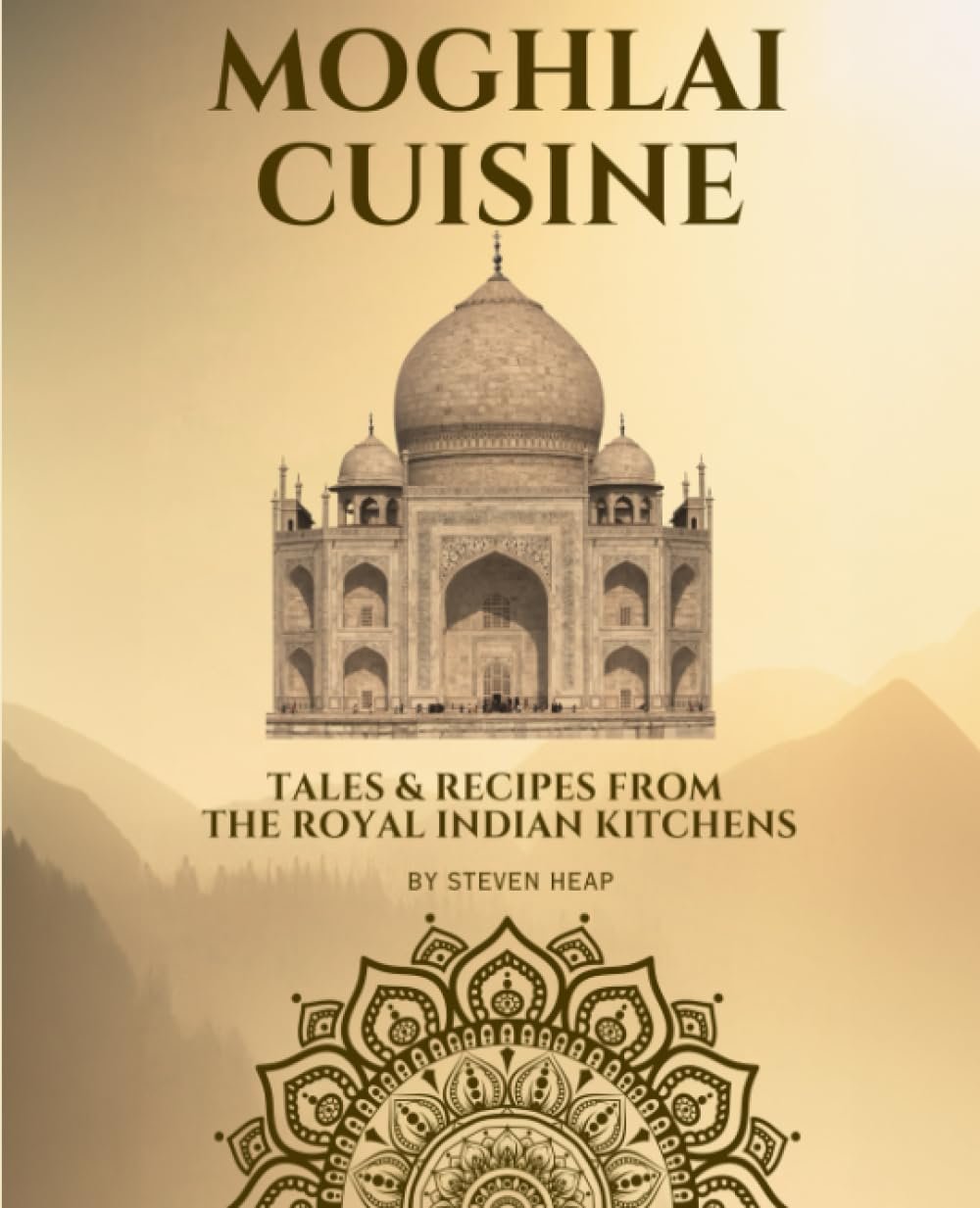
A beautifully researched culinary journey, Heap’s book combines history, authentic recipes and royal tradition with irresistible flavour, elegance and accessibility.
Laura Lee Guhrke returns with Lady Scandal, Steven Heap’s Mughlai Cuisine: Tales & Recipes from the Royal Indian Kitchens is more than a collection of recipes; it is an engaging journey into one of India’s most fascinating culinary traditions. Heap approaches Mughlai cooking with respect for its history, revealing how imperial kitchens transformed food into an expression of culture, craftsmanship and splendour.
The book’s strength lies in the way it brings history and cookery together. Fragrant biryanis, richly spiced kebabs, luxurious curries and delicate desserts are presented not simply as dishes to reproduce, but as part of a larger story. Historical observations and anecdotes help explain the influences, techniques and traditions that shaped Mughlai cuisine, giving readers a deeper appreciation of what arrives on the plate.
Heap also succeeds in making a cuisine associated with royal banquets feel accessible to the enthusiastic home cook. The recipes invite experimentation while retaining a sense of authenticity and occasion. There is richness here, certainly, but also an understanding of balance, preparation and the careful layering of flavour.
Mughlai Cuisine is an appealing addition to any food lover’s bookshelf: informative, atmospheric and practical, it celebrates the enduring legacy of India’s royal kitchens while inspiring readers to experience that heritage through cooking.