
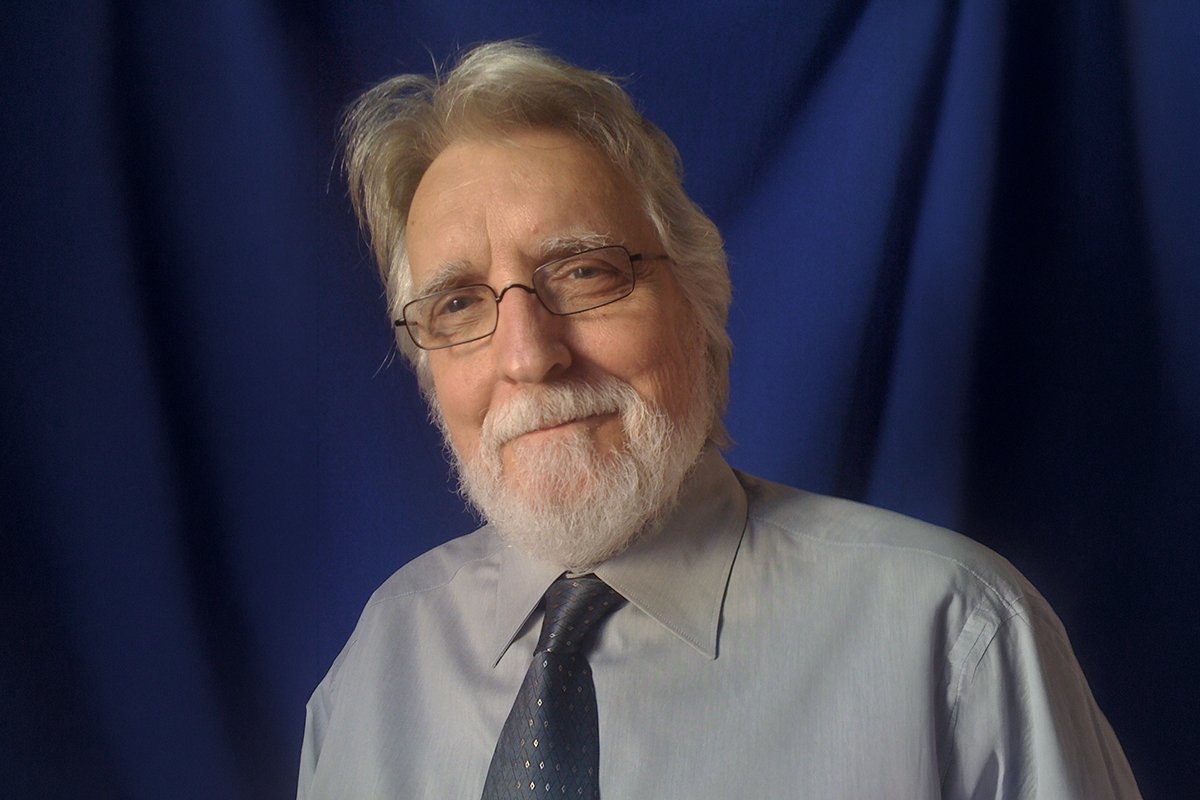
Photo: Neale Donald Walsch, bestselling spiritual author and creator of the internationally acclaimed Conversations with God series, reflects on faith, purpose and humanity’s shared future.
A Life-Changing Conversation On Spirituality, Compassion And The Search For Truth
Neale Donald Walsch reflects on the extraordinary origins of Conversations with God, discussing unconditional love, humanity’s spiritual future, writing with authenticity, and the enduring power of compassion.
N eale Donald Walsch has spent decades inviting readers to reconsider some of life’s most profound questions. Through his internationally acclaimed Conversations with God series, translated into dozens of languages and embraced by millions worldwide, he has challenged conventional thinking on spirituality, faith and the human experience. In this thoughtful and deeply personal conversation with Reader’s House, Walsch reflects on the extraordinary events that gave birth to his life-changing work, the enduring message of unconditional love, and the responsibility each of us carries in shaping a more compassionate world. Candid, reflective and quietly inspiring, his insights offer readers an opportunity not merely to question long-held beliefs, but to explore the possibility that the answers we seek may already reside within us.
Interview Highlights
- The remarkable personal crisis that led to the birth of Conversations with God.
- Why unconditional love is the central message of his life’s work.
- The belief that humanity has misunderstood the true nature of God.
- The concept of “Missing Data” and its role in humanity’s spiritual evolution.
- Why “We Are All One” remains his most important message.
- How simple acts of compassion can transform society.
- His unwavering confidence in the messages he received.
- Why authenticity matters more than writing to please readers.
- Practical advice for aspiring authors seeking to make a meaningful impact.
- The legacy he hopes his books will leave for future generations.
What first inspired the extraordinary dialogue that became the Conversations with God series, and how has your understanding of those conversations evolved over the years?
I had just moved through the worst 10 days of my life, in terms of the sudden accumulation of unwelcome events, one after the other in a very short period of time. First, my relationship with my wife came to an end, when we agreed without rancor or ill will that our marriage was simply not working, that we had not found a way to consistently get along, and that it would be best if we filed for divorce.
Five days later I lost my job, when the corporation I was working for announced that it needed to “downsize,” and that, as its most recent hire, seniority guidelines required that I be among the first employees to be laid off.
But wait. The Universe wasn’t through with me yet. I was on my way to a job interview with a new company when an elderly man in his mid-80s made a left turn in front of my car, misjudging the distance between us and totallying the vehicle I was driving. I was pulled from the wreck by emergency responders, and at the hospital to which I was taken it was discovered that I had a broken neck. And it was not a hairline fracture, but a three-quarter-inch avulsion fracture of the 7th vertical vertebrae posteriorly. (I remember the exact wording on the report to this day.)
The emergency room physician told me that some people die from such an injury, because of spinal cord complications. And, he said, of those who do not die, many wind up paralyzed from the neck down. “You, Mr. Walsch, have suffered neither consequence,” the doctor said in a somewhat incredulous tone. “You’ve been given a great gift.”
The challenge, however, was that I was fitted with what is known as a Philadelphia Collar, and told not to take it offer for any reason, until advised by a doctor that I could, because “it’s the only thing holding up your head while your fracture is healing. We could fix things with an artificial insertion, but we would rather have this heal naturally, which it can do if we give it enough time.” It said it could be anywhere from 9 to 12 months.
Okay, I thought, fair enough. I’d rather have it heal naturally myself. But what I discovered is that nobody would hire me, even after multiple job interviews that I thought went really well, and a glowing letter of recommendation from my former employer. It was only until my 7th job interview that one kind personnel director told me the reason nobody would hire me.
“Mr. Walsch,” he said, “we can’t bring you on staff while you’re wearing that therapeutic device around your neck. One wrong move while you’re on the job, and we’re paying your medical bills for the next five years. Come back to us when that collar is off your neck and we’d hire you in 30 seconds.”
Within three months I had gone through my savings, and could no longer pay the rent on the apartment I had taken after my marriage ended. I was asked to leave (evicted is a more accurate word), and wound up without a roof over my head for two-weeks shy of one year. I slept in a tent at a local campground, which kept me out of the rain, but not out of the cold, and it made for an interesting 12 months going from person to person in front of businesses and restaurants asking for anything they could spare, so that I could pay the small camping fee, and eat that day.
Finally, after 50 weeks of living like this, I had been relieved of my collar and found a parttime job as a weekend fill-in person at a local company. I could then afford a little one-room sparsely furnished studio above a local homeowner’s garage, and it was in my third month of recovery from living outside that I woke up at 4:30 one morning with my mind filled with angry questions about life. There was a yellow legal pad on the coffee table on which I made lists of things I didn’t want to forget that I needed to do, and I began writing an angry letter to God.
“What does it take to make life work?” I demanded to know. “And what I have I done to deserve a life of continuing struggle?” I remember also writing: “Tell me the rules! I’ll play this silly game called Life. Just tell me the rules!”
It was then that I heard a voice inside my head. It didn’t have any particular characteristic, but was more of what I came to call a “voiceless voice” — like the sound of one’s own thoughts. “Do you really want answers to all these questions” it said, “or are you just venting?”
“I am venting,” I snorted in response, “but if you’ve got answers, I’d sure as hell would like to know what they are.”
“You are ‘sure as hell,’ about a lot of things,” I was answered. “But wouldn’t you rather be sure as heaven?”
“Okay,” I snapped. “What’s that supposed to mean?”
“Take notes. Write down everything I’m going to tell you,” the Voiceless Voice instructed. So I did. And I received responses to every one of my rants. All of which led to other questions. Which produced other answers. Which generated even more questions. And before I knew it, I found myself engaged in an on-paper dialogue…which I wound up calling Conversations with God, because that’s exactly what it felt like to me.
I wasn’t trying to write a book, however. I never intended to do so. As far as I was concerned, I felt that I was having a deeply sacred, and very private, experience. It was only after I was told in the dialogue that I would one day turn it into a book, which would be accessed by many readers, that I sent a copy of my handwritten notes to a small publishing house…just to see what would happen. I didn’t think there was a snowball’s chance in hell that they would see print. But the rest, as they say, is publishing history.
In God’s Message to the World: You’ve Got Me All Wrong, you challenge many deeply held beliefs about God. What gave you the confidence to address such a controversial subject so directly?
I was being interviewed on the Today Show on NBC when the reporter asked, “If you really did talk with The Divine, tell us: What is God’s most important message to the world? Please try to keep is down to one paragraph. We have only 30 seconds left.”
For a second I was stunned by the question, my mind wondering which of the dozens of insights I had received through my dialogue I could say was the most important. Then the Voiceless Voice inside my head spoke to me again, and I simply repeated what I was told. “I don’t need one paragraph,” I said. “I can give you God’s most important message in five words.”
“Okay, ladies and gentlemen,” the interviewer said, with a tone of skepticism coloring his words, “here, from the man who says he’s talked with God, is — in 5 words — what he says is God’s most important message to the world. Neale?”
I looked at the camera and said simply: “You’ve got me all wrong.” The interviewer knew that this threw open an even wider discussion, and he really did have one a half-minute left in his segment, so he simply thanked me for my answer and broke for a commercial. After which the Today Show went in an entirely different direction.
I knew that I had opened up the proverbial can of worms, and that I needed to somehow follow up on what I had said on national television, so yes, I reached for all the confidence I could gather, and wrote the book.
You describe humanity as having misunderstood God in profound ways. Which misconception do you believe causes the greatest harm in today’s world?
The idea that God’s love is transactional. It is not like a trade deal between nations, one very large and one very small, in which the big says to the small: “You give what we want, and you’ll get what you want.” God’s love is unconditional, unlimited, and unending, and does not depend on God being accepted and adored in a particular way.
The reason this causes the greatest harm is that it provides our species with the rationale and the justification to express love for each other as a transaction. Yet Pure Love is not a transaction, it is a transmission, requiring (and certainly demanding) nothing in return.
The idea of the “Missing Data” is central to your latest book. Could you explain what it means and why you believe it has the power to transform humanity?
I observe and believe that all of our world’s religions bring us great wisdom and offer us much comfort, but are simply not complete in their doctrines. There is still some missing data, most of it having to do with our true relationship to God as an Individuation of Divinity, and our singularity with each other. Were we to see and embrace as fact that We Are All One, and behave in this way with all others, life on our planet would be enhanced and improved beyond description. Yes, it would literally be transformed.
Your books have inspired millions across different cultures and faiths. Have readers from different parts of the world interpreted your message in surprising ways?
Not that I am personally aware of.
Looking back at your spiritual journey, has there ever been a moment when you questioned the messages you were receiving, and how did you navigate that uncertainty?
Honestly, no. I never questioned the messages I was receiving, because I was convinced that they were coming directly from God, who told me that Divine Wisdom has been placed within all of us, with the invitation to access it upon demand.
Peace, compassion and unity are recurring themes throughout your work. What practical steps can ordinary people take today to help create the kind of world you envision?
We are given the answer to this question by a man who lived on this planet over 2,000 years ago. He said, quite simply: “Do unto others as you would have it done unto you.” I’m sorry if that sounds simplistic and less than intellectually captivating, but all Great Truth is simple. It is we who make things complicated by thinking, and then saying: “You don’t understand. It’s not really that simple.”
The reason it doesn’t seem to be that simple is that we have never really tried it on species-wide basis.
After writing more than thirty books, what continues to inspire you to explore spirituality and the human experience through writing?
The knowledge that our world has been changed in remarkably wonderful ways by others who have done so, and that assisting others in even a small way gives real meaning to my life. Even if some others disagree with what I have written — if all I have done is make them more clear than ever what their own highest truth is, and more determined to live it in the most peaceful, loving, way — I will have done a service.
If you could have one more conversation with God today, what is the first question you would ask?
How can I live more fully, more profoundly, and more consistently — and in a way which reflects true humility — the highest truths I have been given to share?
What writing techniques or habits would you recommend to aspiring authors who want to write about complex spiritual or philosophical ideas in a way that resonates with readers?
Write something on your topic every single day, even if it’s only a few paragraphs, and at the same time every day, if at all possible. And do not, in fact, seek to write in a way that appeals to, or “resonates with”, readers, but in a way which opens and reveals your own heart and soul, paying particular attention to the invitation and the observation of William Shakespeare, who wrote in the dialogue of his play titled Hamlet:
“To thine own self be true, and it must follow, as the night the day, thou canst not then be false to any man.’
What advice would you give to aspiring authors who hope to create books that genuinely change people’s lives?
Don’t try to write a book that will change people’s lives. That could come off as a sermon, or an instruction, or a manual with specifications. Simply share, with candor and grace, what has been the experience of, and in, your own life, writing with sensitivity and compassion for the reader who may be having a dramatically different, and less beneficial, experience. Don’t “talk down” to people. Talk with people, wherever they may or could be in their daily lives.
What legacy would you like the Conversations with God series and God’s Message to the World: You’ve Got Me All Wrong to leave for future generations?
I hope that it will be said that each of the books in the body of work which emerged from my experience of conversations with God served their readers by reminding them of, or helping them get in touch with, their own highest truth about the existence of a Higher Power, the purpose of life in the Realm of the Physical, and their determination to live in a way which demonstrates and expresses Pure Love for all those whose life they touch.
If God invited you to dinner, what meal would you hope was on the menu?
My wife’s potato salad.
If you could spend a day travelling through history with any spiritual figure, who would you choose and what would you ask them first?
Too many to choose from. I would ask to travel with them all simultaneously, and I would ask each of them what is the most important truth of your life.
If your life were turned into a film, which actor would you choose to play you, and why?
A movie based on my life was actually made by Hollywood producer/director Stephen Simon, and the actor who played the role of me was Henry Czerney. I am glad he was chosen, because I thought he did a really wonderful job capturing my essence and my experience.
If heaven had a suggestion box, what light-hearted suggestion would you leave inside?
Show us all how to make better pancakes.

Leave a Reply