
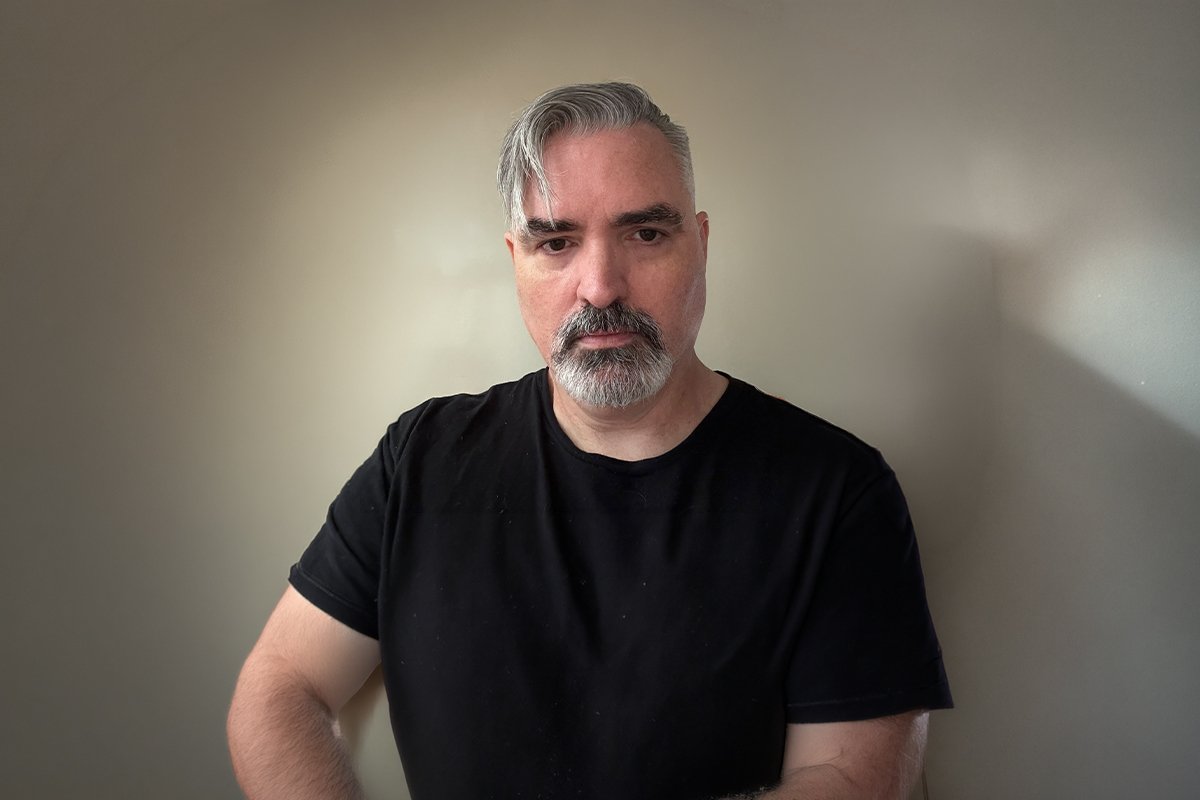
Photo: Paul E Cooley, acclaimed horror and science fiction author, known for crafting dark, immersive, and psychologically gripping narratives.
Exploring Fear Technology And The Unknown Depths
Paul E Cooley discusses deep-sea horror inspiration, blending science with suspense, character creation, podcast storytelling, and practical advice for writers navigating indie publishing and crafting atmospheric, tension-driven narratives.
P aul E Cooley commands attention as a bold and imaginative force in modern genre fiction, fusing horror and science fiction with striking originality. Renowned for his chilling narratives and intricate world-building, Cooley ventures fearlessly into the darkest corners of both the human psyche and the unknown, crafting stories that linger long after the final page.
His acclaimed work, particularly The Black series, exemplifies his mastery of suspense, blending scientific plausibility with visceral terror. Drawing inspiration from cinematic classics while forging a distinctly personal voice, Cooley delivers narratives that feel both unsettlingly real and creatively daring. His ability to transform deep-sea isolation into a suffocating stage for horror is nothing short of extraordinary.
Balancing a career in software development with his creative pursuits, Cooley brings a rare technical precision to his storytelling. His exploration of evolving technologies and their societal impact adds depth and authenticity to his fictional worlds. Through podcasting, hybrid publishing, and direct engagement with his audience, he continues to redefine what it means to be an independent author in today’s literary landscape.
This compelling interview offers an insightful look into Cooley’s creative process, his fascination with fear and technology, and his unwavering dedication to storytelling that challenges, disturbs, and captivates in equal measure.
I was writing an outline for a story set on an exploratory oil rig when I realized I didn’t like the monster I had in mind. During a brainstorming session, the late Justin Macumber asked, “What if the oil is alive?” That was more than enough to remind me of the creature from the movie “The Blob,” but I then added attributes from John Carpenter’s The Thing to give the creature both intelligence and versatility despite its liquid nature.
Paul E Cooley masterfully blends horror and science fiction, creating immersive, intelligent, and deeply unsettling stories that captivate and challenge readers.
How did you balance scientific realism with horror elements in such an extreme underwater setting?
I’ve always been fascinated by the ocean and the alien-like species that live there. We know less about the deep ocean than we do about space, and, with few exceptions, the deeps have yet to be explored by human beings.
Offshore exploration techniques often include the use of Autonomous Underwater Vehicles (AUV) to survey extreme depths. These robots are equipped with sensors to detect motion, radiation, seismic events, etc, not to mention arrays of cameras.
I use AUVs to describe events on the ocean floor that no human could possibly see, which adds suspense while keeping the tale grounded in what is realistic rather than what is convenient for storytelling.
Your background as a software developer is quite technical—how does that influence your world-building and storytelling?
I enjoy writing tales that include futuristic technology, but I like to extrapolate from existing technologies when possible. Having watched computers evolve from the glorified calculators of the 1970s to the data-crunching behemoths of today, I’m cognizant of how technology has affected daily society over the years.
Every fictional gizmo that I add to a story universe has an effect on its society. Whether it be sentient computers, ships that can travel from Earth to Neptune in a few weeks, or autonomous robots handling complex operations, the technologies making those feats possible will have a profound effect on people’s understanding of the world around them, as well as how they relate to one another.
“Some mysteries should not be solved.”—Paul E Cooley
What draws you to exploring the darker aspects of human nature in your fiction?
Human beings fascinate me. They are capable of creating beauty while being quite adroit at destruction. The same human being is often doing both.
I think we all have dark thoughts, and fiction is one of the few media where you can channel them into something creative. Rather than shy away from plumbing the depths of the human psyche, I enjoy seeing how far the rabbit hole goes.
How did you approach building tension and fear in a confined setting like the Leaguer rig?
Imagine floating in thousands of meters of water, hundreds of kilometers from the nearest medical facilities, and hours from any kind of rescue. That idea in and of itself is more than a little disconcerting. Couple it with the claustrophobic confines of an oil rig, and you have a pressure-cooker of an environment. The moment the characters realize the rig is no longer safe, every shadowy corner becomes a possible threat that could lead to their demise. Forcing the characters to face those fears and terrors is the bread and butter of the suspense genre.
“Paul E Cooley’s work is a necessity. Horror needs voices like his. The Black is surely not to be missed.”—Edward Lorn, Author of Life After Dane
Many of your works are serialised as podcasts—how does writing for audio differ from writing for print?
I’ve been podcasting my work since 2009, and reading the words aloud for that long has taught me a few things about pacing, dialogue, and word choice. While I have to include dialogue tags in the written work (he said, she said), I can mostly drop them while narrating since I try to give each character a different voice. At the same time, hearing all those dialogue tags in a row tends to make you rethink your sentence construction and how it will sound in the reader’s head.
What challenges did you face in maintaining suspense across a series like The Black?
The golden rule of monster movies is to “hide” the monster for as long as possible. Instead of showing off the entire creature, you give the reader bits of amorphous description or hints as to what the beast might actually look like. Or its attributes. But once you reveal the entire creature, that mystique is broken, and the monster can actually become a meme instead of something terrifying.
With each story in The Black series, the creature had to evolve as well as provide the characters more hints as to its limitations and weaknesses. At the same time, the creature had to change in appreciable ways between the novels in order to keep the threat fun for readers and nearly unmanageable for the characters.
With each novel, the stakes had to be raised in what the creature can do, what it does, and the threat its continued existence creates for the world at large. In the final novel, those stakes are as high as they get.
How do you develop characters that remain compelling even within high-concept, plot-driven narratives?
I’ve worked with a wide array of people from various disciplines, many different countries, and from non-Western cultures. Each of those people had their own personality, faced their own challenges, and had their own histories. Characters that live and breathe have histories that may not be completely known to the reader, but their pasts often invade their thoughts.
When crafting a story, I think of the types of characters I need, their disciplines, if any, and what kind of person they might be. The more time I spend with that character, the more their ticks, foibles, and histories unfold for me. All I have to do is pay attention to them, keep them consistent, and the characters breathe and sound like real people.
What writing tips would you give to aspiring authors interested in blending horror with science fiction?
Science fiction often provides technologies and weapons that are effective in nearly every situation. The most suspenseful stories, and my personal favorites, feature plots or creatures that make those technologies or weapons less useful or completely useless.
That said, science fiction also provides horror writers the opportunity to create monsters and beings that defy conventional biology. Authors shouldn’t feel hemmed in by traditional humanoid anatomy; instead, they should experiment with body shape and physical attributes. It’s the uncanny valley that makes for true horror, regardless of technological trappings.
What advice would you offer to aspiring authors navigating indie or hybrid publishing today?
Indies should be aware of the publishing process. While multiple drafts, professional editors, and cover artists may not be absolutely required, I heartily recommend them. If you present yourself and your work as professionally as possible, you’re more likely to find an audience.
At the same time, small presses provide a much more manageable pipeline for newer authors. However, not all small presses are the same. Protect your rights and ensure you get paid for them.
How can writers effectively build atmosphere and tension in their storytelling regardless of genre?
Setting is often the easiest mechanism to create an atmosphere. An enclosed space, such as a ship, an oil rig, or even an airplane, provides constraints on characters’ possible actions, thereby restricting solutions to threats and possible escapes.
Introducing elements that the protagonists are unaware of, but the reader is not, also helps build suspense and whets the reader’s appetite for what’s to come.
What habits or routines would you recommend to authors aiming to stay productive and creative long-term?
When you read or watch something you enjoy, spend some time analyzing the story mechanics and characters. If you were entertained, then there’s something to learn about the story’s construction and how the characters are developed.