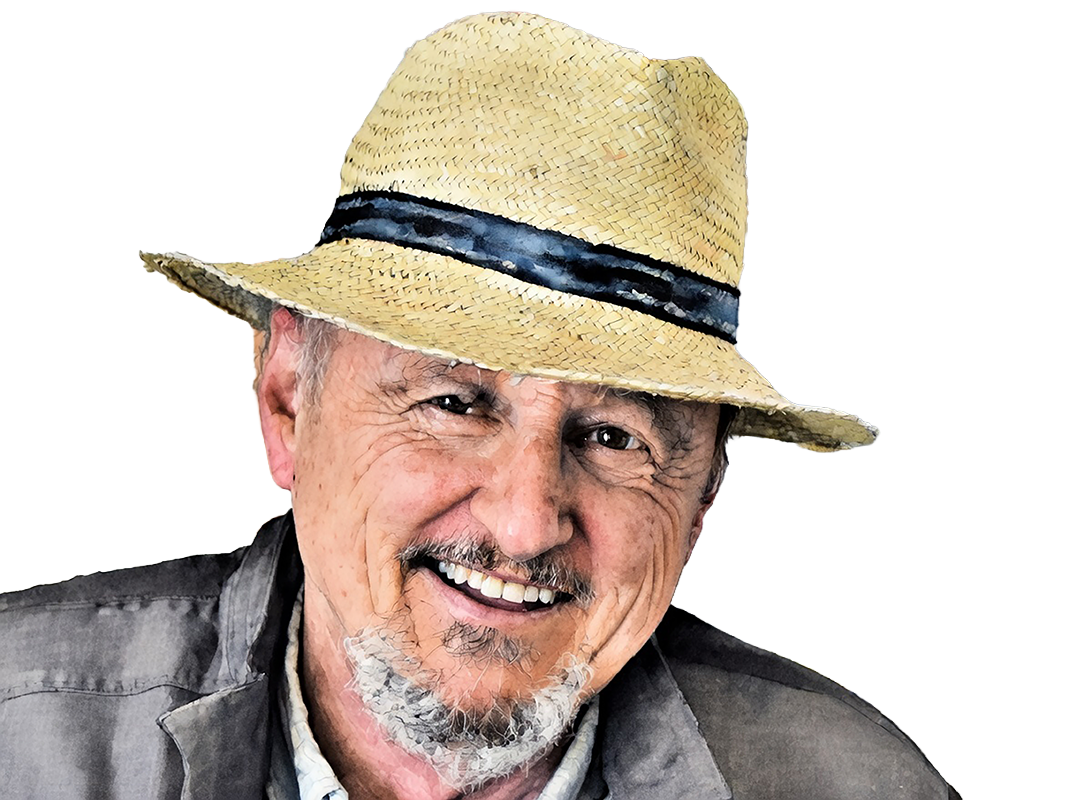
Photo: Lee Musgrave, acclaimed artist and author, whose work bridges visual expression and compelling storytelling with striking originality.
Blending Mystery Romance And The Art World
Lee Musgrave discusses how travel, memory and intuition shape his art and fiction, blending visual expression with storytelling while exploring perception, human behaviour and the evolving contemporary cultural landscape.
L ee Musgrave stands as a compelling and singular voice in the contemporary cultural landscape, seamlessly bridging the worlds of visual art and literary fiction with rare authenticity and intellectual depth. His journey—from Perth to the dynamic art scenes of Los Angeles and the serene yet stirring landscapes of Washington State—has shaped a creative vision that is both globally informed and deeply personal. There is, in Musgrave’s work, an unmistakable sense of lived experience: a restless curiosity, a reverence for history, and an enduring fascination with the human condition.
What distinguishes Musgrave is not merely his impressive exhibition history or his accolades, but the profound cohesion between his artistic and literary practices. Whether on canvas or on the page, his work pulses with a distinctive energy—layered, evocative, and often quietly unsettling. His novels, including Brushed Off, Off Kilter, The Beautiful One, and Waylaid, reveal a writer unafraid to explore the delicate interplay between romance, suspense, and psychological insight, all set against the richly textured backdrop of the art world he knows so intimately.
Equally remarkable is his commitment to authenticity. Musgrave resists formula, choosing instead to trust instinct and embrace the unpredictable rhythms of creativity. This intuitive approach lends his storytelling a natural fluidity, while his visual art—particularly his exploration of Techspressionism—challenges perception and invites viewers into a dialogue that is at once intellectual and visceral.
In this illuminating conversation, Musgrave reflects on the formative influence of travel, memory, and discovery, offering readers a rare glimpse into the mind of an artist who continues to evolve while remaining steadfastly true to his vision. It is a privilege to present an interview with a creator whose work not only resonates across disciplines, but also leaves a lasting imprint on all who encounter it.
Lee Musgrave is a masterful storyteller and artist whose originality, insight and emotional depth elevate both contemporary fiction and visual art.
Interview Highlights
- Global travel deeply influences his creative perspective
- Strong connection between visual art and writing process
- Exploration of time, memory and discovery as core themes
- Creator of the James Terra Mystery Series
- Unique blend of romance, suspense and art-world settings
- Emphasis on intuition over rigid planning
- Inspired by both urban energy and natural landscapes
- Focus on perception, abstraction and human behaviour
- Advocates authenticity and artistic integrity
How have your travels and sojourns influenced the allegorical images and stories that emerge in your art and writing?
In so many, many ways for I often travel to where the exhibitions are being held or I have online meetings with people from there. These gatherings enrich my life by engaging me in fresh experiences with new people and places … a carry-over love from my childhood for by the time I was ten years old, I had traveled around the world twice and lived in ten different places. Which has always made me hope my art and writing will be enjoyed universally, especially in the English-reading world, so I can have broader conversations about them both and find out more about how they have affected people. During the past year or so my artwork has been featured in over 20 exhibitions internationally including in Germany, Poland, Uzbekistan, and several cities in America. I’m confident many of those places, events and participating people will eventual show-up one way or another in my writing and/or art.
“If I didn’t create art, I wouldn’t be able to write.”
– Lee Musgrave
Your work often explores time, memory, and discovery; how do these themes shape the way you approach both visual art and storytelling?
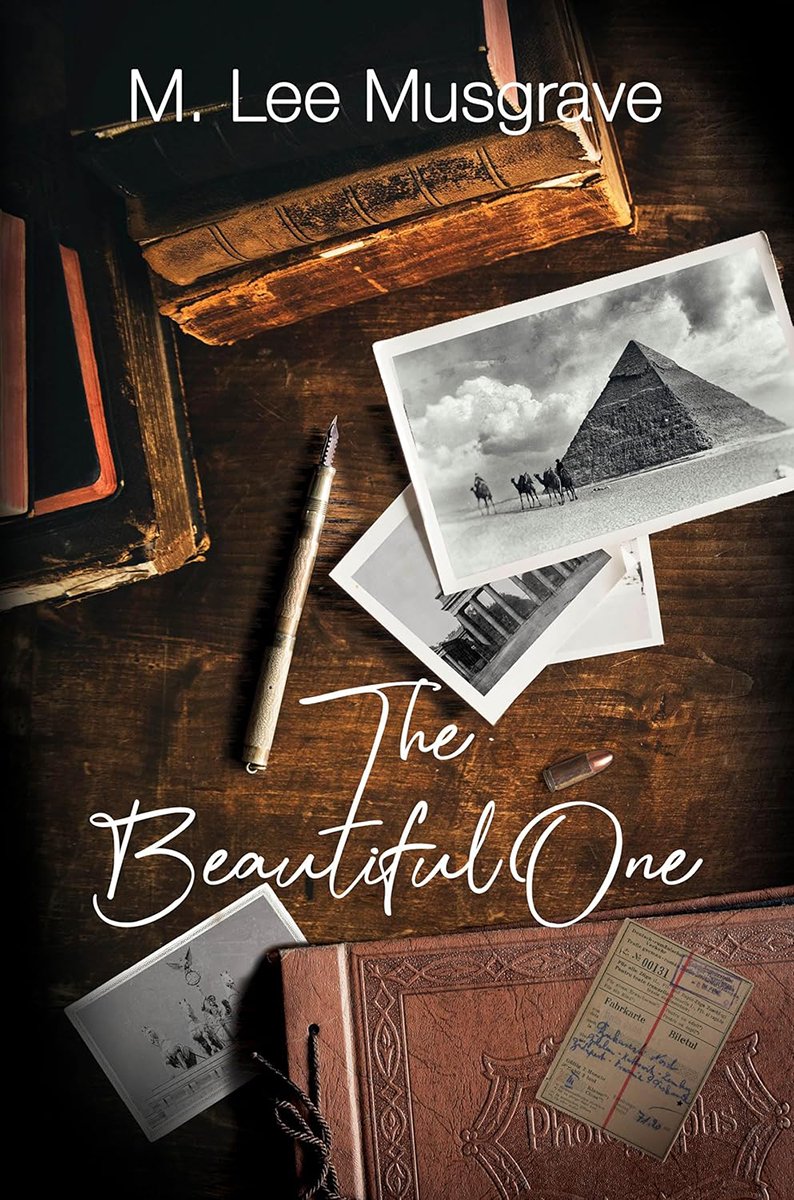
Here is one example – As a child, the first time I saw a photograph of the legendary Egyptian Queen Nefertiti sculpture bust (discovered in 1912) the joy artist Thutmose had in creating it overtook me. I knew in that instant I had to see it in person. When I finally did see the real thing, that precious feeling of elation embraced me even stronger. I’m certain it always will. Further, the Queen Nefertiti exhibition in the Berlin Museum is a wonderful presentation of the many sculptures Thutmose made of Queen Nefertiti, her family and associates. The realistic style and approach he used in creating them was unique in Egyptian history as was the art being created in 1912 Berlin (where the Nefertiti bust was first exhibited) so it felt natural to write a story encompassing them both. The result is my amateur sleuth romantic mystery novel The Beautiful One. The challenge was how to be selective about incorporating many of the extraordinary historic people, inventions, and events of both era’s into a fictional story without overwhelming the main characters. Plus, since many of the characters were inspired by real historic people, I wanted to respect their individual legacies. Truth be told, there is so much actual legendary historic material from these two era’s, I could have easily made this book twice as long. The bottom line is, I allow time, memory and discovery to imprint themselves within me and when one or all of them reach a crescendo I either write a story or create a work of art. Note: I have created a Techspressionism painting inspired by the Nefertiti sculpture bust and have yet to exhibit.
You work includes painting, drawing, photography, Techspressionism and creative writing. How does moving between these different mediums influence your creative process?
I’m fond of saying, if I didn’t create art, I wouldn’t be able to write. I approach both forms of self-expression basically in the same manner. I do not pre-plan a painting or a book, I simply begin. However, that said, while I’m painting, I often find myself flashing on how to improve the current story I’m writing and vice-versa. Each art form is ingrained within me. They make me whole. I cannot image a world without art and books. However, considering that contemporary life is rather crazy, creating fiction that pretends there are always solutions and closure to every major conflict; that life isn’t unpredictable and/or illogical every day; is silly … but it never dulls my passion to create.
“I do not pre-plan a painting or a book, I simply begin.”
– Lee Musgrave
What inspired you to set the James Terra Mystery Series within the contemporary art community of Los Angeles?
Though I was born in Perth, Australia, I lived most of my life in Los Angeles including in Santa Monica and Malibu Cyn. As a result, all 3 novels in the Series are set there, although much of Waylaid take’s place north of L.A. in the central coast area around Avila Beach. Each story is an amateur sleuth romantic mystery that takes place within SoCal’s fascinating art community primarily because as a well-established artist myself, I am very familiar with all aspects of that mini-universe. Plus, Los Angeles, the City of Angeles, is one of the most famous places in the world and was home for several of my favorite authors including Dashiell Hammett (The Thin Man), Raymond Chandler (The Big Sleep), Ross Macdonald, Walter Mosley (Devil In A Blue Dress), and Michael Connelly to name just few. Further, each of my stories takes place in current times, so it is easy for readers to imagine the L.A. settings.
“When I am true to myself the stories simply come forth organically.”
– Lee Musgrave
Your novels combine romance, suspense, and the art world. What challenges and opportunities come with blending these elements in a single story?
When I was a young teenager, a family member mentioned that I seem to observe people as if I was studying them. At the time, I responded by stating I was doing so in-order-to draw them. A couple of years later, I realized I was also scrutinizing our shortcomings in terms of how we treat each other subtly seeking to learn from that. As I matured, read more books and made more paintings, I recognized that I enjoyed stories and visual images that were both romantic and suspenseful. I was able to do that quicker in my artwork than in creative writing. It was only when I realized that if I set a story within the art world, I could pull plot lines from my own experiences. In other words, when I am true to myself the stories simply come forth organically. Often when writing the best things just seem to happen without any pre-planning. My approach is to allow the mystery to evolve of its own accord. In so doing, the pull, pulse, and potency of the story becomes so self-evident that in many ways it becomes a character of its own.
Many of your works balance abstraction with expressionism. How do you decide when a piece should lean more towards representation or abstraction?
That question only arises when I’ve decided to start a new Series. However, even then often as I’m working on a new painting it will tell me which direction to go. In other words, the painting speaks to me visually and I always listen. When I don’t, the painting is usually a failure.
Your creative philosophy mentions making your work “modern, yet somehow ancient”. Could you explain what that balance means in practice?
As we all come from the same gene-pool so-to-speak, all artists strive to create images that appear well connected to the centuries of rich art history and yet suggest a uniqueness that will only be associated with themselves. Which in today’s pluralism, is very challenging to achieve.
How does living near nature and hiking trails in Washington State influence your artistic and literary inspiration?
Having spent a great deal of time in the Columbia River Gorge before moving here, I knew exactly what I wanted to artistically respond to first, once I was here permanently. When I had first arrived in Los Angeles as a child, I was taken to Griffith Observatory to see the city view, but it was the roar emanating from the city that got my attention. I was dumbfounded by it coming at me like an invisible monster. I felt trounced upon and beleaguered especially when others told me they could not hear what I was referring to. When I arrived in the Gorge in 1992, the gentle, sweet-scented wind swathed me and I wanted to hike along the many rivers through the forests and mountains. When I made my home here in 1995, it was those elements I responded to first in my new studio. As a result, the Washington State Arts Commission, Artist Trust, and the National Endowment for the Arts gave me a Fellowship for my paintings inspired by that environment. Followed by the Washington State Arts Commission purchasing one of my surrealistic tree paintings for their Art In Public Places Commission along with purchases from Universities, Colleges, Cities and even the King County International Airport. That welcoming generosity enabled me to return to the abstraction and Techspressionism I had been pursuing in L.A. It also empowered me to write my first novel, Brushed Off in which romance and suspense reflect the undercurrents of turbulence in this new century. In it I present prose involved with deep meaning if the reader wants to think deeper, but otherwise can feel like edifying artistic interludes. I’ve been told that my observations about human behavior are perceptive, written with an agile mindset and that I have a natural ear for lived-in dialogue plus my plots buzz with an uneasy undercurrent of violence as they develop in unexpected directions, avoiding cliched turns and any sort of moralizing messaging. I can accept those judgements and firmly believe I developed that ability while living in L.A., but was only able to use them in a creative, narrative way here in the Pacific Northwest of America. I miss much about L.A. especially its art community and I visit there often, but I do not miss the city’s roar, it is louder than ever.
“Brushed Off is a unique, atmospheric work of Los Angeles mystery fiction.
Not only does author Lee Musgrave provide an engaging case, which ends in an explosive climax,
but he also paints a vivid portrait of the city’s beautiful but dangerous art scene from an insider’s perspective.
A welcome addition for those who enjoy contemporary L.A. noir.”
– Rick Treon, award-winning author of Let the Guilty Pay
Across the various series of your artwork, what core ideas or emotions remain constant for you as an artist?
Contrasting chaos and rationality in-order-to create tension hasbeen one of my favorite objectives in each series whether abstract or representational; temporal or spatial; worldly or naïve; terrestrial or celestial. As well as exploring spatial perception, especially when its unstable and disordered or when clarity coexist with fragmented elements reflecting how life oscillates between order and disorientation.
My Techspressionism art is expressly about perception, all pointing to the playful unreliability of the viewers vision and rational thought. By using repetition, layering, color variation, and imaginary textures I create the illusion of space while retaining a deceptive flatness while rewarding the viewer’s eye with visual pleasure within the tension. The fascinating alchemy that goes into each image is created from the bits and pieces of discarded ephemera I have collected. I stage, light, and photograph it; then alter it via computer programs (except A.I.). For me, each image is more than a document of ephemera for each provides opportunities to discover elements of enchantment that connect with the viewer in deeply profound ways. This effect arises from our collective consciousness and can feel deeply personal, maybe a little disquieting plus suggestive of other times, other places, other worlds or simply a dream incited. They even radiate a life force of their own that suggest something beyond them that leaves a lasting imprint on the viewers cerebral cortex. They are charged images that evoke awe, insight, humor, reflection, and empathy.
While it is true I enjoy the ancient human drive to take advantage of chance in the creation of my digital art or writing, I do not use A.I. in any form.
“What makes this book truly stand out is its beautifully written characters, rich historical backdrop, and the seamless way it blends fact with imagination. Chione and Asim’s relationship is both tender and resilient, and their individual growth is portrayed with depth and sensitivity. Their story is a testament to love’s endurance and the human spirit’s refusal to break. The writing is lyrical yet accessible, evoking vivid scenes of Cairo’s golden sands and Berlin’s bustling cafés and galleries. You feel every heartbeat, every doubt, every flicker of hope. Whether you love historical fiction, stories of romance and empowerment, or simply a tale that immerses you completely, The Beautiful One delivers on every level. It’s a story about reclaiming identity, daring to dream, and the powerful legacy of love and heritage. Final thoughts: This book is a gem — heartfelt, beautifully detailed, and full of soul. A perfect read for anyone who believes that love, art, and courage can shape history. An absolute must for your TBR list!”
– Jithu Influencer
You’ve written that your images can feel familiar, dreamlike, or even unsettling. Is that something you look for, or does it happen on its own?
As a result of years of conversations with artists, curators, critics and collectors I’ve noted that the more observant among them reference that aspect of my art. In other words, whatever they and I see isn’t something I deliberately plan for in my work, but it is there. I often feel it has more to do with how I (and others) see life in general. Plus, it probably reflects how our culture is under rapid change, and how many artists are addressing themes of protest and the emotional impact of global challenges without being overly blunt, brusque, or terse about it.After all, my images of staged pieces of ephemera generate an aesthetic elegance that addresses a subject whose visual persona transcends its socially coerced repute and reflects upon humanities consumer-centric existence while articulating critical engagement with the non-material aspects of the subject. Thus, expanding photography’s and digital arts evolving conversation with contemporary art in general. The work also reflects the fragility of both at a time when the boundaries between fiction and reality have become grossly blurred. Does that mean that I deliberately bring that mood to the surface of my work? No, I don’t, but I do concede that it often is there, even though I didn’t plan for it to be. You could say that my nonobjective imagery is often an evocation of my subconscious reflecting a culture under rapid change and occasionally addressing themes of protest and the emotional impact of global challenges.Further, artists are often absorbed in their own inner worlds—infused with a voyeuristic, psychological complexity echoing the overwhelming isolation of contemporary life. Even with the availability of instant human contact via the world-wide-web the computer-based studio establishes a general sense of alienation. This is not necessarily loneliness, but a kind-of ambiguity of subconscious psychic tension. My work addresses the solitude of this dream-like suspended time while acknowledging the life-like energy of computer technology. It provides instant access to the basic elements of art (line, color, shape, etc.) in an aura of denatured nostalgia or fondness for the creation of abstract expressionistic images. I achieve this goal by staging found ephemera (trash) on my studio work table, light and photograph it; then load the images into my computer and adjust them using a variety of programs (no A.I.). This process gives me the ability to immortalize the momentary, random, coalescence of these objects into what many artists have come to call Techspressionism.
What writing tips would you give to aspiring authors who want to develop a strong and distinctive storytelling voice?
One of my favorite things to do after writing a thousand words or more is to set that work aside for at least 24 hours. Then read it out-loud. In doing so, hearing your words spoken, whether in a monotone or with accentuated pitch, cadence, timbre, lilt, etc. you will begin to develop your writing voice. Your choice of words and sentence structure will begin to reflect how you feel about what you have written.
What advice would you offer to aspiring authors who hope to build a lasting and meaningful creative career?
At the top of the list is ‘be true to yourself’ for if you are not you risk becoming unkind, harsh, mean, hostile, and eventually ill … mentally and physically. In other words, don’t write about a subject that is popular unless you are genuinely interested in it.
You mention working intuitively and grabbing materials on impulse. What tells you it’s time to stop?
The great master, Leonardo da Vinci, once said ‘An artist can find all the inspiration he needs by staring at an old, weathered wall.’ When I stare at one of my many piles of found ephemera to start a project the spirit of his counsel guides me. So too, when my intuition silently speaks to me of stepping back from a work, I do so without hesitation. I do not question that directive for I long ago came to realize it is a divine gift, an endowment, that I will never waste or abuse.
EDITOR’S CHOICE
A richly imaginative, atmospheric novel combining history, romance, and intrigue, with compelling characters and a vividly realised early modern Berlin setting.
The Beautiful One blends historical fiction with mystery and light fantasy, following Asim and Chione in early twentieth-century Berlin. The novel captures a city in transition and explores ambition and identity, with Chione standing out as a strong character. Though pacing and plot depth occasionally falter, it remains an engaging and imaginative read.