
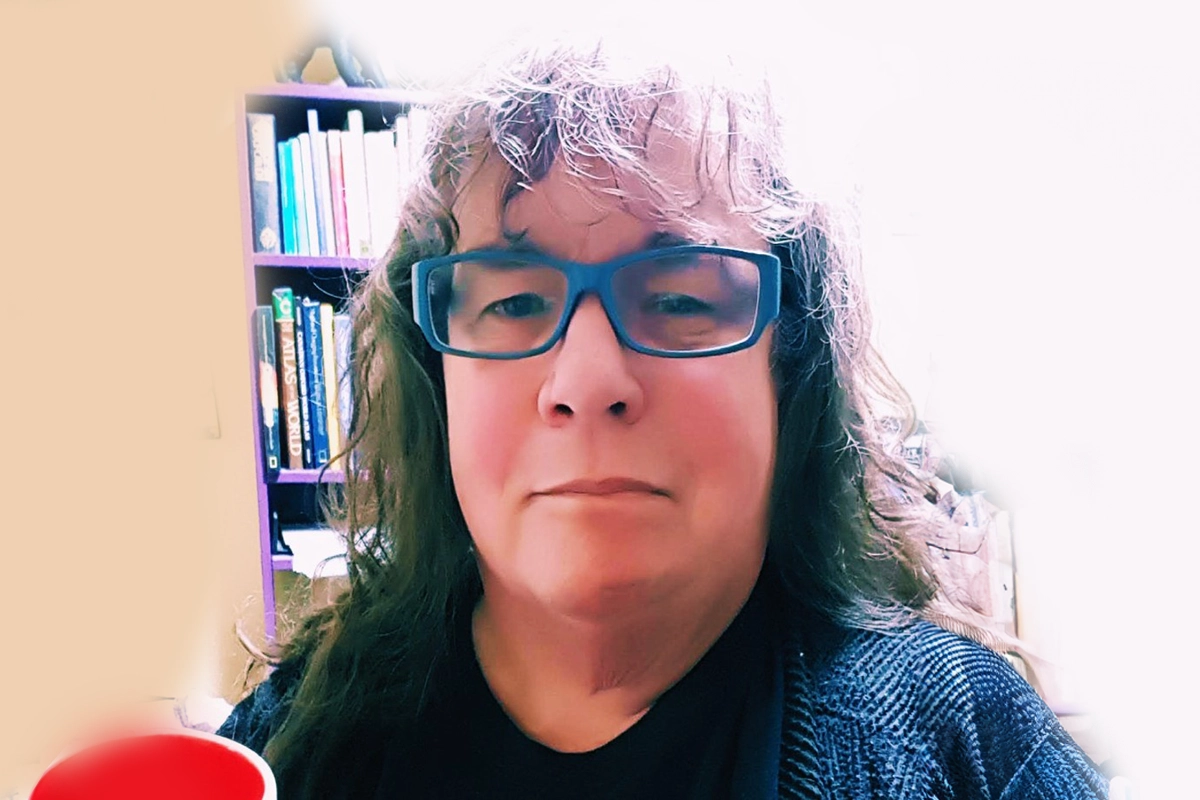
Photo: Alison Bruce, award-nominated author creating masterpieces of mystery, history, paranormal suspense, and humour, always fuelled by coffee and creativity.
Unearthing Stories Filled With Mystery, History, And Paranormal Delight
Alison Bruce, celebrated author of seven novels, shares insights into her creative process, inspirations, blending genres, research adventures, and her journey from storyteller to award-nominated novelist.
Alison Bruce is a remarkable force in the literary world, a skilled wordsmith whose talents span far beyond the pages of her captivating novels. A celebrated author of seven compelling books, Alison’s work seamlessly intertwines history, mystery, romance, and the supernatural, creating richly textured narratives that linger in the minds of readers. Her ability to weave well-researched historical detail with sharp wit, strong characters, and a dash of the paranormal speaks to her unparalleled creativity and versatility as a storyteller.
Known for her meticulously structured plots and resilient protagonists, Alison’s stories are not merely tales; they are immersive journeys into settings as diverse as the wild west of Under a Texas Star, the tumultuous backdrop of the American Civil War in Hazardous Unions, and the thrillingly supernatural world of Ghost Writer. Four of her novels have garnered critical acclaim, becoming finalists for prestigious genre awards. Such accolades are no surprise, as her talent for combining profound human themes with carefully chosen elements of suspense and humour ensures a deeply enriching experience for all lovers of fiction.
Not only a gifted novelist, Alison has excelled across disciplines as a copywriter, editor, graphic designer, and even served as Executive Director of Crime Writers of Canada. Her decades of professional expertise have only enhanced her artistry as a writer, bringing precision, creativity, and a warm authenticity to her work. It is through this craft that she shares both gripping stories and characters who inspire, entertain, and challenge us. Alison Bruce’s work has truly set a benchmark in modern storytelling, and it is an honour to have such an accomplished author grace our pages.
We are thrilled to present an engaging conversation with Alison Bruce in which she sheds light on her creative process, her inspirations, and the lessons she’s learned along the way. Enjoy this insightful interview with one of the most captivating voices in contemporary fiction.
Alison Bruce’s exceptional storytelling, richly detailed settings, and unforgettable characters cement her place as a masterful, versatile author.
Can you tell us about your experience as a copywriter, editor, and graphic designer, and how these skills have influenced your writing?
I been writing stories as long as I could string sentences together on a page. Before that, I told stories. As a result, I eventually became good at stringing words together. My sister used to read my stories back to me as written, horrible grammar, misused homonyms, warts and all. I heard the mistakes I didn’t see, and I learned to do better rather than be embarrassed by the superior English skills of my younger sister.
In the beginning, I’d say my experience writing stories influenced my work as a copywriter and editor more than the other way around, except in one thing. When I was criticized by a client for what I wrote, I didn’t take it personally. A lot of the time it was a question of miscommunication. In any case, it was their baby not mine. That really helped when I had my first book editor and I had to listen to suggestions without taking them personally.
Branching out into graphic design started because I was tired of seeing the same clip art in newsletters all the time. It catches the eye, but it doesn’t always give the reader information. It doesn’t tell a story.
I think everything should tell a story.
What inspires your ideas for the protagonists in your novels, particularly in terms of their strength of character and sense of humour?
At some point, all my characters are a part of me, especially if I’m writing in the first person. If they don’t start off as me, like Marly Landers, I become them while I write about them. Since I also wrote from the point of view of Texas Ranger Jase Strachan, I also became him.
My characters have a sense of humour because I haven’t met a resilient person who didn’t. Given the amount of trouble I give my protagonists, they have to have a sense of humour or they wouldn’t survive. I’ve learned this from experience. In one month I found out my mother, father and sister all had cancer. There’s nothing funny about cancer, but you have to find humour in the things that happen around it or all you do is cry all the time.
Your novel Ghost Writer features a unique blend of mystery, suspense, and supernatural elements – what drew you to this combination of genres?
The anecdote at the beginning of Ghost Writer, where Jen describes seeing her grandmother’s ghost before she knew her grandmother had died, happened to me. My experience wasn’t as detailed. I just saw Grandma Bruce at the end of my bed and knew she was saying good bye. When my mother came to tell me grandma died overnight, I already knew.
I tend to be sceptical, but I believe my own senses, even when I don’t understand them at the time, and I love a good ghost story. One of my favourites was Ghost Whisperer. I couldn’t help thinking, how it would be much more challenging if she could only see ghosts and not hear them. They would have to communicate via charades, or, as I have my ghosts do, showing their point of view of the of the past. What they show isn’t false, but it isn’t the complete truth either. This makes the ghost story like any other mystery. The witnesses are unreliable, are among the suspects, and may end up being the murderer.
How do you undertake research for the historical elements in your books, such as the settings in Under a Texas Star and Hazardous Unions?
I love history. At one time I wanted to be a history teacher. One of my high school history teachers said I’d never be a historian. An honours BA, majoring in both history and philosophy later, I had to agree with him. I’d never be a historian. I didn’t have the focus to stay on topic. Once I started researching, I tended to go down rabbit holes of related material.
My history teacher would probably have disapproved of me using the introductions Louis L’Amour write to his short stories as source material. However, L’Amour interviewed cowboys who lived the wild west era and included their stories in these introductions. For nuts-and-bolts information, like the cost of a shirt in the general store, I used a role-playing guide for the historical old west. Role playing gamers like to keep their facts straight.
Historical research is the easy part for me. It gets tougher when I have to research drug interactions, cyber-crime, police procedures and crime scene protocols. I have such interesting reference books on my shelf like The Anatomy of Motive and Forensic Psychology for Dummies along with The Shorter Oxford English Dictionary.
What is your typical writing process like, from initial concept to completion of a manuscript?
First I get an idea and take it for a test spin to see if it has legs.
Once I have the basic outline and main characters set, I start researching anything the story hinges on. If it’s not going to work, I want to know asap! Maybe something else will. Maybe the story will be set aside until I find the right thing to hang the mystery on. This is what happened with Deadly Art, my most recent book. The main character actions didn’t change a lot, but the whole story had to hang on a different premise because the first one was outdated.
In the interim I wrote Ghost Writer and A Bodyguard to Remember, which brings us to…
How do you balance the level of romance in your stories with the demands of the mystery or suspense plot?
A Bodyguard to Remember is the only book, other than the western historical romances, that I set out for romance to be featured. It is a romantic suspense because Ghost Writer ended up becoming a supernatural romantic suspense. That happened because I fell in love with a voice in my head.
Chief Gravel lived in my head along with Jen Kirby and all the ghosts. Fortunately, both Jen and I knew we had a job to do and that came first. So, there could be hints of romance, but the main action had to centre around solving the mystery and putting the ghosts to rest before they killed her.
Even Pru Hartley in A Bodyguard to Remember puts her children’s safety before romance. Finding spies may be important, but the welfare of her children is paramount.
In each story, I get the characters to limit the level of romance so that it doesn’t interfere with times when they should be more worried about other things.
What advice would you give to fellow authors who are just starting out in the industry, particularly in terms of developing their craft and getting their work noticed?
Before writing: READ! READ! READ!
After writing: PROOFREAD! PROOFREAD! PROOFREAD!