
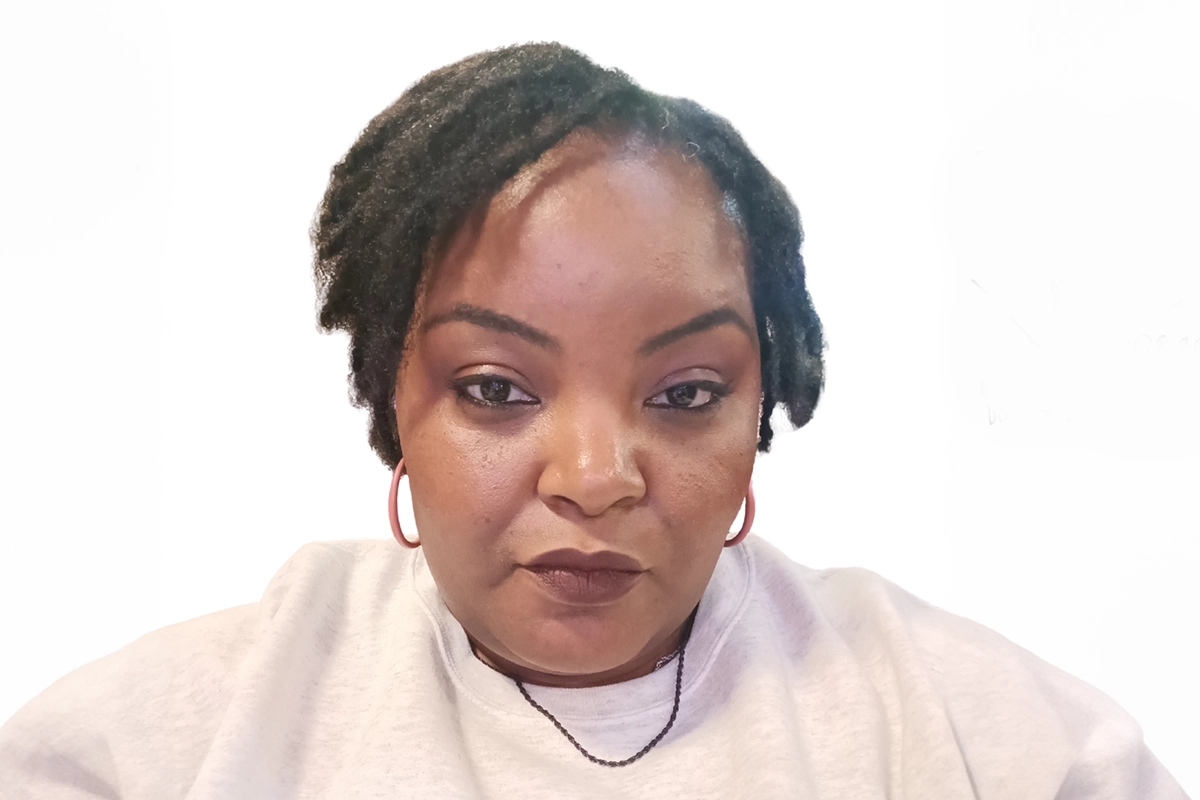
Photo: Author Porsha Deun: A creative force shaping powerful stories filled with passion, love, and imagination.”
Creativity, Resilience, And Storytelling
Porsha Deun shares her inspiring journey from debuting with Love Lost to crafting diverse genres, advocating love, tackling grief, and empowering young minds with her authentically imaginative storytelling.
Porsha Deun is a brilliant author whose literary journey stands as a testament to resilience, creativity, and passion. Hailing from Flint, MI, she embraced her love for storytelling during moments of adversity, taking the first steps towards transforming her vivid imagination into captivating stories. Her debut novel, Love Lost, not only marked the beginning of her remarkable career but also garnered the recognition it truly deserved, proving her natural flair for weaving compelling narratives right from the onset.
With over a decade of dedication to her craft, Deun has established herself as an extraordinary voice in diverse literary genres, ranging from romance and fantasy to children’s books and devotionals. Her ability to produce at least one book per year reflects an unwavering commitment to her artistry, alongside her unique writing process that favours spontaneity and the whispers of inspiration over rigid outlines—a trait that makes her stories deeply authentic and delightfully unpredictable.
This interview delves into the heart of Deun’s work, exploring the themes of grief and guilt in her acclaimed Addict Series, the empowering message within her children’s book Princesses Can Do Anything, and the significance of love as a binding force in all her works. Porsha Deun’s writing not only entertains but inspires, offering glimpses of hope, empowerment, and intricate human emotions. It is no wonder that her characters linger in the minds of readers long after the final pages are turned.
Her honesty about her journey, from embracing her unique style to the successes and challenges of indie publishing, serves as a guidepost for aspiring authors navigating their own paths. As someone who values authenticity in storytelling, Porsha Deun writes not just with her words, but with soul and purpose. Prepare to be captivated by her insights and stories in this exclusive interview, and allow yourself to be drawn into the rich tapestry of her creative world.
Porsha Deun is a gifted writer whose evocative storytelling and versatility inspire readers, proving her brilliance across diverse genres.
What inspired you to start taking your writing seriously in 2015 whilst being unemployed?
I had a lot of time on my hands and to be honest, I was in my feelings about someone from my past that I had not seen for some time. I had some wine, went to bed, and dreamt up this story. The next morning I got up and wrote out the first six chapters of the first draft of what eventually became Love Lost, my debut novel.
How do you manage to publish at least one book per year, and what is your writing routine like?
I try to write something every day. It doesn’t matter if it is just a single line of dialogue or an entire chapter; or if it is on a sticky note, the Notes app on my phone, or on my laptop. Most days, I’m successful with this. Some days, not so much. But I also give myself grace. One of the things that helps me (writers who have to outline tend to think this is crazy) is I don’t restrict myself to write the next scene from the previous writing session or even work on the same story from the previous day. Whatever scene or characters are talking to me that day or in that moment (I’m known to pull a notebook and pen out of my purse at any given moment) is what I write. So I don’t write linearly. For example, my novel Intoxic, when I started that story, I had the first two chapters, the last five chapters, and the epilogue. I had no idea how I was going to get from the ending of chapter two to the beginning of what became chapter 53! The journey of finding that middle was fun!
Your debut novel, Love Lost, was nominated for an award, how did that feel and what impact did it have on your career?
It was sort of surreal. I mean, this was my debut novel. Who gets recognized for their first ever book, especially in indie publishing with very little marketing dollars behind it. Though I felt good about the story, I never expected that. I was definitely encouraged by it. For me it validated that I don’t have to have a massive following to reach people.
You have written in several genres, including romance, fantasy, and children’s books, which one do you enjoy writing the most and why?
Romance is my home as both a reader and a writer. Romance, love, means there’s still hope in a world where reality is often dark and depressing. Plus, who doesn’t love love? We all want and need it. Even in the other genres I write, love is there-whether it’s familial, platonic, self-love, or romantic. Love is and should be in everything.
Can you tell us more about your experience writing the Addict Series, and what prompted you to explore the themes of grief and guilt in the third instalment?
Oh, you really did your work. I love it! We as humans have a hard time embracing grief and guilt. I think it is because we fail to see grief as the evidence of an everlasting love, and instead we make them to be demons for our own torment. I’ve lost a parent, grandparents, and mentors and I will always grieve for them because I will always love them. There is guilt there for not expressing that love enough or for certain conversations where I said the wrong thing or could have reacted in a better way. In the third book, DeAngelo struggles with the grief of losing his brother, the guilt of being the connection between his brother and Destiny, and the guilt of never acknowledging the love he had for Destiny. That is a tough combination for anyone to deal with considering what happened at the end of the first book. He really wanted to sweep it all under a rug but he couldn’t because this other person who did not want to deal with their grief and rejection was taking it all out on him.
How do you develop your characters, and what techniques do you use to get into their mindset and create realistic dialogue?
My characters are individuals who live rent free in my head. Ha! Whether or not I like the character, there are bits of me (and people I know) in each of them. Because they are all pieces of me, my life, and those I have interactions with, it doesn’t make it hard for me to get into their mindsets. They have their voice and their side of the story. Because I have a vivid imagination, I can take those bits of myself and put them in situations I would not otherwise be in and watch how they react like it’s a movie in my head.
Your children’s book, Princesses Can Do Anything, promotes a positive message about female empowerment, what inspired you to write this story?
My niece. I never intended on writing a children’s book. In fact, when I was asked when I was going to do a children’s book at events and markets, my response was that my books include the act of making children but they are not for children! I’d refer them to my friend, LaTashia Perry, who writes beautiful children’s books (Hair Like Mine, Skin Like Mine, etc.). One day I was at my brother’s house where his wife had some clothes for me to try on for an upcoming photoshoot. I guess my niece, who was probably 3 or 4 years old at the time, felt like she hadn’t seen me in many dresses and skirts. So I’d come out of the bathroom in a dress or skirt and she’d say I looked like a princess and we’d waltz around the living room. When I put the clothes I came in back on, she was disappointed and said I wasn’t a princess anymore. I explained to her that princesses can wear pants and do all of the princess stuff and more. Months later, I was brushing my teeth, getting ready for work, and the book played out in my mind page by page. I ran to get my notebook immediately. Because of that, I made my niece the co-author of the book.
What advice would you give to aspiring authors who are just starting out on their writing journey, and what lessons have you learnt along the way that you wish you had known sooner?
My advice is in three parts: 1. write your book for yourself. This means you stay true to yourself and your story. 2. You edit for your readers. Fixing plot holes and grammar makes the reading experience more enjoyable for your reader. 3. Publish for yourself and your readers. Most aspiring authors never finish the first draft, so to publish is a huge accomplishment. Do it! Also, your readers can’t find your book and you can’t find your readers if you don’t publish! One thing I wish I had known sooner is that my writing process doesn’t have to look like anyone else’s. I remember looking at posts within the writing community on a particular social media platform and feeling guilty that I did not outline. I stopped writing my book as I had been doing to create an outline for the Love Lost Series, which at the time I thought was going to be a duology, not the trilogy it became. I spent two weeks on that dang-on outline only for my characters to protest. They stopped talking to me! I went back to writing the way I had (I’m a true pantser), and the words flowed again. Thirteen books later, not a single thing in that outline has made it into any of my books. I say all of that to say, your writing style is your writing style. Let it be flexible. Most of the time, pen and paper work better for me than typing on a keyboard. If you have a long commute to and from work, use the talk-to-text feature on your phone and your Notes app to get some words in. Do you.