
Photo: Dennis Gelbaum: A Visionary Creator Changing the Way We Experience Stories
Visionary Author and Creative Trailblazer Redefining How Stories Are Told
Dennis Gelbaum shares his journey of reinvention, blending creativity and strategy, and crafting transformative narratives through advertising, film, writing, and innovation with inspiring insights for aspiring storytellers and creators.
D ennis Gelbaum is not just a storyteller; he is a creative force, a visionary who breathes life into every medium he touches. With accolades spanning advertising, product development, songwriting, and literature, his dynamic career is a testament to the power of reinvention and relentless curiosity. As the architect of compelling narratives, both on-screen and page, Dennis astounds with his ability to engage, inspire and challenge audiences across the globe.
An award-winning producer, director, and writer, Dennis has captivated diverse audiences with profoundly immersive experiences and stories. His novel Beyond Reasonable Doubt, a remarkable work of historical fiction, reflects his precision as a director and his gift for putting a reader right into the action, while his poetry collections Something About Going Home and Going Home radiate emotional depth and literary elegance. He is a master “marketing mixologist,” a cinematic storyteller, and a pioneer of disruptive engagement, seamlessly blending creativity with strategy to produce lasting cultural moments. From receiving top honours at Cannes to authoring screenplays like The Mona Lisa Conspiracy, Dennis has proven to be a creator unbound by traditional limits, constantly expanding the very definition of what storytelling can be.
This month, it is our privilege at Reader’s House to sit down with the ever-innovative Dennis Gelbaum. In this captivating conversation, Dennis shares insights into his multifaceted career, his creative process, and how he channels both triumph and adversity into unforgettable works that defy conventions at every turn. Prepare to be inspired by a man whose creativity doesn’t just tell stories—it challenges how we experience them.
Dennis Gelbaum is a creative genius whose extraordinary vision transforms storytelling into immersive experiences that captivate and inspire.
Highlights From the Interview:
- How Dennis blends creativity and strategy to create compelling narratives.
- The story behind his award-winning Black & Decker Cannes Lion campaign.
- Reinventing himself through various career transitions, from advertising to writing.
- Insight into the making of his novel Beyond Reasonable Doubt, poetry collections, and award-winning screenplays.
- The importance of risk-taking, failure, and challenging the status quo in creative growth.
- Valuable advice for aspiring authors on authenticity, experimentation, and writing from life’s regrets.
What inspired you to transition into a career that blends creativity and strategy?
Growing up in an environment where artistic expression was a constant gave me the confidence to take risks. However, I quickly realized that creativity alone wasn’t enough. I began selling myself as a “marketing mixologist,” believing that true audience engagement requires a blend of art, science, and strategic thinking. Rather than following a rigid corporate path, I pursued wisdom through direct experience – often taking the “hard way” to learn how to restore trust and build resilient brands. This focus on the human element allowed me to transition from simply selling products to inspiring change in how people feel about brands.
Can you share the most memorable or impactful project you’ve ever worked on?
Winning the Cannes Lion for Black & Decker was a definitive chapter during the “Dusenberry Era” at BBDO/New York. At a time when the agency was known for big, cinematic ideas, I was the “go-to” producer capable of turning those visions into masterpieces. I was tasked with bringing a level of visual sophistication to the power tools category that had never been seen before, treating the products like high-tech instruments of precision. Navigating the technical complexities of shooting mechanical tools in a way that felt sleek and futuristic proved my philosophy: creativity and strategy are inseparable. The campaign didn’t just look beautiful; it redefined Black & Decker as a premium, innovative household name. This victory, following my award-winning “American Revolution” campaign for Dodge, cemented my reputation as a maverick who could inject “boring” products with enough cinematic adrenaline to capture the world’s attention.
“Don’t wait for the ‘perfect’ time or the ‘perfect’ idea. When you have the choice to sit it out or dance, always dance.” – Dennis Gelbaum
How do you approach reinventing yourself both professionally and personally?
My journey has been a series of strategic pivots. I transitioned from agency Copywriter, Producer and Creative Director to Commercial Director to partner of The NAVARAC Film Group, a multimedia production company. Later, I moved away from traditional advertising to create immersive “brand experiences” and live multimedia spectacles for global icons. I even ventured into product development, inventing the Buddy Lite Safety Leash for The Sharper Image, and briefly entered the culinary world as a restaurant owner. This reinvention is rooted in a shift from seeking perfection to valuing wisdom. I speak openly about personal and professional betrayals – business partners who “kidnapped my trust.” My recovery involved moving beyond that pain and finding peace through writing. Transitioning from 30-second ads to 500-page novels like Beyond Reasonable Doubt and poetry collections like Something About Going Home and Going Home allowed me to explore my own “mistakes and missteps.” I believe that being conscious of one’s regrets is proof of having truly seen life, not just passing through it.
What motivates you to continue exploring new ventures and taking on challenges?
I am driven by a blend of relentless curiosity and a “problem-solver” mindset. I enjoy the challenge of proving I can succeed in entirely different fields. One of my favorite quotes is from a Lee Ann Womack song: “When you get the choice to sit it out or dance, I hope you dance.” I always dance, choosing action and risk over complacency. I am not afraid of failure; I believe that when one door closes, another opens.
“If you are a poet who also likes business, or a director who loves science, find a way to let those identities inform one another.” – Dennis Gelbaum
How has your background in advertising and production influenced your creative approach as an author?
The transition from micro-storytelling to long-form authorship is characterized by my “Director’s Eye.” I use punchy, rhythmic prose that mimics film edits, and my chapters often function like storyboards. In my mystery thriller Beyond Reasonable Doubt, I utilized my strategic background to deconstruct the science of DNA evidence, challenging the audience’s perception of “absolute truth” much like I would challenge a consumer’s perception of a brand. I treat the book page like a multimedia experience, collaborating with artists to ensure the visual layout is as impactful as the text.
What do you enjoy most about the process of storytelling, whether it’s through writing, producing, or directing?
I love storytelling’s power to motivate and inspire – not just for the audience, but as a vehicle for my own evolution. Whether projecting laser images onto buildings or crafting a thriller plot, I thrive on the “puzzle” of integration. As a commercial director, I didn’t just want to make ads; I wanted to make “30-second features.” More than anything, I love the initial phase of the creative lifecycle and the beautiful unpredictability of the process.
“Your goal should be to motivate, inspire, and change how people feel.” – Dennis Gelbaum
What role does failure play in your creative process, and how do you handle setbacks?
Failure is an essential component of authenticity. I treat my mistakes as the foundation of my growth. I describe myself as “unstoppable,” thriving particularly when others say something is impossible. I handle setbacks by “challenging everything” – the process, the risks, and the conventional thinking that led to the hurdle. I leverage my producer’s background to find alternative routes when the primary path is blocked.
Do you have any routines or methods that keep you inspired and productive?
I avoid rigid schedules in favor of streamlining decision-making and maintaining a “mixologist” mindset. I stay productive by refusing to view creativity and strategy as separate tasks. I break my process into four phases: Create, Present, Sell, and Execute. While execution is my least favorite part, my productivity stems from my ability as an Executive Producer to surround myself with people who are smarter and more experienced in their specific niches.
How do you balance the diverse aspects of your professional career with your personal life?
I don’t seek “separation,” but rather integration. I turn personal hobbies into professional ventures, blurring the line between work and play. This balance comes from deep self-acceptance. By embracing my regrets as proof of having lived, I avoid the burnout that comes from trying to maintain a perfect professional facade.
What advice would you give to others about maintaining authenticity in their personal and professional journey?
Embrace the totality of one’s experience – the successes and the setbacks alike. Authenticity comes from being honest about the “messy” parts of your story. I believe that “to live is to make mistakes” and that trying to hide them only creates a false brand. To be truly authentic, you must be conscious of your regrets, as they are proof of a life fully lived. I maintain my own authenticity by refusing to separate my personal interests from my professional output. And don’t try to fit into a single “box.” If you are a poet who also likes business, or a director who loves science, find a way to let those identities inform one another. Authenticity is found in the “mix.”
Authentic growth happens when you take risks and challenge the status quo. If you believe in an idea – even if it seems “crazy” like inventing an illuminated safety leash or learning how to make a pizza or writing a novel late in your career – you have to pursue it. Whether you are creating a 30-second commercial or a 500-page book, your goal should be to motivate, inspire, and change how people feel. Focus on the human connection rather than just the transaction.
What do you think is the key to creating lasting impact through creative projects?
The key to creating a lasting impact isn’t found in a single viral moment or a big budget; it is found in the strategic integration of emotion and experience. You cannot have an impact if you play by the rules. I “challenge everything”- the process, the risks, and the opportunities. I reinvented the pet leash because I saw a safety flaw. I turned a poem into a power ballad because I wanted to see if the emotion would translate to music. If you want to leave a mark, you have to “re-imagine the box” until the box no longer exists.
What advice do you have for aspiring authors who are just starting out on their writing journey?
My advice for aspiring authors is built on the same “unstoppable” mindset that has fueled my career in advertising. I don’t view writing as a quiet, academic exercise, but as a bold act of participation in the human experience. If you are just starting your writing journey, may I share the following: 1. Don’t wait for the “perfect” time or the “perfect” idea. When you have the choice to sit it out or dance, always dance. 2. Start writing now, even if it feels messy. The act of doing is where the “luck” and the momentum are found. 3. You don’t have to be an expert in everything. Surround yourself with talented editors, illustrators, and mentors. 4. Listen more than you speak. 5. Challenge the “what ifs” before they become obstacles. 6. Experiment with different mediums. Don’t just think of your story as a book – think of how it could be a screenplay, a poem, or a song. 7. Write from your regrets. Consciousness of your regrets is proof that you have truly lived, not just passed through. 8. Put your own vulnerability on the page. Readers connect with the “bonds of trust” and the “fragility” of human relationships, not with manufactured perfection.
EDITOR’S CHOICE
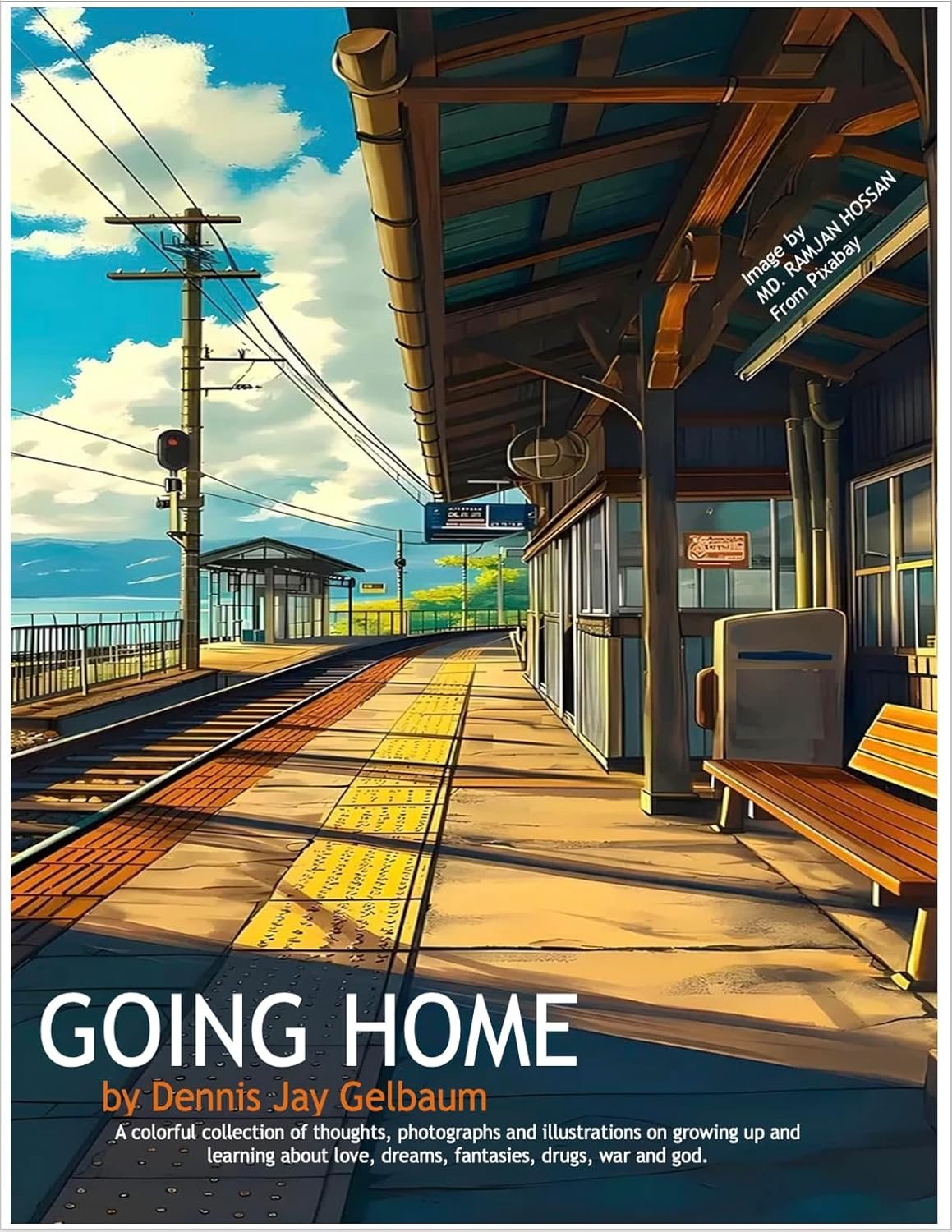
Dennis Gelbaum’s Going Home is a brilliant, poetic exploration of life, blending creativity, emotion, and thought-provoking reflections beautifully.
Dennis Gelbaum’s Going Home is a vibrant mix of poetry, photographs, and reflections that explore profound themes like love, family, and the harsh realities of adulthood. Beautifully written, it captures the joy, struggles, and dreams of growing up, wrapped in vivid imagery. A thought-provoking journey through life’s colours and complexities—this book is heartfelt, creative, and deeply resonant.