
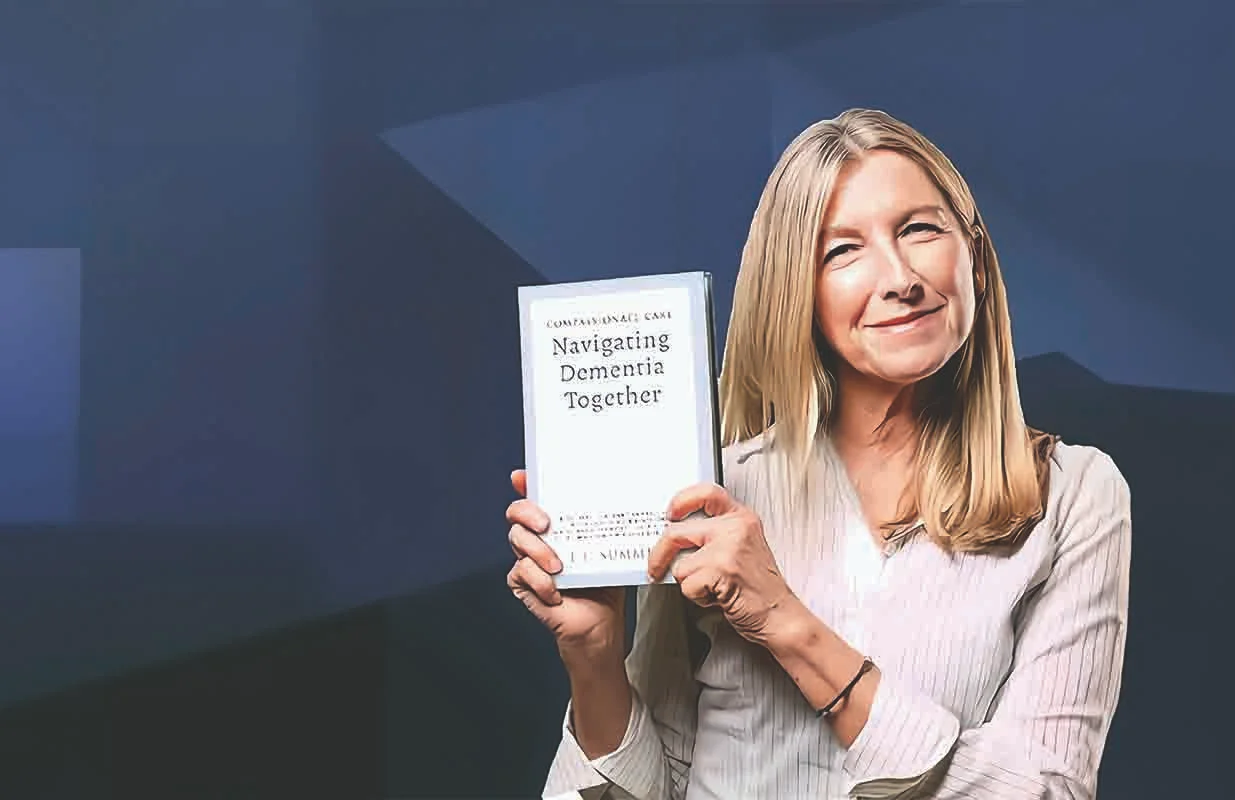
Photo: L.E. Summers, author of the Compassionate Care trilogy, shares their experiences and wisdom to guide dementia caregivers worldwide.
A Compassionate Voice for Dementia Caregivers
L.E. Summers shares their heartfelt caregiving journey, offering practical advice, emotional support, and strategies to help caregivers navigate dementia care with compassion, resilience, and the importance of self-care.
L .E. Summers has become a source of guidance and solace for caregivers navigating the complex and often emotional journey of dementia care. Their trilogy of books—Compassionate Care: Navigating Dementia Together, Compassionate Care: A Practical Handbook for Dementia Caregiving, and Compassionate Care: Accepting the Dementia Diagnosis—offers a blend of practical advice and heartfelt support to empower caregivers looking after loved ones with dementia. Rooted in personal experience, Summers’ work serves as a gentle reminder of the importance of resilience, compassion, and self-care in the face of life’s most challenging moments.
Summers’ caregiving journey began in 2020 during the early days of the COVID-19 pandemic. After retiring from a career in IT and real estate, Summers found themselves travelling 1,600 miles to care for their mother, moving back into their childhood home. On their very first day as a caregiver, a doctor discussed the possibility of hospice care for their mother, propelling Summers into a role they had never anticipated. Determined to help their mother live long enough to meet her first great-grandchild, Summers faced the trials of caregiving head-on. From those experiences emerged their books, crafted from personal notes and reflections, which detail what worked, what didn’t, and everything they wished they had known when they started.
L.E. Summers is a transformative voice, equipping caregivers with essential tools, heartfelt empathy, and unmatched guidance for dementia care.
Reflecting on their motivations, Summers explained, “Caregiving was not a path I anticipated for myself, but it taught me so much about growing older, family, love, and perseverance. I struggled at first, but I kept notes on what worked and what didn’t. With my books, I am sharing my experience and insights, creating resources I wish I had found but couldn’t.”
One of the recurring themes in Summers’ work is the emotional toll of caregiving—the isolation and ambiguity that often accompany the role. Many caregivers find themselves questioning their decisions or feeling overwhelmed by the changes in their loved ones. Summers said they hope their readers feel less alone when engaging with their books. By providing both practical guidance and emotional validation, Summers aims to help caregivers navigate these challenges with confidence. “Having a resource that tells you ‘this is normal, and here is what helps’ can be a great source of reassurance,” Summers shared.
A central focus throughout Summers’ writings—and one reinforced in this interview—is the importance of self-care for caregivers. Summers firmly believes that caregivers cannot pour from an empty cup. “You cannot provide compassionate care when you are stressed and running on empty,” they emphasised. Practical self-care tips are woven into their books, from the importance of having a backup for caregiving tasks to taking brief “vacations” through meditation or other forms of recharge.
To support their caregiving efforts, Summers often turned to the DICE model, a framework that encourages caregivers to Describe, Investigate, Create, and Evaluate solutions to challenges and behaviours. This method, Summers explained, was indispensable for understanding potential triggers to their mother’s distress and creating a routine that worked. Their detailed notes became an evolving toolkit, offering new insights through trial and error.
Support networks, too, played a critical role in Summers’ success as a carer. From practical help like picking up groceries to emotional support from trusted connections, they stressed that no one should navigate the caregiving journey alone. “Support comes in so many tiers,” Summers explained. “It is about finding the right people for each need. I also encourage caregivers to reach out to online groups and local faith or medical communities, which often offer free advice and resources.”
Summers’ commitment to making caregiving resources accessible is evident in their decision to translate their first book into Spanish—a natural progression, given their upbringing in the Hispanic community. They shared that language barriers often exacerbate the challenges faced by Hispanic caregivers, making resources in their native tongue essential. Summers hopes to expand these translations to their other titles in the near future.
When asked what they hope readers take away from their books, Summers’ response is clear: “I want them to feel less isolated and more confident. Caregiving has no map, and it’s easy to feel as though you are failing when things don’t seem to work. Trial and error is part of the process. My books aim to offer suggestions, encouragement, and a reminder that self-care isn’t selfish—it’s necessary.”
Summers also had words of encouragement for other writers contemplating sharing their own caregiving experiences. “Write from the heart,” they advised. “Your authority stems from your experiences, and that authenticity is what readers value. Even if your story feels personal, it will resonate with others. Your journey matters.”
Through their words and wisdom, L.E. Summers has become a light for countless caregivers, proving that even in the most challenging times, love, understanding, and practical support can make all the difference. As featured in Mosaic Digest, Summers’ story leaves readers with a renewed appreciation for the caregiving journey and the human capacity for compassion.