
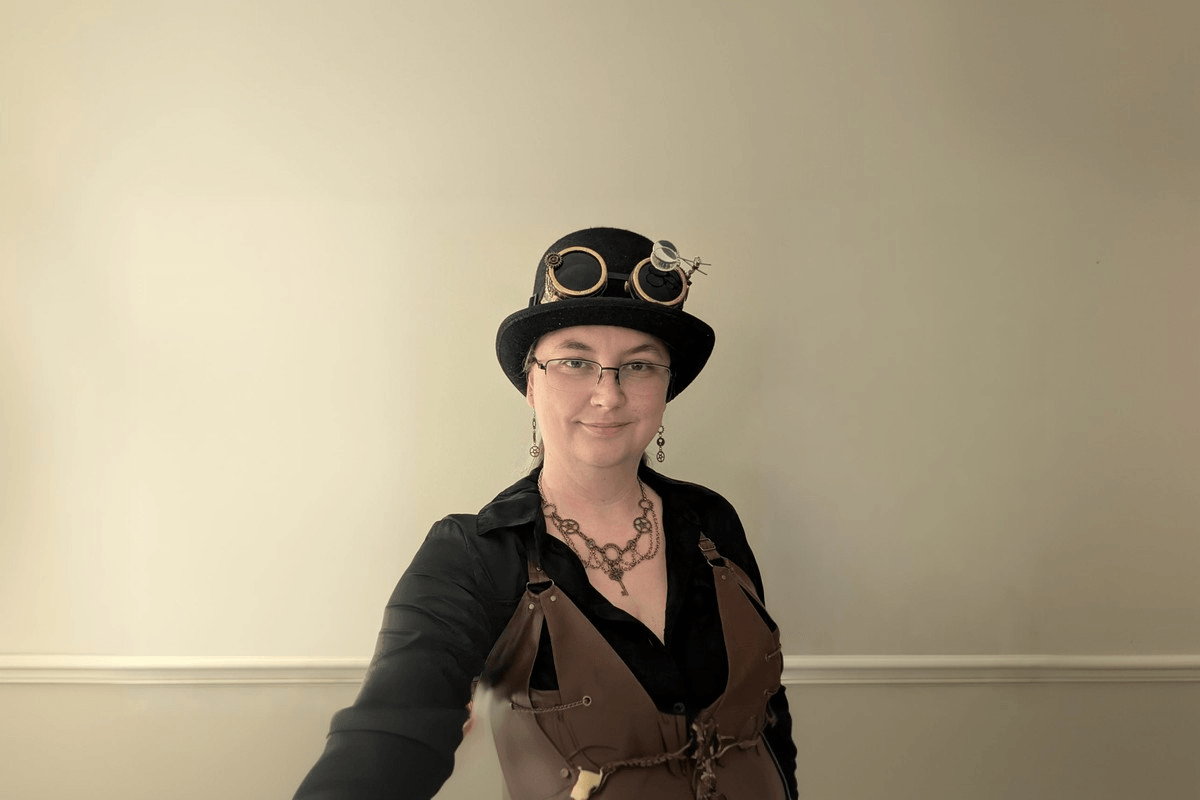
PHOTO: L.R. Braden, bestselling and award-winning author of imaginative urban fantasy tales, balancing darkness with light and humour in her storytelling.
Award-Winning Urban Fantasy Author Inspires With Hope and Intricate Storytelling
L.R. Braden discusses her creative process, the balance of light and dark in her writing, and the immersive world-building behind her acclaimed urban fantasy novels that captivate readers worldwide.
L.R. Braden is a master at weaving the extraordinary into the ordinary, crafting worlds that feel both eerily familiar and breathtakingly magical. Blending urban landscapes with intricate mythologies, she invites readers to peer into the supernatural seams of existence, where fae, shifters, and demons lurk just out of sight. Her stories are a testament to the power of imagination tempered with structure, a delicate balance she achieves with remarkable precision. But what truly sets her apart is the heart she brings to her craft, imbuing even the grittiest of conflicts with a sense of hope, healing, and humanity.
At the core of Braden’s work lies a profound respect for her characters. She understands that complex pasts shape motivations, that vulnerability can coexist with strength, and that laughter has the power to pierce through darkness. It is in this tension—between shadow and light, despair and redemption—that her narratives find their voice. Whether it’s the snarky wit of a demon pushing her heroine forward, or the quiet revelations of personal growth, each moment is handled with an elegance that lingers with the reader.
With her award-winning Magicsmith and Rifter series, Braden has proven herself a storyteller of exceptional calibre—a weaver of tales that defy the bounds of genre and expectation. Her novels do not merely entertain; they challenge readers to see the world, and themselves, through new lenses. As we explore the artistry behind her prose and the alchemy of her world-building, we are reminded of the enduring magic that great stories possess: the ability to transport, to transform, and ultimately, to inspire.
L.R. Braden is a masterful storyteller whose intricate world-building and emotional depth inspire readers with hope, magic, and humanity.
How do you balance the darker themes in your work, such as demon possession and violence, with the more lighthearted moments and character interactions?
Since my books deal with some heavier themes, I feel it’s important to frame those elements in a story that also shows joy and laughter. I want my readers to turn the last page with a sense of hope, not despair. To that end, I sprinkle moments of levity throughout, mostly in the form of characters with irreverent, optimistic, sometimes downright inappropriate personalities to break the mood when my narrative character is struggling with emotions like grief, guilt, or overwhelm. This is best exemplified in the Rifter series, where a snarky demon is constantly bantering in the main character’s head, making it impossible for her to take herself or her situation too seriously, no matter how dire. Pacing is also a useful tool to balance moods in storytelling. I tend to alternate scenes of high drama or action with scenes where the characters can catch their breath.
Can you tell us about your writing process, from initial idea to final draft, and how you approach editing and revisions?
I usually start with a character, then I consider challenges I want that character to tackle and try to identify an overarching theme to tie it all together. The plot and setting usually develop naturally during this process. I then create a basic outline describing key points in the story and loosely fill in the sections between those points. Then I write my first draft.
I tend to write pretty clean copy, but it’s important to note that a first draft is never a final draft. No matter how good a story is, it can always get better. Once I complete a draft, I do a round of self-editing and revisions to make developmental changes and clean everything up. Then it goes to my alpha reader to ensure the story makes sense to someone other than myself. Next it goes to a professional content editor who points out any weak points remaining in my story. Then another round of revisions. Then I hand it off to beta readers and my copy editor. I do another pass to incorporate their feedback, get the book professionally formatted, then do a final proofread to ensure everything is as tight as possible before releasing the book into the world.
“No matter how good a story is, it can always get better.” – L.R. Braden
Your characters often have complex, troubled pasts – how do you develop these backstories, and what role do you think they play in shaping the characters’ personalities and motivations?
Backstories play an integral role in shaping my character’s motivations, personalities, and actions. To develop them, I start by considering the internal conflict I want a character to struggle with over the course of the story, such as needing help but being unable to ask for it or wanting love but feeling unworthy. I start the character as far from where I want them to end up as possible, then I consider what in their past could logically have brought them to that point.
In the case of Mira, from the Rifter series, the abuse she suffered, her subsequent possession, and the damage her magic caused to the people around her combined to make her isolate herself, constantly on the move and avoiding personal relationships. That’s why learning to open up to another person (her eventual partner Ty) is such a big deal for her. It also shapes how she uses her powers, choosing to protect innocents from dangerous magic-users like herself. And when writing in a series, each book adds to the backstory of the next by carrying forward the events, triumphs, and traumas of the ones before, so the characters’ backstories are constantly evolving.
“The key to an immersive world is believability.” – L.R. Braden
The world-building in your series is incredibly detailed and immersive – can you walk us through your process for creating the magical systems, creatures, and cultures that inhabit your worlds?
The key to an immersive world is believability. To create the Magicsmith universe, I used my own reality as a foundation, then I layered in details to highlight differences, such as iron beads hanging in shop doorways to keep fae out, the establishment of a three-letter organisation to monitor and police magic-users, and politicians lobbying for election based on their stance for or against paranatural tolerance, thereby infusing the existence of magic into the culture. To populate the world with magical creatures, I drew on existing folklore and mythology, tethering those stories to fae beings who might have inspired them.
I find the best way to make magic systems believable is to ensure they follow internally consistent rules and have a cost. There are two sources of magic in my Magicsmith world. Fae, vampires, and werewolves draw power from their own life force and are therefore limited by their own strength and the type of magic they’re attuned to. Human practitioners draw power from the world around them, giving them more versatility but opening them up to possession from the demons who dwell in the Rift. Both types of magic can destroy the caster if they channel too much energy.
“It’s both exhilarating and humbling to be selected as a winner.” – L.R. Braden
How do you manage to juggle multiple plot threads and character arcs across multiple books in a series, and what tips would you give to authors struggling with this aspect of writing?
My advice would be to ensure that each book is complete and satisfying on its own, because readers sometimes pick up a book without realising it’s part of a series. Avoid a story-so-far info dump, but make sure you explain pertinent details that new readers might be missing if they skipped earlier books, and craft a satisfying conclusion that wraps up the book’s main questions even if you leave some threads open for future stories. I tend to resolve a unique mystery plot in each book while the characters, themes, and world carry over, evolving as each story adds to the complexity of my universe.
I recommend creating a series “bible” to track overarching elements like character descriptions, rules for magic, world politics, etc., updating as necessary. Whatever is integral to your stories, record it for easy reference so you can keep the details consistent across multiple books.
Your work has won numerous awards, including the Eric Hoffer Book Award and the Imadjinn Award – what do you think sets your writing apart, and how do you feel about receiving these accolades?
It’s an honour to receive professional recognition for my work. I know that hundreds, sometimes thousands, of authors are nominated for such awards, so it’s both exhilarating and humbling to be selected as a winner.
My goal as a writer is to create stories that readers can fully escape into, where the worlds, the characters, and the adventures come to life in such a way that reality falls away for a time, but that resonate with a sense of truth that the reader can then carry with them when they close the cover and return to their lives. I’d like to think winning these awards means I’ve achieved that.